
The Cats of Labin: A Portrait of the Old Town’s Quietest Residents
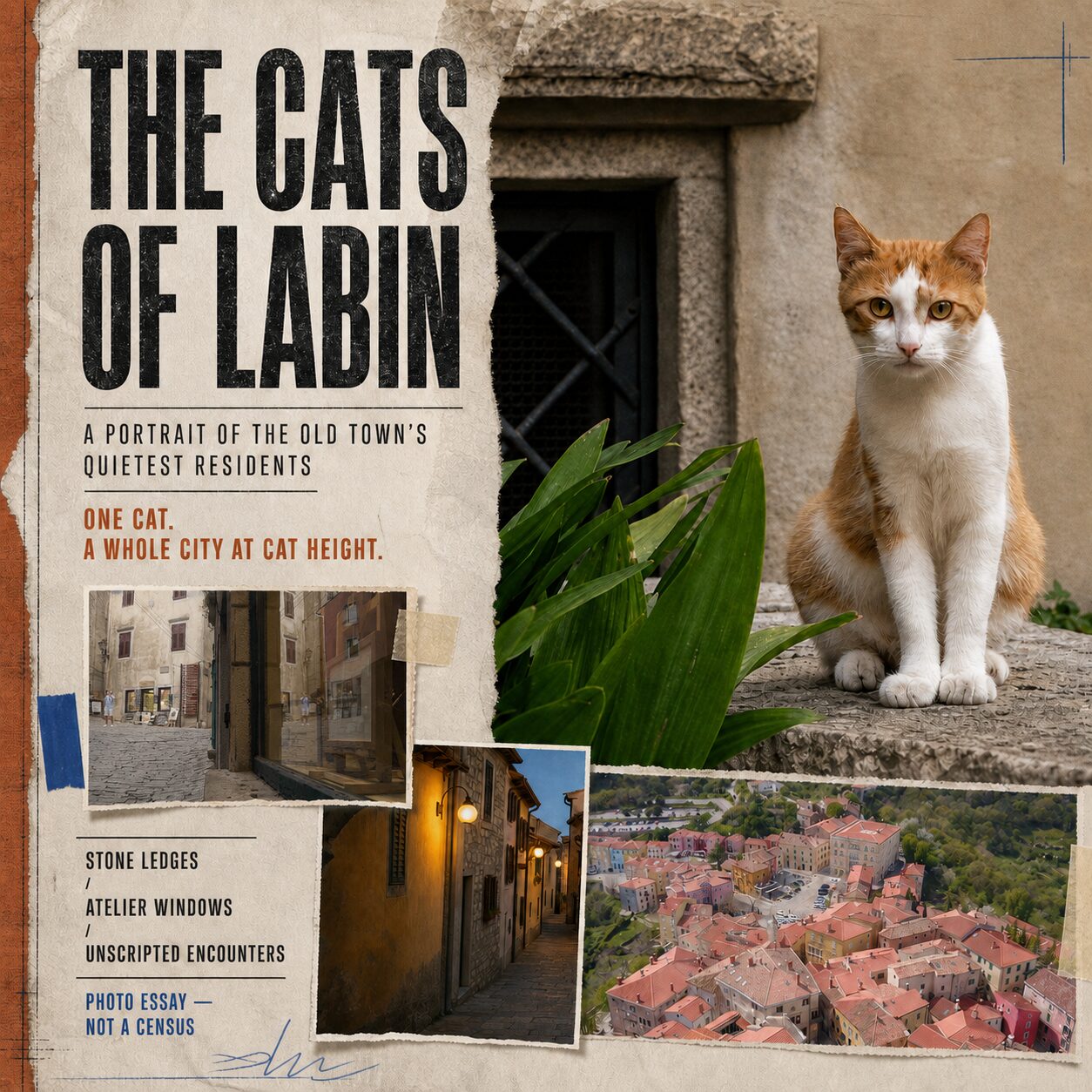
Some towns announce themselves through monuments. Labin Old Town works more quietly. A shutter opens above a cobbled lane. An atelier window catches the afternoon light. Somewhere between a doorway and a warm stone ledge, a cat watches the street as if it has been given responsibility for the whole scene.
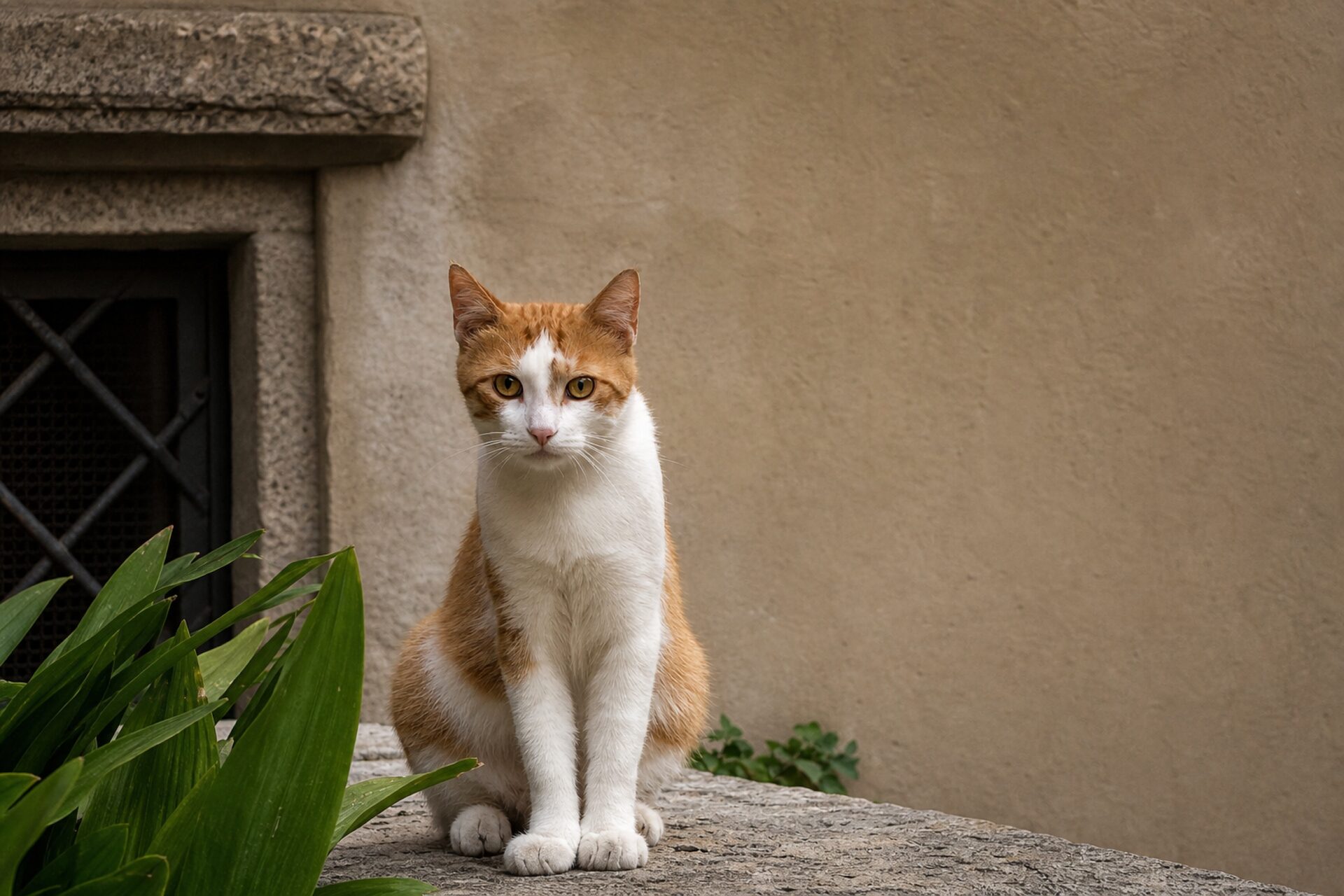
This article began with a photograph of one orange-and-white cat in Labin. It is not a census, and it does not prove that the Old Town contains a managed colony. A cat seen outdoors may be a pet, a free-roaming companion, a community cat or an animal without a permanent home; appearance alone does not settle the question. What the photograph does show is a perfect relationship between subject and place: pale stone, weathered plaster, deep shade and a resident who needs no direction from the camera.
So this is a portrait rather than a list of guaranteed sightings. It is about the way cats alter how we look at a historic town. They bring our eyes down from façades to thresholds, from panoramic viewpoints to small pockets of sun. If you meet one, the reward is the encounter itself—not touching it, feeding it or arranging it for a photograph.
Key Takeaways

A Photo Essay, Not a Census
We can document individual cats in Labin, but we cannot honestly promise a colony or a particular number of animals.

Slow Down to See More
Quiet lanes, stone ledges and shaded thresholds reward an unhurried walk far more than a checklist.

Let the Cat Decide
Do not chase, corner, lift or wake an unfamiliar cat. Keep an escape route open and let it approach—or leave.

Soft Light Works Best
Early and late light flatters both fur and stone, while cooler hours can make the lanes more comfortable to explore.

The Town Is Half the Portrait
Labin’s arches, ateliers, steps and ochre walls turn a simple animal portrait into a story about place.
What This Article Can Honestly Claim
| Question | Honest answer | Best approach |
|---|---|---|
| Are cats guaranteed? | No. Outdoor cats move on their own schedule. | Enjoy the town first |
| Is there a documented colony? | We found no reliable source confirming a managed Old Town colony. One photograph is not population evidence |
Avoid repeating the claim |
| Can you tell whether a cat is stray? | Not reliably from a brief sighting or photograph. | Do not assume ownership status |
| Should visitors feed cats? | Do not improvise. A cat may have an owner, dietary needs or an established carer. | Ask local animal-welfare contacts |
| Best photography rule | Use distance, patience and the existing light. | Never block an exit |
Why Cats and Old Stone Towns Look Made for Each Other
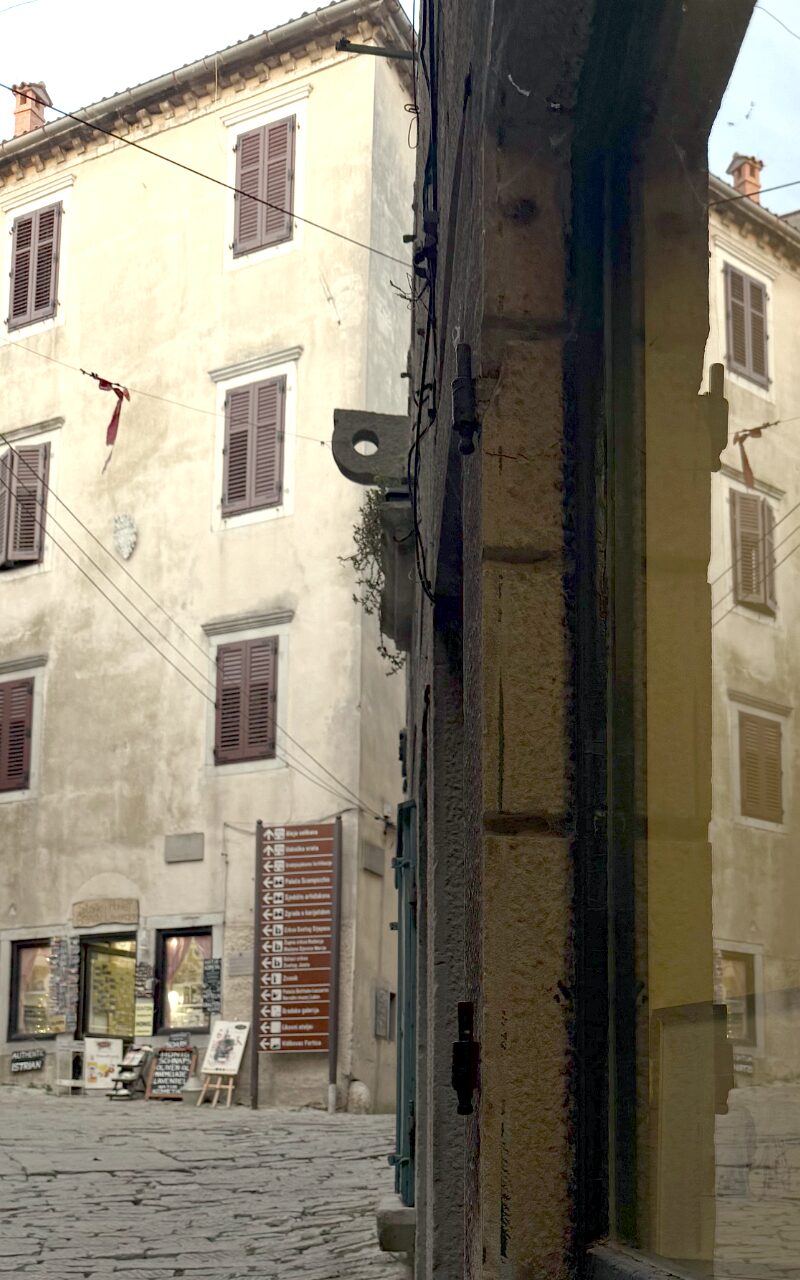
Labin’s official tourist information describes a medieval hill town where architectural and cultural heritage meet art ateliers and contemporary life. That mixture is exactly why a cat portrait here feels richer than a studio photograph. The background is never neutral. Stone records wear, plaster holds the colour of late sun, and every doorway suggests another room beyond the frame.
Cats are skilled at choosing edges: the top of a low wall, the border between shade and light, the step from a private doorway into a public lane. Those are also the places where Labin’s architecture becomes most tactile. A photographer who follows the cat’s attention begins to notice the grain of a lintel, the cool darkness behind ironwork and the way plants soften a hard ledge.
The animal does not need to perform. In fact, the strongest image usually arrives when nothing dramatic happens. A direct look, two front paws placed together and the stillness of a warm afternoon can hold more character than an elaborate scene. The town provides the visual history; the cat provides the pause.
A Slow Walk Through the Old Town
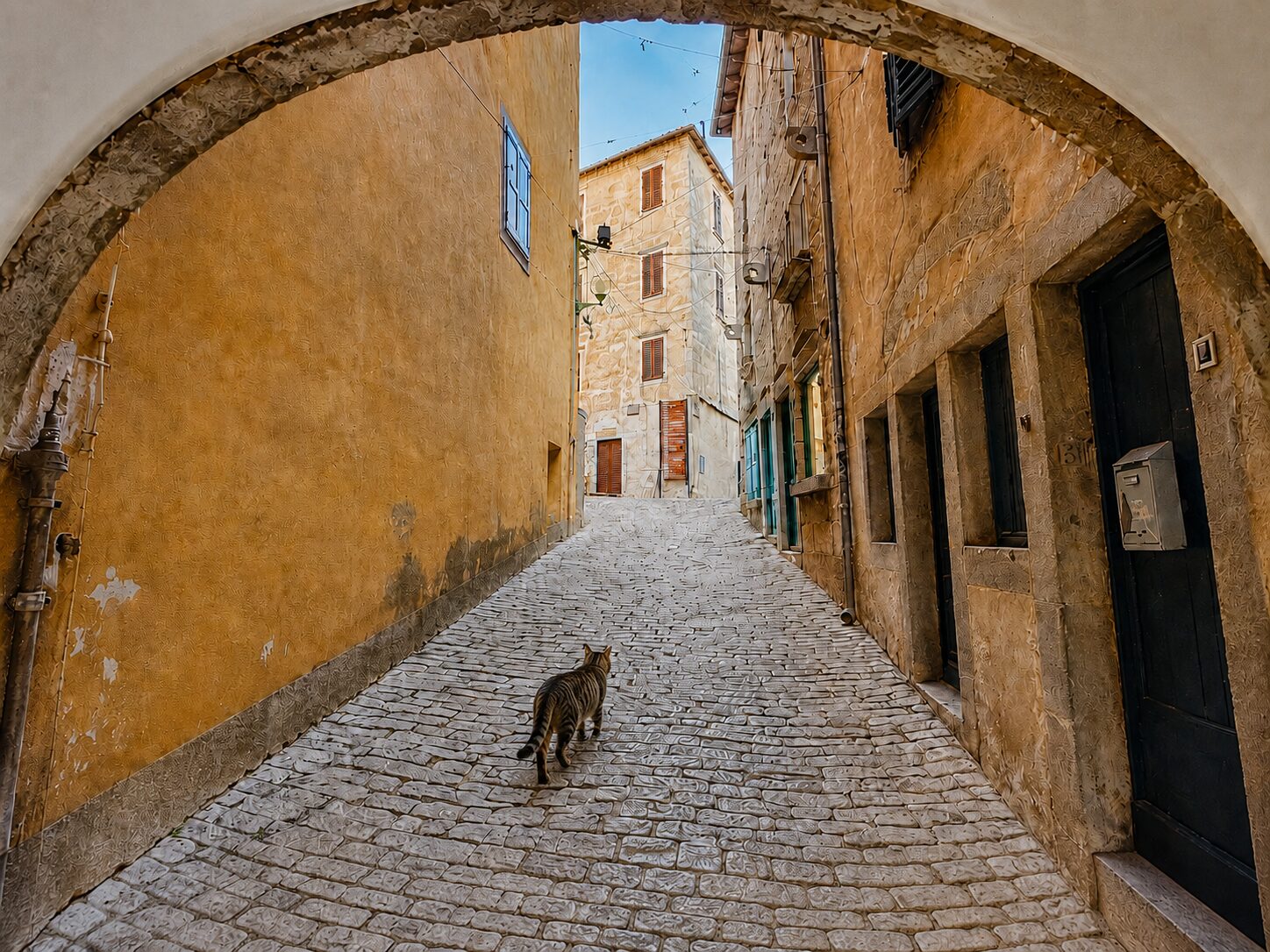
Begin at the edge of the historic core and walk without treating the route as a hunt. The approach is simple: look at the town, not under every parked car. Pass through the lanes around the main square, follow the older passages and give yourself time for the viewpoints. If a cat appears, it becomes part of an already worthwhile walk.
Arches make natural frames, but they are also funnels used by residents. Keep doorways, stairs and narrow passages clear. The same courtesy applies around atelier windows and private thresholds. Photographing from the opposite side of a lane often produces a better composition than stepping close, and it avoids turning someone’s entrance into your set.
Labin’s historic centre deserves more than a feline theme. Our guide to Labin’s cultural and historical sites explains the architecture and heritage that surround the walk. Read it before you come and the stonework behind the cat stops being decorative scenery; it becomes part of the town’s longer story.
How to Photograph a Cat Without Making It Work for You
Stop before the cat changes position because of you. That distance is your starting point. Lowering the camera can make the portrait more intimate, but crouch gradually and remain outside the animal’s escape line. A long focal length or a modest crop is kinder than moving into its space.
Watch body language. A relaxed animal may sit loosely, look away and return its attention, or choose to approach. An animal that flattens its ears, tightens its body, lashes its tail, retreats or fixes on an exit is asking for more space. Professional feline-handling guidance emphasises observation, choice and the ability to hide or withdraw. A street portrait should demand even less than a veterinary interaction: no restraint, no calling from multiple sides and no attempt to force eye contact.
Use the light that is already there. Open shade preserves detail in pale fur and keeps deep alleys from becoming harsh. If the cat is in sun, expose for the bright fur and allow the background to fall darker. Avoid flash. Besides disturbing the animal, flash removes the soft atmosphere that makes Labin’s lanes distinctive.
Take a short sequence, then stop. A good rule is to leave while the encounter still feels ordinary to the cat. The photograph should be evidence of patience, not evidence that a visitor successfully overrode an animal’s preferences.
Owned, Roaming or Unowned? Why the Label Matters
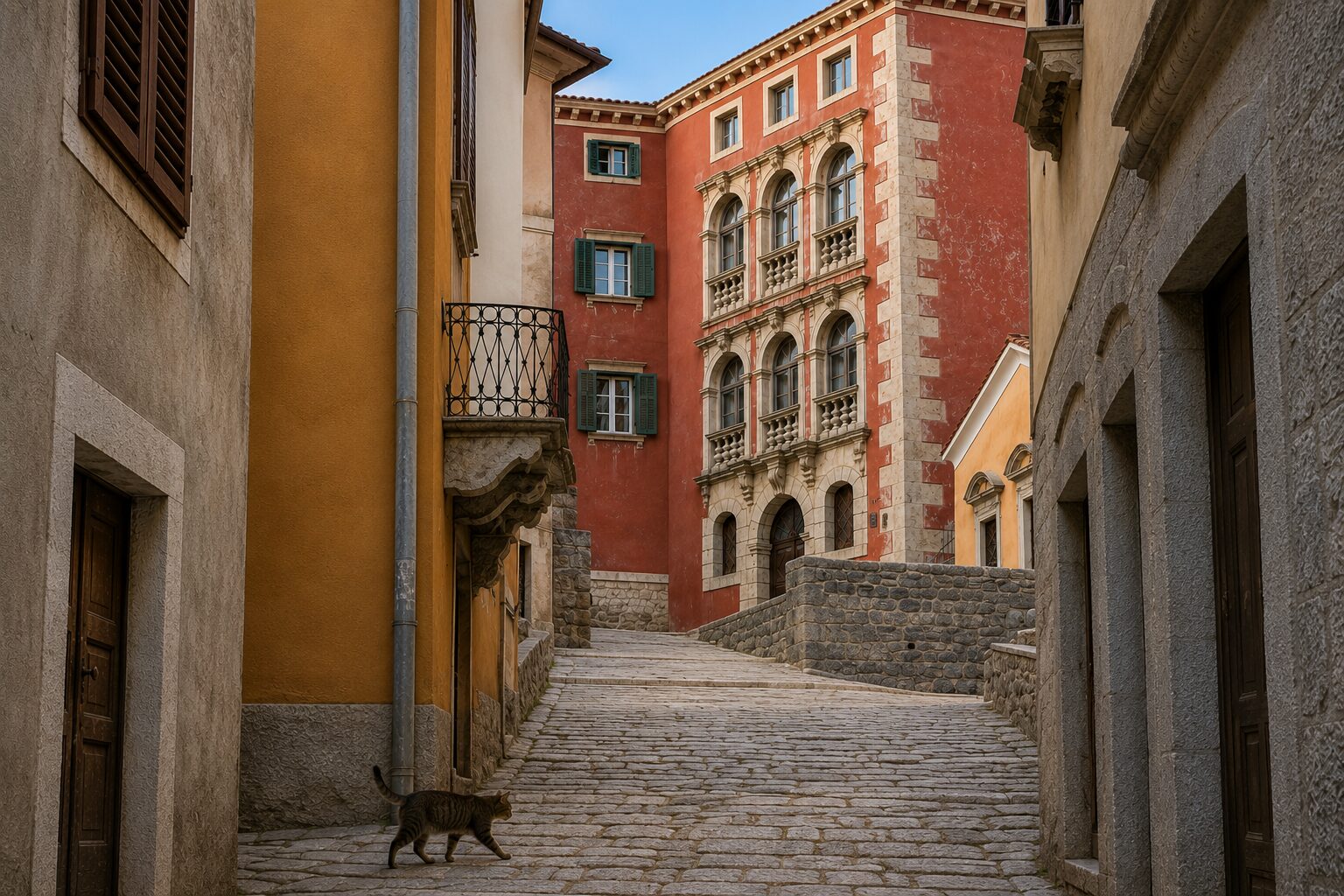
A clean coat does not prove ownership; a cautious manner does not prove that a cat is feral. Outdoor cats exist across a spectrum of relationships with people. Some return to nearby homes. Some receive regular care from residents. Others may need organised help. Visitors rarely have enough information to classify them during a short walk.
That uncertainty is why casual feeding is not automatically the kindest action. Food can conflict with a medical diet, attract animals to traffic or private entrances, create competition, or disrupt an established care routine. If a cat looks healthy and calm, the respectful response is usually to observe and move on. If it appears injured, trapped, severely unwell or in immediate danger, note the exact location, take a clear photograph from a safe distance and contact a local veterinary or animal-welfare service rather than attempting an improvised rescue.
Water is less likely to create dietary problems, but even then it should be placed only where it does not obstruct a doorway, create a slip hazard or conflict with residents. Local knowledge matters. The people who live with the situation understand whether an animal has an owner, a carer or an existing routine.
Visiting with Children
Cats can turn a heritage walk into a game for children, but set the rule before the first sighting: quiet voices, walking feet and hands kept close until the cat clearly chooses contact. Never let children surround an animal, follow it beneath a car or reach into a hiding place.
Give children a photography task instead of a touching task. Ask them to notice where the cat sits, which colours repeat in the wall and fur, or how many shapes they can find in the doorway. This shifts excitement into observation and makes the town part of the experience.
Keep the walk short in strong heat. Labin’s stone can reflect summer sun, and steep cobbles demand attention. A morning visit can be paired with Labin’s morning market; later, families with enough energy can compare the Old Town’s stone passages with the green descent described in our guide to Sentona’s Trail between Labin and Rabac.
The Best Time Is When the Town Becomes Quiet
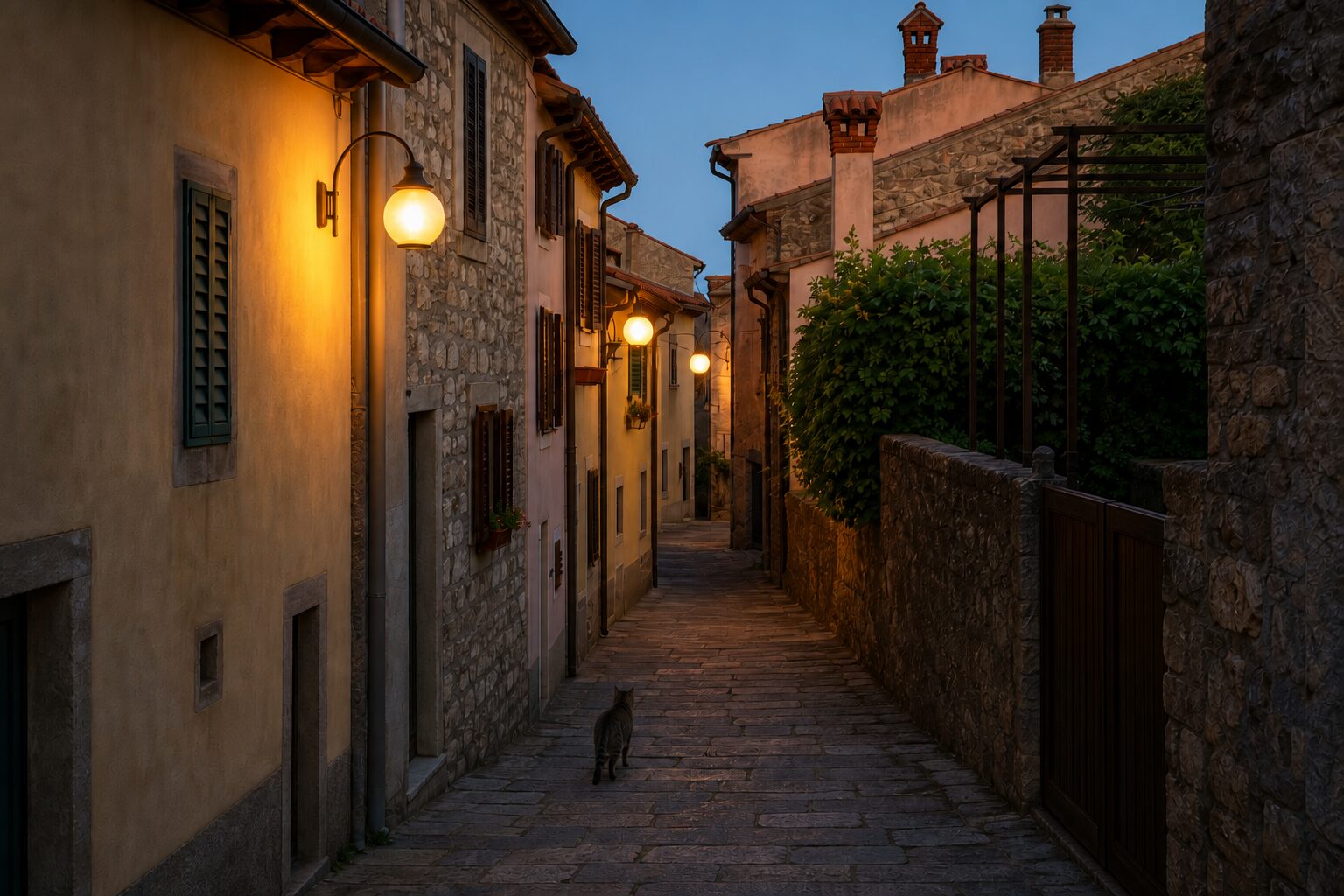
There is no reliable timetable for cats. Still, a quieter street gives both animal and photographer more room. Early morning offers cooler stone, fewer groups and clean directional light. Late afternoon softens façades, while blue hour turns the lamps into warm pools along the lane.
Do not interpret absence as failure. The empty street is part of Labin’s character, especially outside the busiest weeks. Photograph the arch, the shutter or the light on the cobbles and continue. The best encounters happen because the walk remains open to other subjects.
If you are staying on the coast, allow time for the climb or drive up from Rabac and avoid compressing Labin into a rushed stop between beach plans. Our honest Rabac travel tips help set realistic expectations for moving between the resort coast and the hill town.
Frequently Asked Questions
Are there really many cats in Labin Old Town?
Cats are seen in and around the Old Town, and we have a genuine photograph from Labin. We did not find reliable evidence for a defined population or managed colony, so this article does not promise numbers or guaranteed sightings.
Where is the best place to see a cat?
There is no dependable spot. Walk the historic lanes, respect private thresholds and enjoy the architecture. A cat may appear on a ledge, step or shaded edge, but it should never be lured into position.
Can I pet the cats?
Only if an apparently relaxed cat clearly approaches and invites contact—and even then keep it brief. Never corner, pick up or wake an unfamiliar animal, and supervise children closely.
Should I bring cat food?
No. You may not know whether a cat is owned, on a medical diet or part of an established care routine. If you want to help, ask a local animal-welfare organisation what support is actually useful.
What should I do if a cat looks injured?
Record the exact location, photograph the animal without chasing it and contact a local veterinarian or animal-welfare service. If it is in immediate traffic danger, prioritise your own safety and call for local help rather than attempting to grab a frightened animal.
Final Thoughts
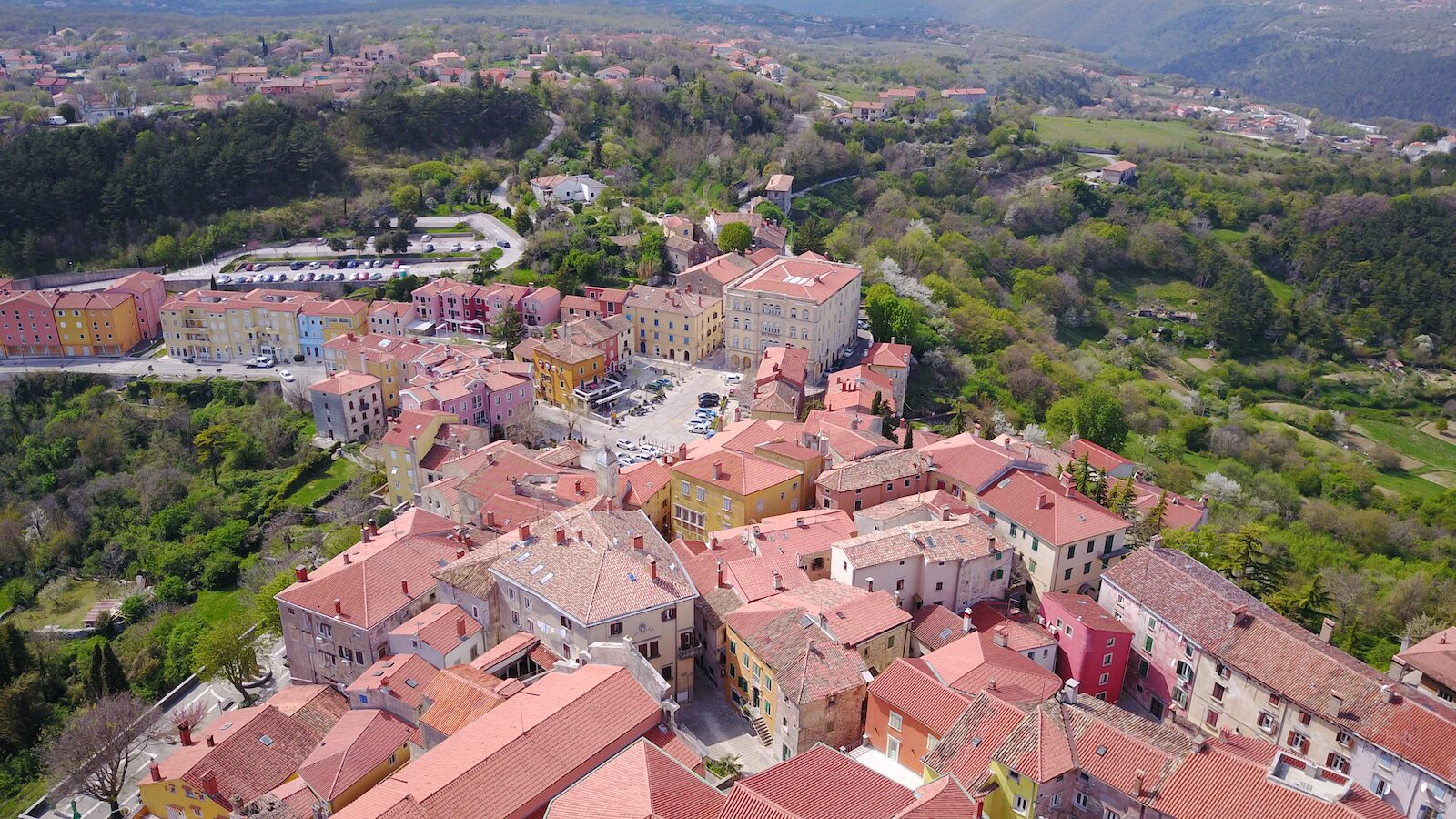
The cat in our photograph does not explain Labin, and Labin does not need cats to make it worth visiting. The pleasure lies in the overlap. One alert animal on a stone ledge can reveal how much of the town’s beauty exists below eye level: in worn surfaces, small gardens, shaded windows and the boundary between private life and a public street.
Come for the Old Town, its art and its history. Walk slowly enough for the details to find you. If a cat chooses to share the frame, give it space, take the photograph and leave the encounter as calm as you found it. That is the only kind of “cat tour” Labin needs.