
Jellyfish in Rabac: What to Expect, When They Come, and How to Stay Calm

Istria image-library photograph; exact location unconfirmed. Not a current Rabac sighting report.
You can see the pebbles through the water. The shoreline looks inviting. Then a pale, rounded shape drifts past, and suddenly the question is not where to swim but whether to swim at all. Jellyfish can turn a straightforward beach morning into an anxious one, especially if you are visiting Rabac for the first time or watching children play in the shallows.
The useful answer is neither “there are no jellyfish here” nor “the sea is dangerous.” Jellyfish occur in the Adriatic, but a sighting is not a forecast for your entire holiday. Different species have different sting potential, and conditions at the beach matter more than a reassuring date on a calendar. Knowing what to look for, when to step back and how to get help makes the decision much less dramatic.
This guide explains regional patterns, not today’s conditions on a particular beach. The wild jellyfish photograph comes from our Istria image library; its exact shooting location is unconfirmed, and it is not proof of a current bloom in Rabac. The aquarium photographs are identified separately. Safety information was checked in October 2026 and is general first aid, not a substitute for a clinician or local rescue advice.
Key Takeaways

No guaranteed jellyfish-free month
Seasonal patterns vary by species and year. Check the beach you intend to use, not just your travel dates.

Look, give space, do not touch
A good view is not an invitation to handle an animal. Leave the water if avoiding contact becomes difficult.

Use seawater for the initial rinse
After a sting, seek local help. Avoid rubbing, urine and improvised remedies.

Know when to call 112
Breathing difficulty, collapse or a severe reaction needs urgent help. Do not delay for a photograph or species identification.
Which jellyfish might you encounter?
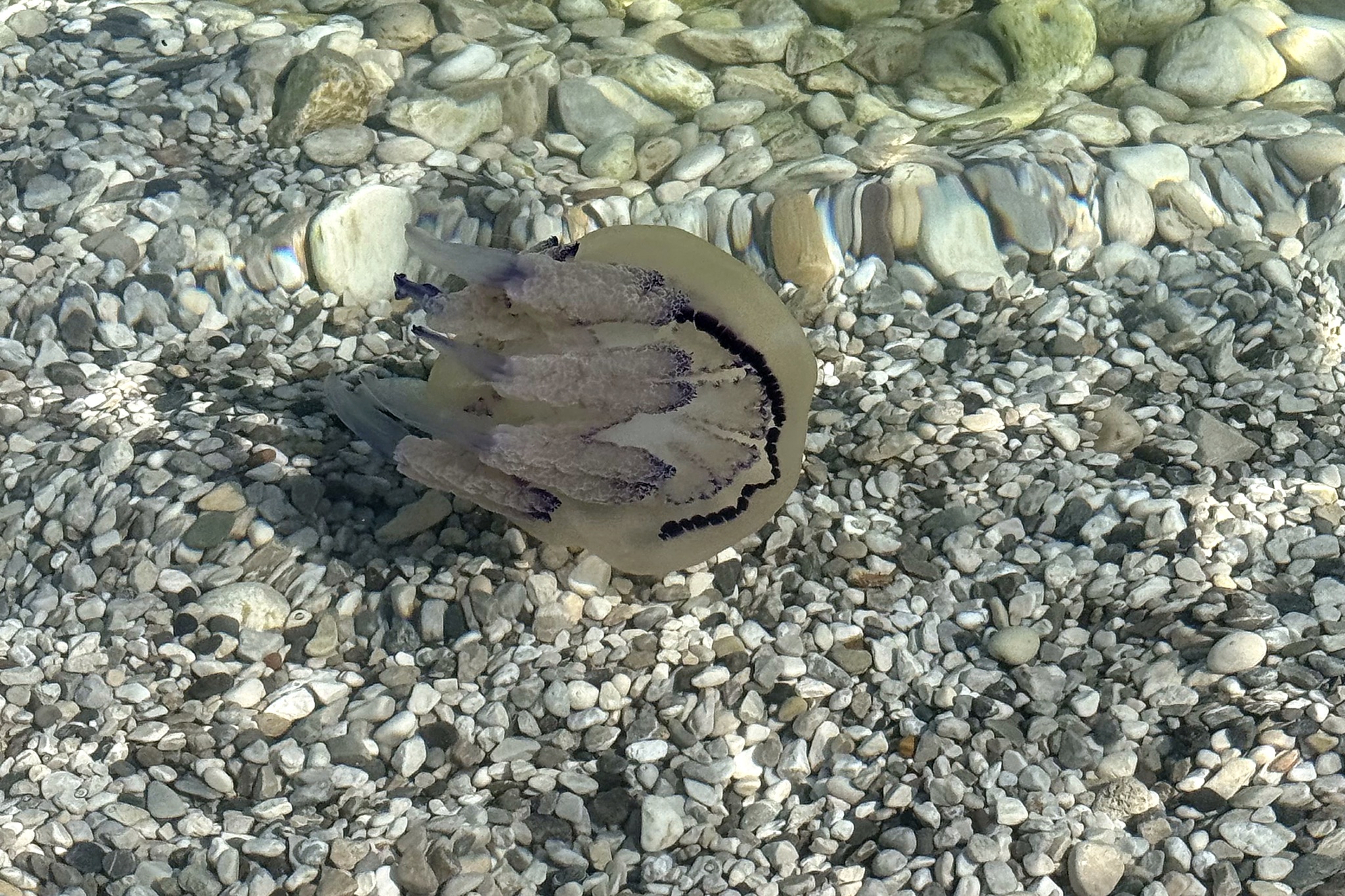
The northern Adriatic has several familiar jellyfish groups. Size alone is not a reliable danger test. A large, pale animal may have relatively mild sting potential, while a smaller jellyfish with long tentacles deserves more caution. Colour also changes with light and the angle of the water, so identification from a quick glimpse is uncertain.
The Institute of Agriculture and Tourism’s Adriatic guide and Aquarium Pula’s species notes are useful introductions. The table is a regional orientation aid, not a declaration that all these species are present in Rabac today. Do not approach a jellyfish to inspect the features listed below.
| Regional species | Visible clues | What to remember |
|---|---|---|
| Moon jellyfish (Aurelia spp.) | Translucent bell; four ring-like structures | Usually mild sting potential; still do not handle. |
| Barrel jellyfish (Rhizostoma pulmo) | Pale bell with a violet-blue margin; bulky oral arms | Can irritate skin, especially in sensitive people. |
| Compass jellyfish (Chrysaora hysoscella) | Brown radial compass-like markings; long tentacles | Can cause painful stings; keep your distance. |
| Mauve stinger (Pelagia noctiluca) | Pinkish or mauve bell; trailing tentacles | A stinging species; do not approach for identification. |
| Mediterranean jellyfish (Cotylorhiza tuberculata) | Raised centre resembling a fried egg | Generally low sting potential; observation is better than contact. |
Use these descriptions to understand the differences, not to make a close-up diagnosis in the water. A violet edge, for example, is not the same feature as the brown radial pattern of a compass jellyfish. If you cannot identify an animal confidently from a safe position, you do not need to resolve the question before stepping back. The practical rule stays the same: observe without contact.
When do they come? Patterns, not promises
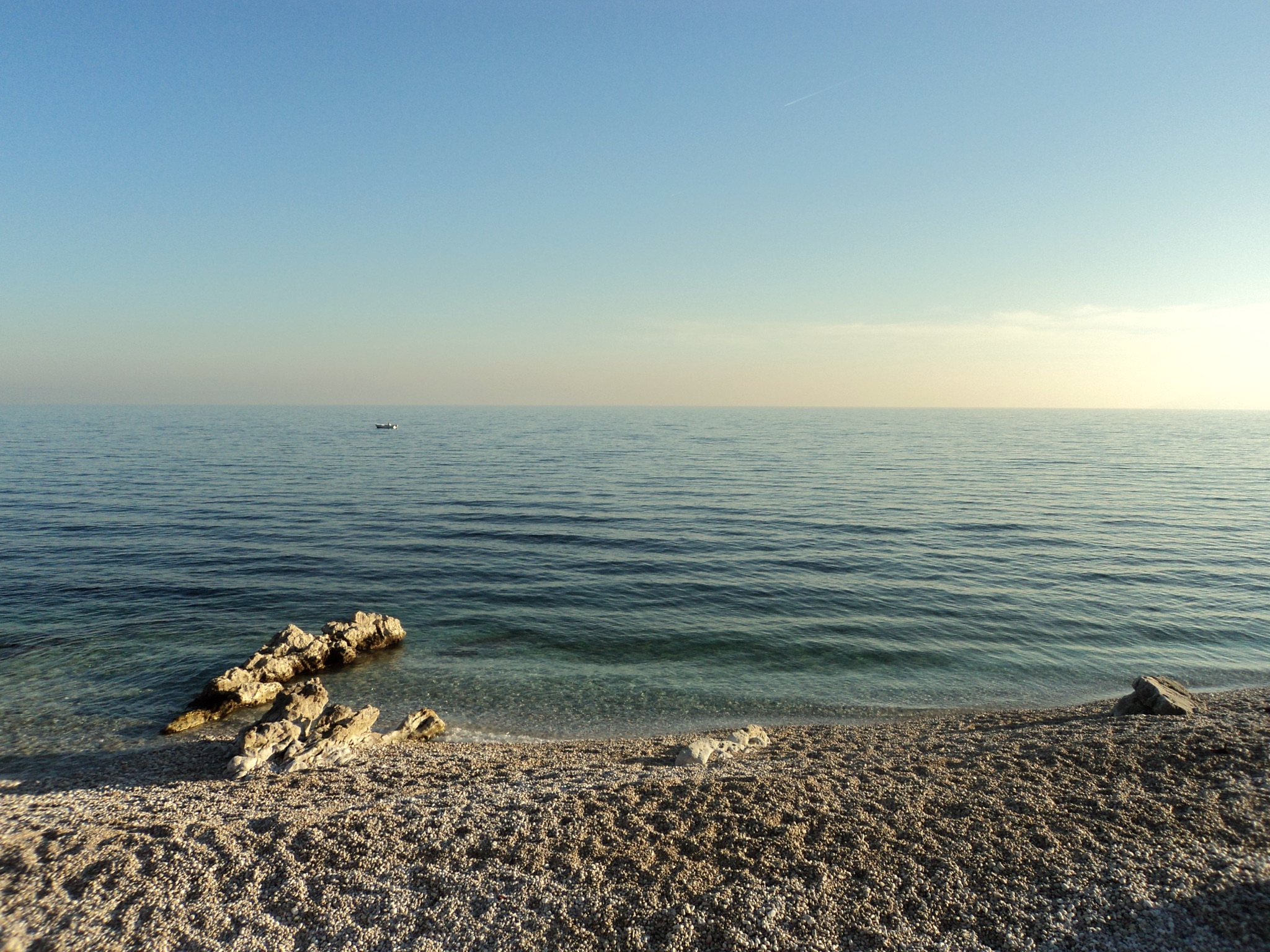
There is no defensible start-and-finish date for “jellyfish season” on every Rabac beach. Moon jellyfish can be numerous in spring and summer; Mediterranean jellyfish develop through summer. Historical research in the Gulf of Trieste also records spring compass-jellyfish blooms. Those observations explain why jellyfish are not exclusively an August issue; they do not predict a particular week in Rabac.
Do not book June or September on a promise of zero jellyfish. Equally, do not cancel a July holiday because of one photograph circulating online. A dated report from the beach you plan to use is more relevant than a dramatic image with no location. Ask where and when the animal was seen, whether it was one individual or a concentration, and whether a local warning is still in place.
Choose travel dates for the broader holiday you want: beach time, walking, quieter surroundings or summer atmosphere. Our month-by-month Rabac guide helps with that decision. Treat the jellyfish check as part of the day’s beach routine rather than a reason to search for an impossible risk-free month.
Why one cove can look different from the next
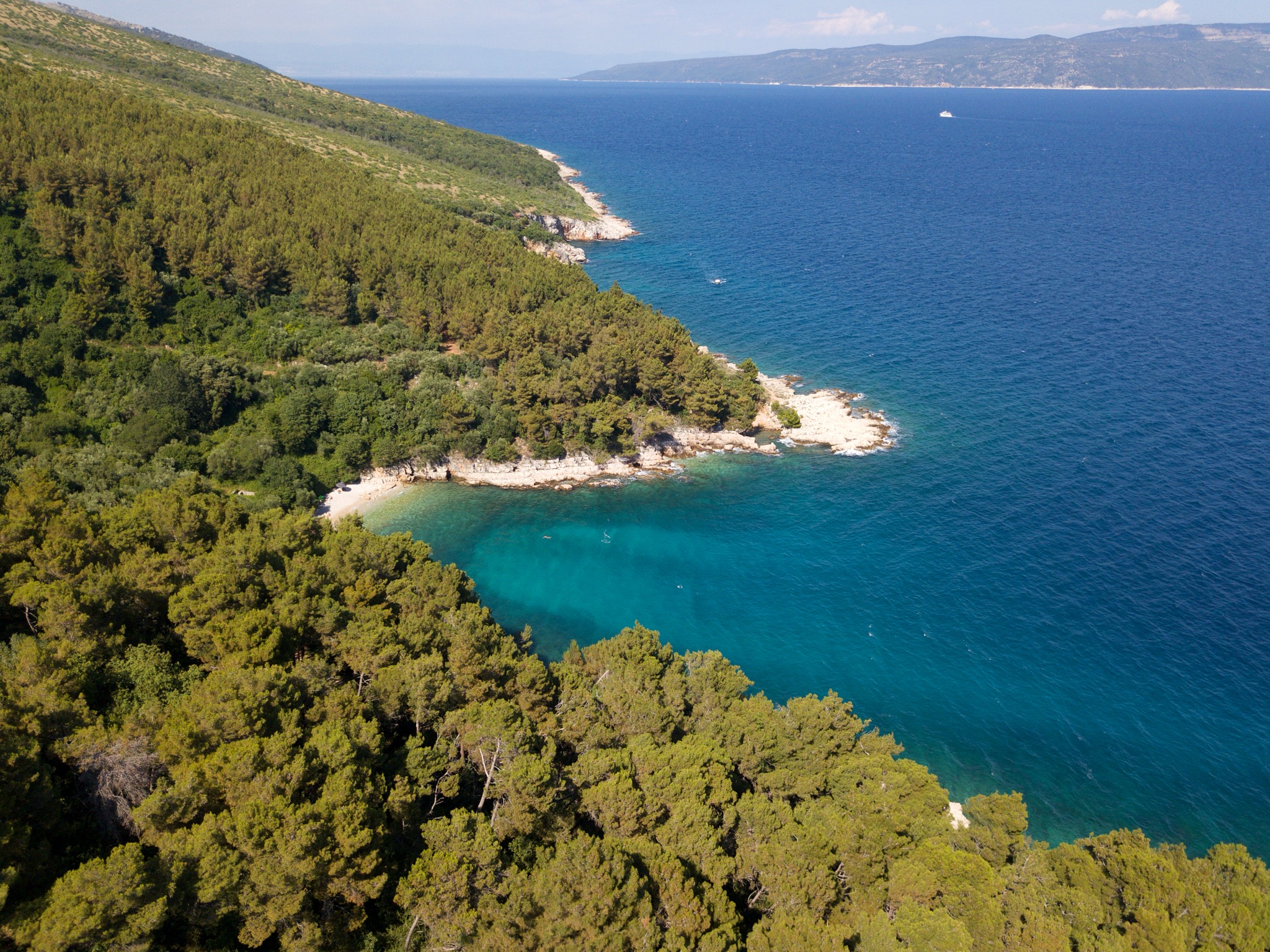
Jellyfish are living animals, but their distribution is strongly affected by moving water. Currents and waves can bring them towards shore. That means a clear patch of coast and a nearby patch with visible animals are not necessarily contradictory observations. The sea is not a swimming pool with an evenly mixed population.
The practical implication is simple: check the actual entry point and the route back out. A sheltered-looking cove is not automatically jellyfish-free, and a windy day is not a reliable guarantee either. Do not translate wind direction into a universal safety rule without local observations. A different beach may offer an alternative, but it needs its own check; walking a few hundred metres is not proof that the issue has disappeared.
Also resist the urge to move offshore just because the edge looks crowded with jellyfish. Deeper water introduces other decisions about distance, boats, your swimming ability and the return to shore. If the nearshore conditions do not feel manageable, taking a break is a better plan than trying to outswim the problem.
A calm check before you enter
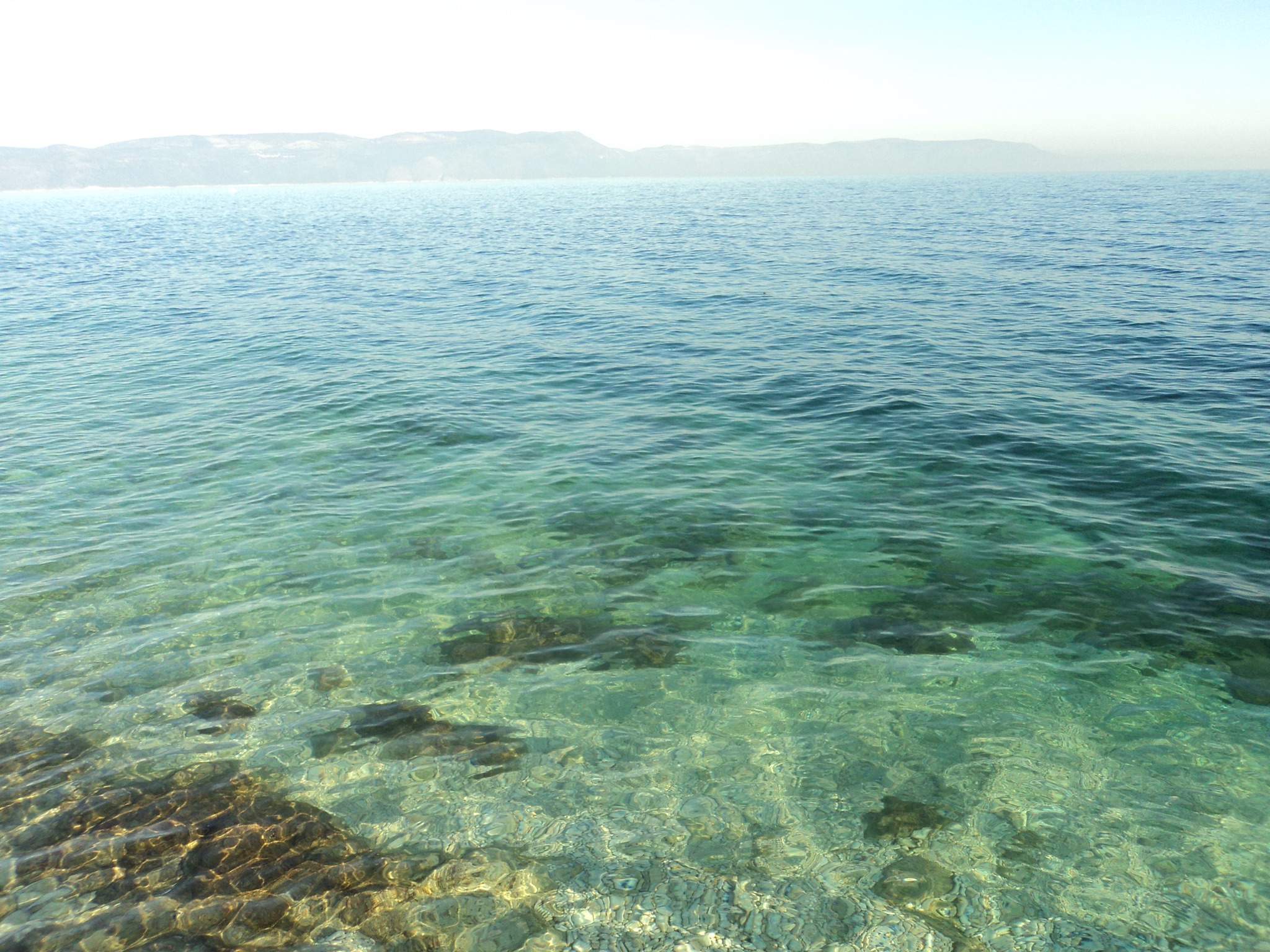
Give yourself a short pause on shore before the first swim. Look across the shallows and the area you intend to use, rather than staring only at your feet. Glare can hide transparent bodies and thin tentacles; a quick look is helpful but not a guarantee. Ask the lifeguard, where one is on duty, about current advice, and read any posted warnings.
Make the decision while you are still on dry land. If several animals are visible along your intended path, or a warning advises against entering, choose another activity. If you are unsure about what you are seeing, ask rather than testing it with your hand. Other people swimming nearby do not provide species identification or a promise that you will not be stung.
For a family, agree a straightforward signal before entering: if anyone notices a jellyfish or feels an unexpected sting, tell the adult and come back towards the agreed exit. This is easier to remember than a list of Latin names. It also gives a nervous swimmer permission to stop without needing to justify the decision.
What to do when you see one
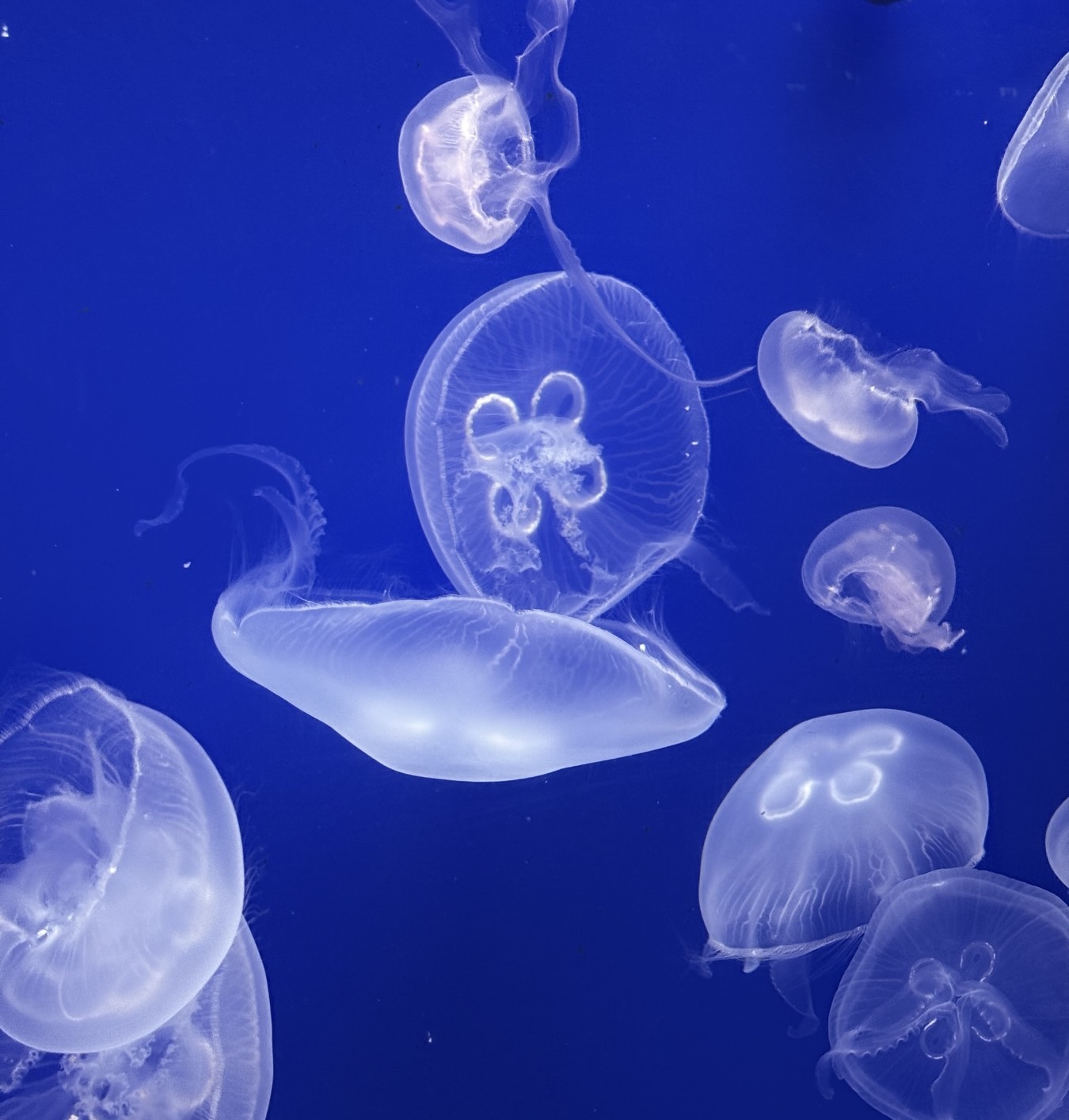
Aquarium Pula photograph, not a wild Rabac sighting. Observe jellyfish without touching them.
Do not poke it, scoop it out or push it towards someone else. Give the animal space and return calmly towards your exit if contact may be difficult to avoid. Do not assume the visible bell shows the full reach of its tentacles. A photograph can wait until you are safely on shore; moving closer for a better shot defeats the point of noticing it.
You do not have to finish the swim you planned. A shorter swim or a dry-land break is a perfectly good result. If you are with someone who becomes frightened, focus on the route out and the next practical action, not on debating whether the animal is “really dangerous.” The same approach works with children: a clear instruction is more useful than either panic or dismissive reassurance.
Do not handle a jellyfish washed onto the beach, even if it appears dead. The IFRC first-aid guidance warns that dead jellyfish can still sting. Keep children and curious hands away, and alert beach staff where available instead of moving it yourself.
With children: make curiosity safe
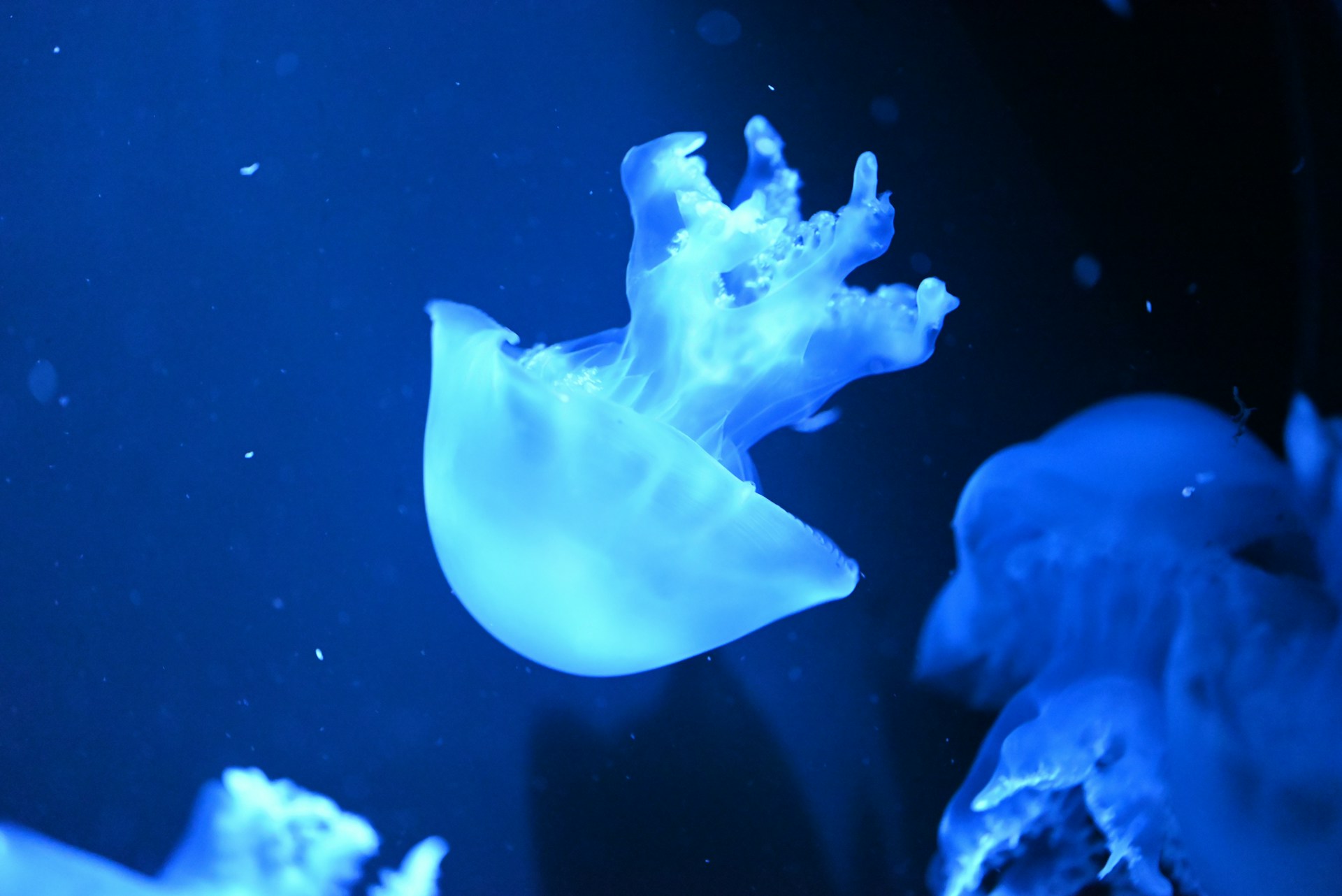
Jellyfish are fascinating precisely because they look unlike the animals children normally meet. You can explain that they belong in the sea and have stinging cells for catching food, not that they are “bad.” Looking is allowed; touching is not. That distinction turns the lesson into something useful rather than making the whole beach feel threatening.
Keep supervision active in the shallows and decide who is watching each child. A conversation about jellyfish does not replace normal water safety. Water shoes are useful for walking on pebbles, but they do not protect arms, legs or the rest of the body from drifting tentacles. Clothing can cover skin, but should not be treated as permission to swim through a concentration of animals.
If a child is stung, get them out safely and seek medical advice promptly. Pay attention to the child’s overall condition, not just the mark on the skin. Use calm, concrete words: “We are getting out; we are asking for help.” Avoid letting a crowd of conflicting beach remedies become the next source of distress.
If you are stung: the first practical steps
Get safely out of the water and ask for local medical or trained first-aid help. If there are severe symptoms, use the emergency guidance in the next section immediately. Do not delay treatment while trying to catch or identify the jellyfish. For a non-life-threatening sting, the following approach follows the linked medical guidance:
- Initially rinse the affected area gently with seawater, not fresh water.
- Do not rub. Remove visible tentacles carefully with tweezers if you can do so safely; never touch them with bare hands.
- For pain relief after the seawater rinse and tentacle removal, use comfortably hot, non-scalding water, with trained help where possible. IFRC describes 40–45°C for 20–30 minutes; NHS advice uses at least 30 minutes. Check temperature carefully, particularly for children.
- Seek medical advice for persistent or severe pain, an extensive sting, or uncertainty about the injury.
Sources: IFRC 2025 aquatic-injury guidance, NHS sea-creature sting advice and American Red Cross jellyfish first aid. Heat is for symptom relief, not proof that the injury needs no further assessment. Do not burn the skin, and follow the clinician’s or trained responder’s directions.
When to get urgent help
Call 112 in Croatia for breathing difficulty, collapse or loss of consciousness, chest pain, rapidly worsening severe swelling, or other signs of a serious reaction after a sting. Severe pain or a sting to the face, mouth, throat or near the eyes also warrants urgent medical assessment. If you are uncertain how serious the situation is, ask emergency services for guidance rather than waiting it out.
Stay with the person and follow the dispatcher’s instructions. Tell them your beach or nearest identifiable access point and what symptoms have developed. Someone else can meet the responders at the access route; do not leave the affected person alone to search for a species name. The Croatian government confirms 112 as the unified emergency number. The warning signs above follow the NHS and Red Cross sources, not a claim that every jellyfish encounter is an emergency.
The remedies to leave out
Urine is not a treatment plan. Neither is rubbing the area with a towel or turning it into an experiment with whatever is in a beach bag. Do not use vinegar as a universal jellyfish remedy. Advice differs by species and region; research on Mediterranean jellyfish shows why a rule borrowed from a different coastline can be inappropriate.
A study of rinse solutions for Rhizostoma pulmo found that vinegar could trigger stinging-cell discharge in the species tested. That is a reason to follow species-appropriate professional advice, not to invent a substitute chemical. If beach advice conflicts, keep the question focused on the injured person and contact trained help.
After the initial episode, seek medical advice if the skin or pain is getting worse rather than better. Do not return to the water merely because a friend says the mark looks small. How you feel, the extent of the injury and professional advice matter more than the appearance of a photograph.
Jellyfish, mucilage and water quality are different issues
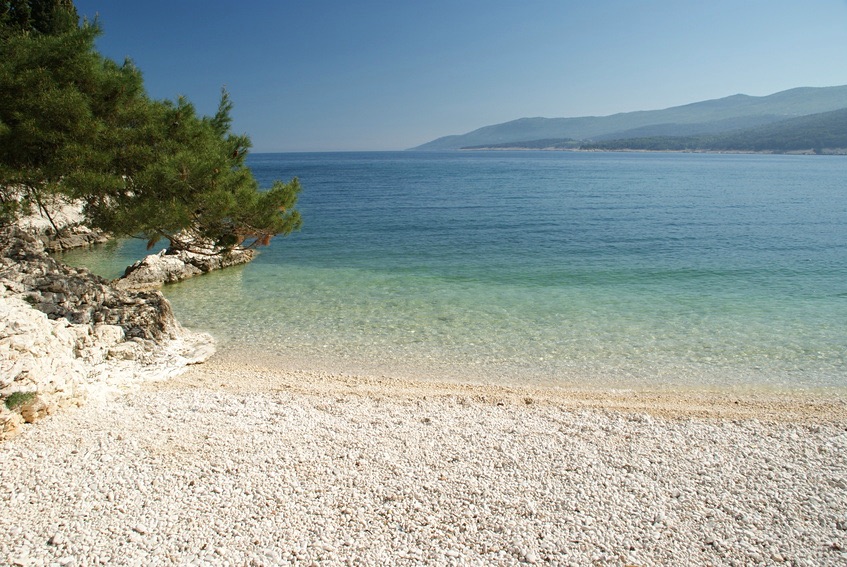
A jellyfish is an animal. Mucilage is a different marine phenomenon; cloudiness, floating material and a living bell-shaped body should not be treated as interchangeable. You do not need to diagnose every unfamiliar thing from shore. If the water looks unusual or there is an official restriction, ask for current advice before entering.
Our guide to mucilage on the Croatian coast explains the separate topic. A jellyfish sighting alone does not tell you whether the water meets bathing-water standards. Conversely, a reassuring water-quality result does not promise the absence of marine animals. Those are different questions, and separating them helps avoid both misplaced alarm and misplaced confidence.
Keep your questions specific: Is there a bathing restriction? Have jellyfish been seen here today? Is anyone giving local first-aid advice? Clear questions produce more useful answers than “Is this beach safe?” asked as if any open-water beach could offer an absolute guarantee.
An aquarium is a different way to look
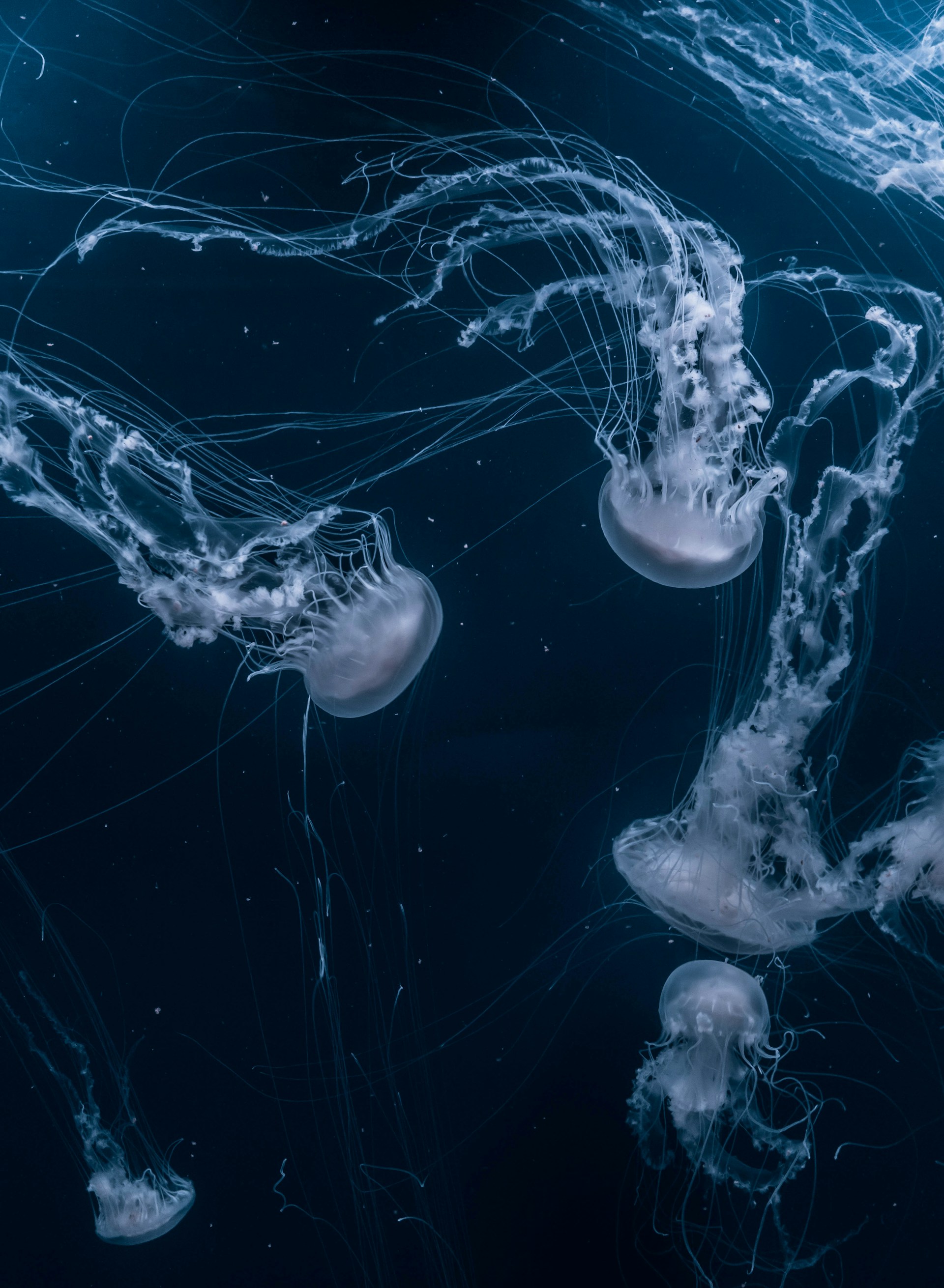
Aquarium Pula display, not a wild Rabac sighting. Species is not assigned from this photograph.
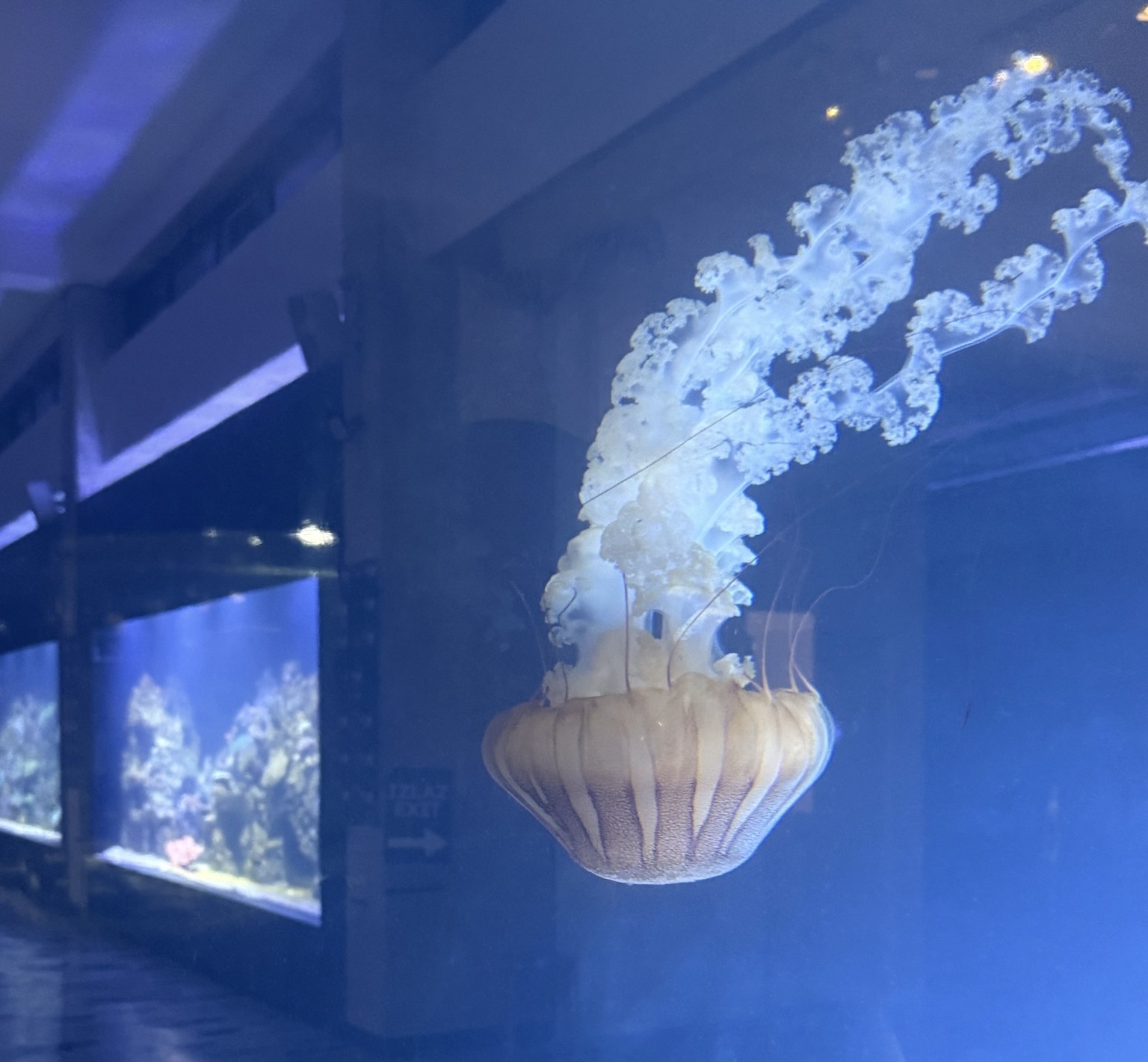
A separate Aquarium Pula display; aquarium collections include non-Adriatic species.
If curiosity survives the nerves, Aquarium Pula offers a setting in which to watch jellyfish without sharing their water. Its collection includes animals from outside the Adriatic as well as regional species. A dramatic aquarium jellyfish is not evidence that the same species lives off Rabac. Read the exhibit label instead of assuming every tank represents the nearby sea.
The two photographs in this section show aquarium displays, not wild Rabac sightings. That difference is especially useful for children who have seen long tentacles in a picture and assumed they should expect them on every swim. A display can turn the subject from an unexplained fear into an animal with a name, habitat and role.
Use our Aquarium Pula visitor guide to plan the wider visit, and check the attraction’s official information for current opening arrangements. An aquarium visit is an option, not an emergency response or a necessary expense after seeing one jellyfish.
A small beach plan beats a bag of remedies
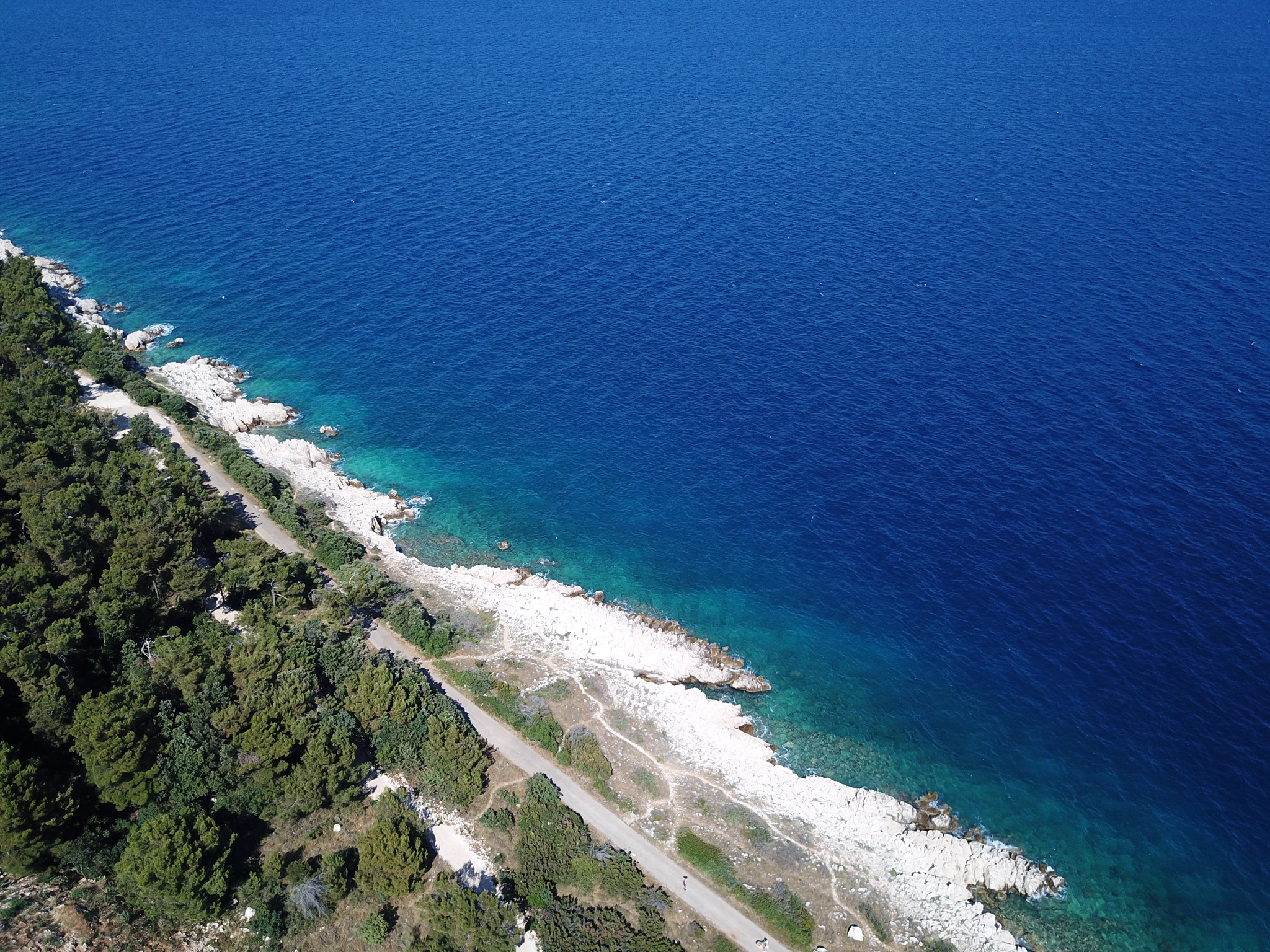
Before settling into a cove, know the exit and the route back to a recognisable access point. Keep a charged phone available, and agree who will stay with the children if an adult needs help. Those preparations are useful for ordinary beach problems too; they do not require treating a holiday as a rescue exercise.
The most valuable item is a clear next step. If animals are concentrated in the swimming area, take a break. If someone is stung, get out and seek help. If severe symptoms develop, call 112. Avoid packing kitchen chemicals “just in case” on the assumption that every sting has the same treatment.
For an anxious swimmer, decide on an easy alternative in advance: a shore-side pause, a walk, or trying the beach again after checking conditions. Having another enjoyable choice removes the pressure to enter water you are uncomfortable with. Staying calm is not the same as forcing yourself to swim.
Frequently Asked Questions
Are there jellyfish in Rabac every day?
Regional occurrence does not mean constant presence at every beach. No current beach-level monitoring series was verified for this article. Ask locally and check the area where you intend to swim; do not turn a sighting elsewhere into a daily Rabac forecast.
Is September guaranteed to be jellyfish-free?
No. Choose September for the holiday conditions that suit you, not a zero-jellyfish promise. Different species have different patterns, and local conditions still need checking.
Do water shoes stop jellyfish stings?
They cover your feet, not the rest of your exposed skin. They are useful on pebbles but are not a reason to swim through jellyfish or ignore a warning.
Should I pour vinegar on a sting?
Not as a blanket rule. The appropriate treatment is species-dependent. Start with the seawater-based guidance above, seek trained help and follow professional instructions rather than borrowing a remedy from another region.
Does seeing one mean the beach day is ruined?
No. It means you have information to act on. A pause, a different activity or another beach check can still make a good day. Do not promise yourself a swim regardless of the conditions.
Keep the sea in perspective
Rabac does not need either a jellyfish scare story or a claim that nature comes with guarantees. Look before you swim, give jellyfish space and ask for local advice. Learn the first steps for a sting and recognise when urgent help is needed. Those habits leave room for both sensible caution and enjoyment.
You do not need to become a marine biologist before entering the water. You need a clear way to assess the moment and permission to change the plan. That is a calmer, more useful form of confidence than pretending there is nothing to notice.