
Rovinj from Stone Alleys to Sunset: A One-Day Walking Route
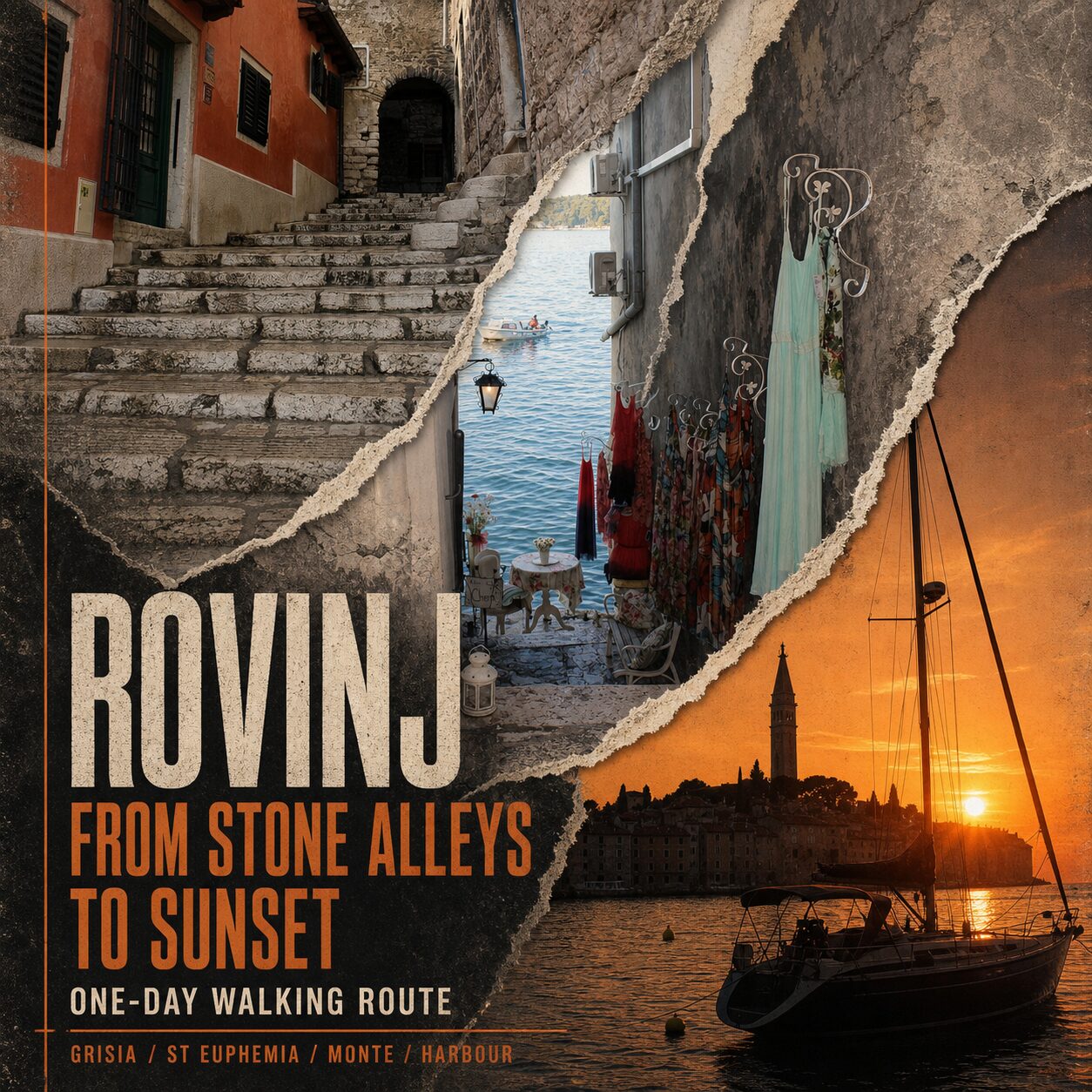
Rovinj is often reduced to one photograph: pastel houses pressed against the Adriatic, with the bell tower of St Euphemia above them. The photograph is deserved. The mistake is treating it as the destination rather than the opening scene.
The best way to understand Rovinj is to walk through its changes of scale. Begin beside the harbour, pass under Balbi’s Arch, climb streets polished by centuries of footsteps, reach the church plateau, descend through passages that end directly at the sea, and finish where the old town becomes a dark silhouette against sunset. The route is compact on a map, but it feels larger because every few minutes the town changes its light, texture and horizon.
This is a practical one-day route for travellers who want the famous views without spending the entire visit chasing them. Allow three to five hours for the core walk, or most of a day if you add a swim, a long lunch, the bell tower or a museum. There are no restaurant rankings or fixed prices here: opening hours and admission conditions can change, so check them directly for your 2026 visit.
Key Takeaways

Walk It as a Loop
Climb through Grisia, then descend by smaller western lanes. Repeating the same street misses half of Rovinj’s character.

Give the Route Room
The core works in three to five hours, but a swim, tower climb or slow meal can easily turn it into a full day.

Look Beyond the Skyline
The memorable details are at eye level: worn limestone, laundry, workshops, arches, shutters and tiny passages to the water.

Treat Monte as a Swim Stop
The rocks below the old town offer dramatic sea access, but little shade and uneven footing. Water shoes help.

Save the West Side for Late Light
Rovinj’s final act happens where the lanes and waterfront face the setting sun. Do not spend golden hour rushing back to the car.
The Route at a Glance
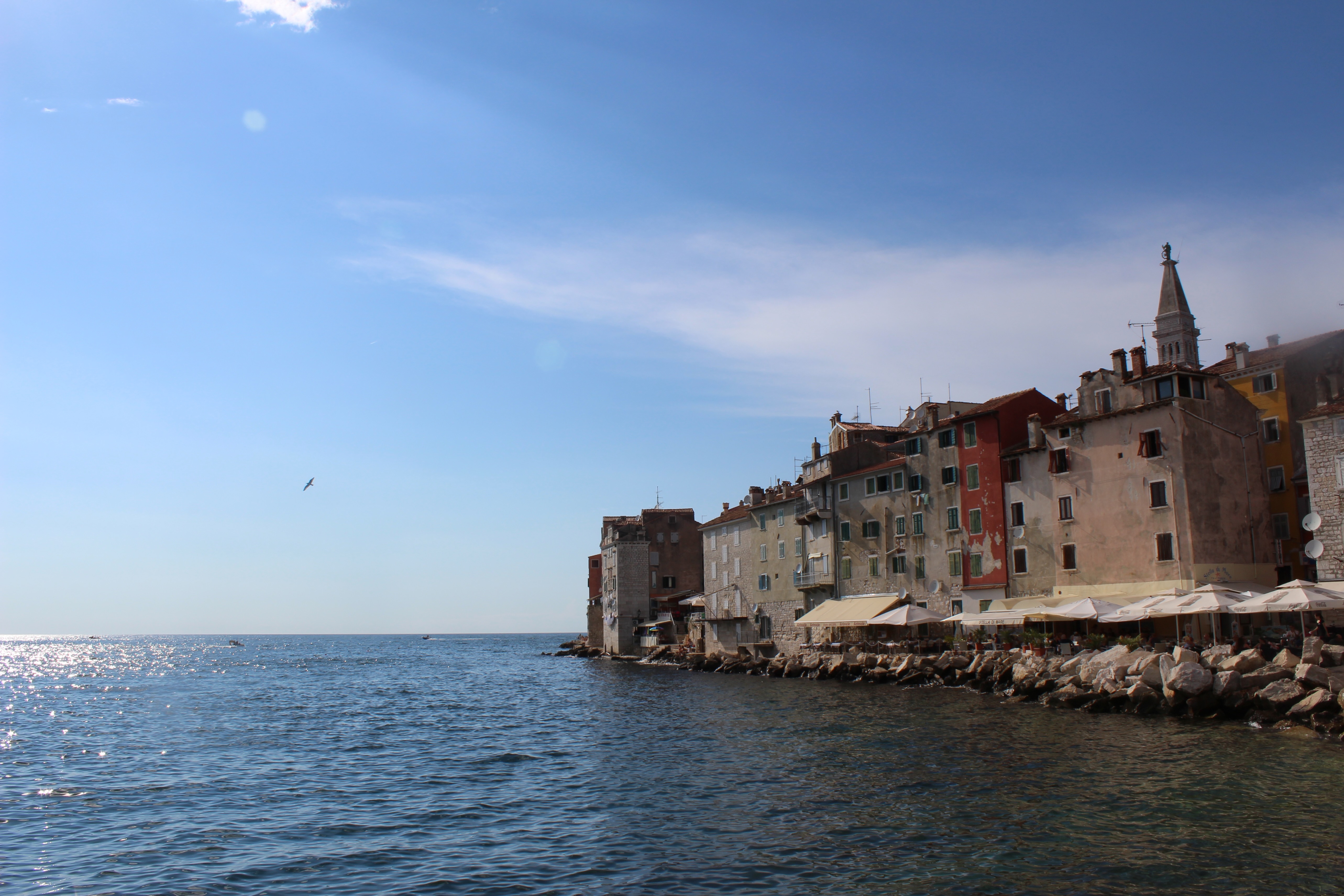
Begin around Trg maršala Tita, where the harbour meets the historic core. The old town is pedestrian territory, so think of the parked car as something you will not need again until the walk is finished. In busy periods, allow extra time to park outside the core and approach on foot.
| Stage | Where | What to notice | Suggested time |
|---|---|---|---|
| 1 | Main square and Balbi’s Arch | Harbour orientation, town clock, transition into the old core | 20–30 min |
| 2 | Grisia and side lanes | Worn limestone, studios, steep steps and framed sea views | 45–75 min |
| 3 | St Euphemia plateau | Baroque church, 60-metre tower and island views | 30–60 min |
| 4 | Western lanes and Monte rocks | Sea-level passages, cliffs, bathing places and changing light | 45–90 min |
| 5 | Harbour and sunset edge | Boats, skyline silhouette and the final westward glow | 45–75 min |
The times are deliberately generous. They include pauses to look, photograph and choose a side street. A fast walker can cover the distance sooner, but speed removes the thing that makes Rovinj special: the small visual surprises between named sights.
1. Start Where the Harbour Becomes the Old Town
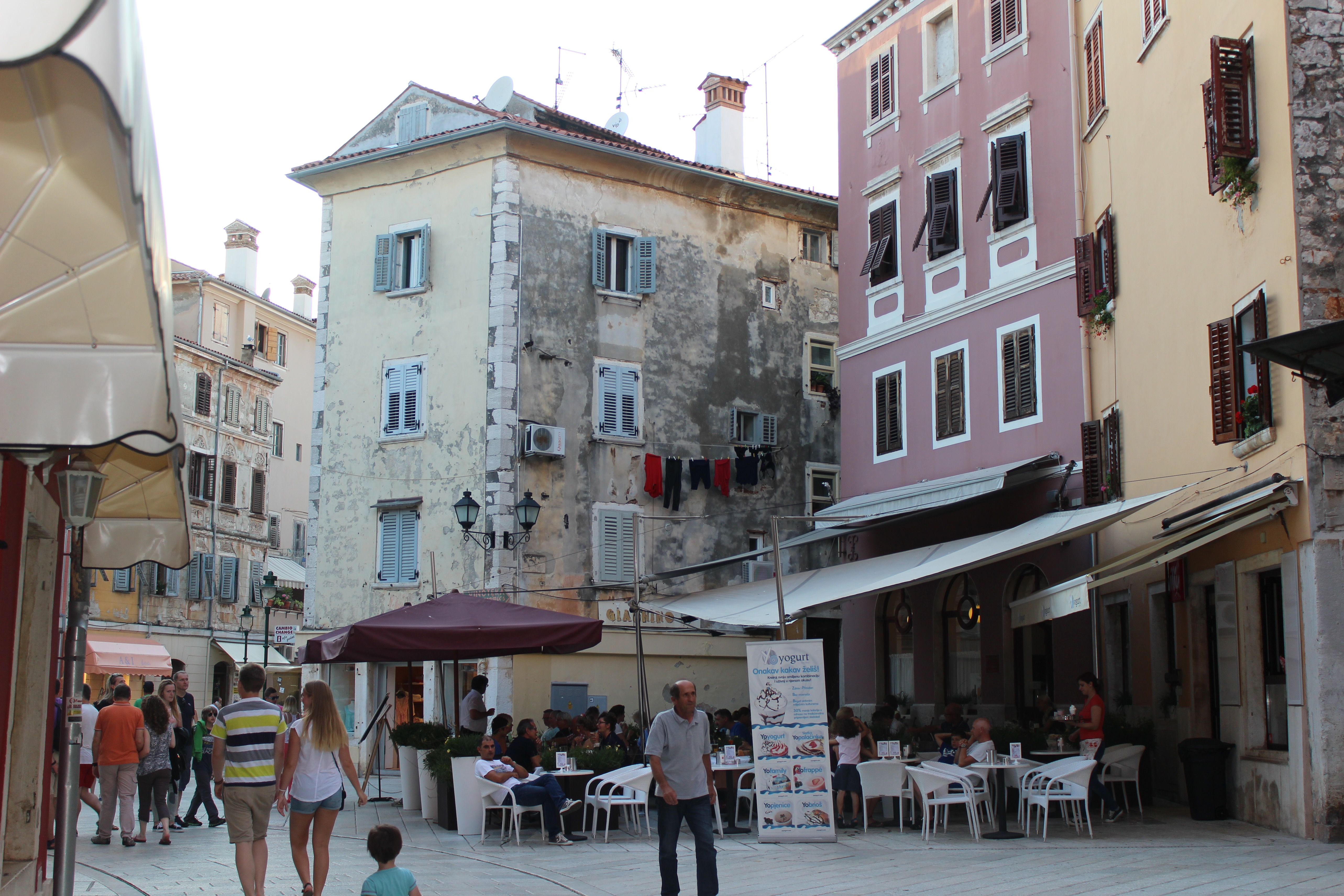
Take a few minutes to orient yourself before entering the lanes. From the waterfront, the church tower gives you the logic of the route: you will climb toward it, pass over the crown of the peninsula, then return along the sea-facing side. Rovinj’s historic nucleus developed on a small island that was joined to the mainland when the channel was filled in 1763. The town still feels water-bound because the sea remains visible at the ends of so many streets.
Balbi’s Arch stands where an older outer gate once controlled access to the fortified town. The present Baroque arch dates from the seventeenth century. Do not treat it only as a checkpoint for a photograph. It marks a real change in urban texture: the space narrows, the ground begins to rise and the façades lean closer together.
This is also the best place to make a simple decision. If you want the classic route, take Grisia uphill. If the street is very crowded, enter by a parallel lane and cross back later. Rovinj’s lanes reconnect frequently; getting slightly lost is useful as long as you continue generally upward.
2. Climb Grisia, but Keep Leaving It
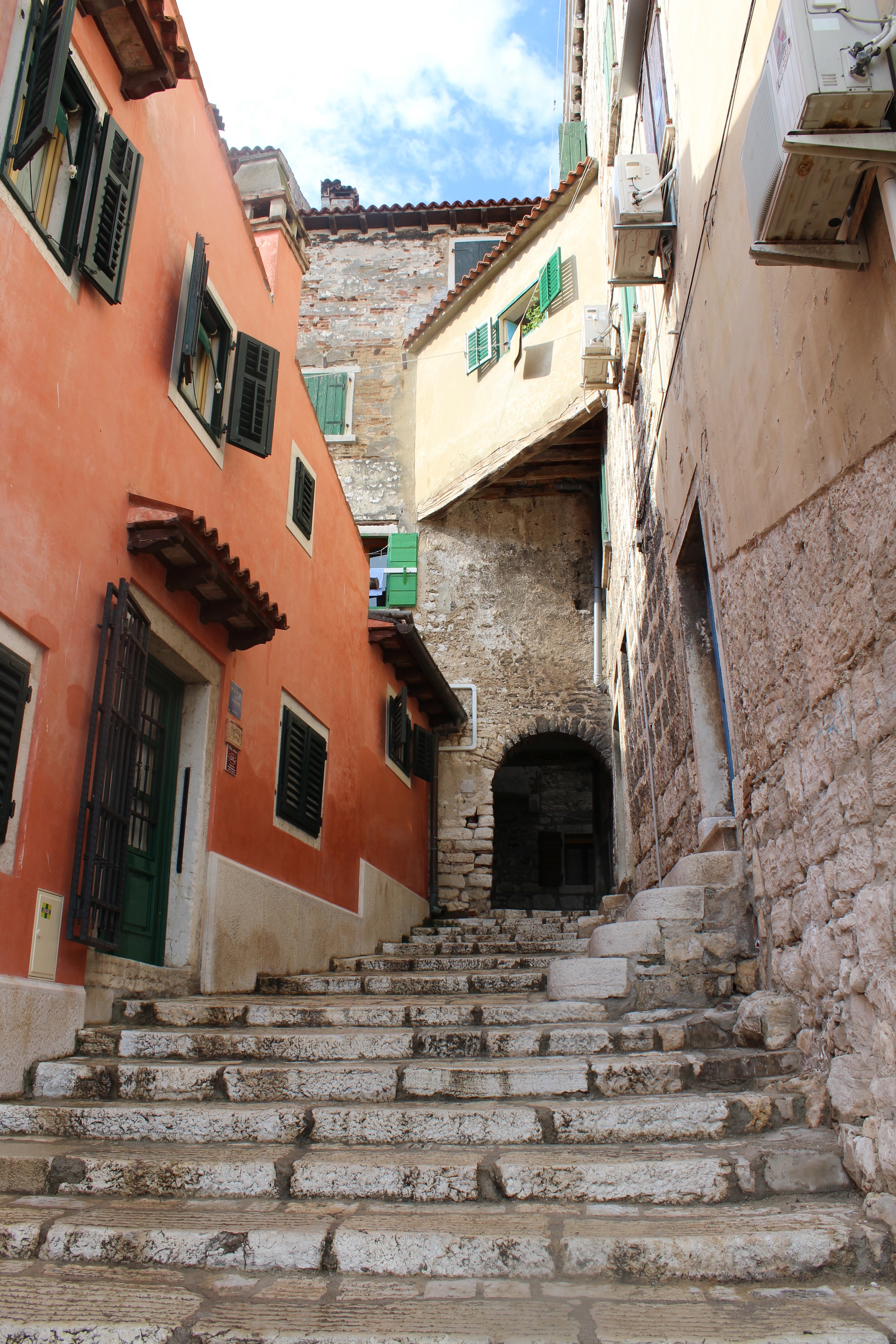
Grisia is the old town’s best-known climbing street. It connects the lower square with St Euphemia and carries a long association with studios and open-air art. The limestone underfoot is part of the experience: pale, uneven and polished smooth in places. Shoes with grip are more useful than elegant sandals, especially after rain.
The street deserves attention, but the better strategy is to keep stepping off it. Look into the narrow passages on either side. Some end at a doorway; others open suddenly to blue water, a laundry line or a tiny workshop. These departures break the climb into manageable pieces and reveal how densely the peninsula was built.
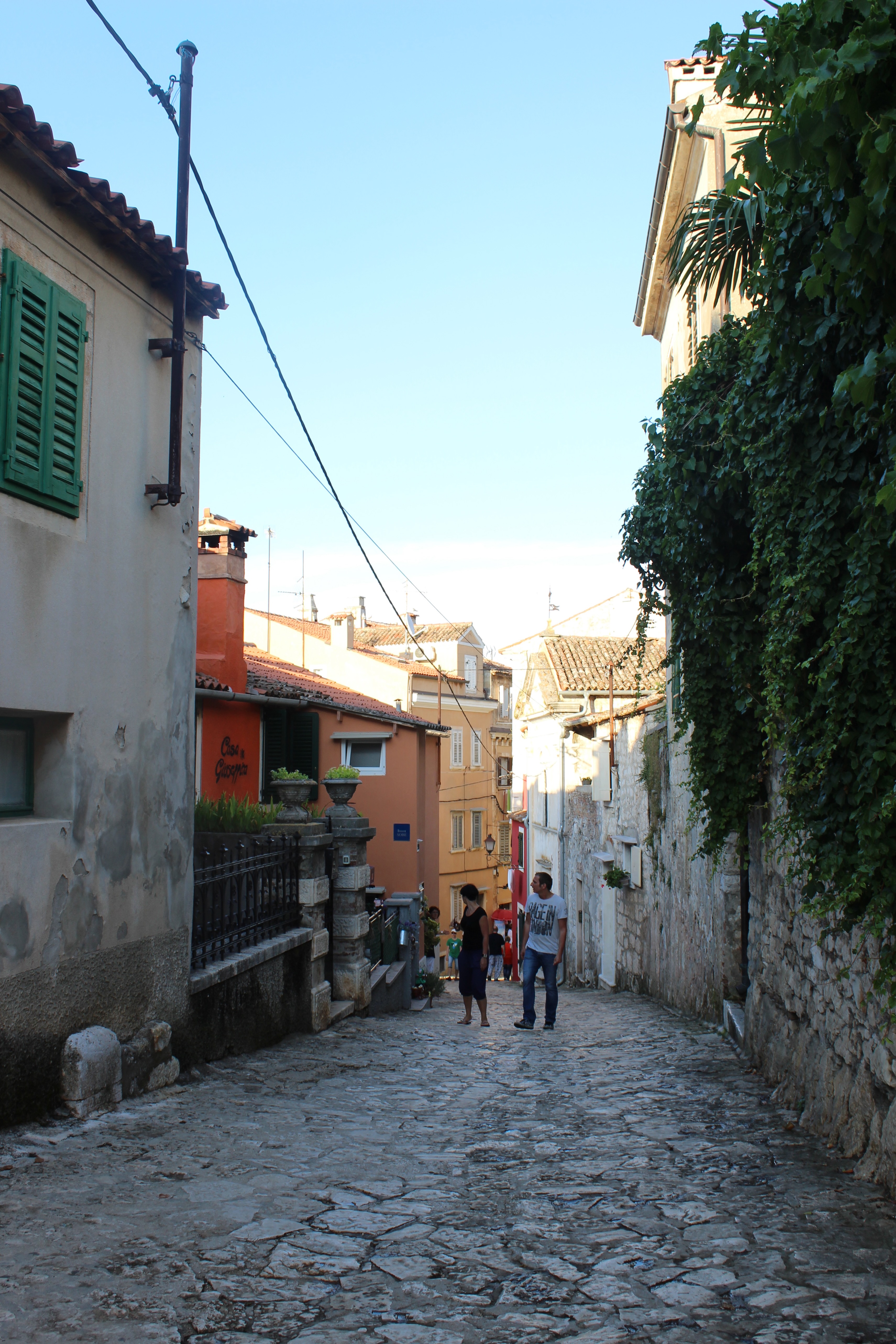
Photographically, the most useful light is not always full sun. Bright midday light can bleach the stone and create hard contrasts. A lane in open shade often shows colour and texture more clearly. Frame upward when the street is busy, wait beside an arch for people to pass, and use the sea at the end of a passage as a small area of brightness rather than the entire subject.
If you enjoy architectural details, look for the practical adaptations of a town built with little space: external stairs, bridges between structures, shutters at different heights, tiny terraces and doors fitted into old stone. Rovinj’s beauty is not uniform preservation. It is the visible negotiation between historic fabric and everyday life.
3. Follow the Passages That End at the Sea
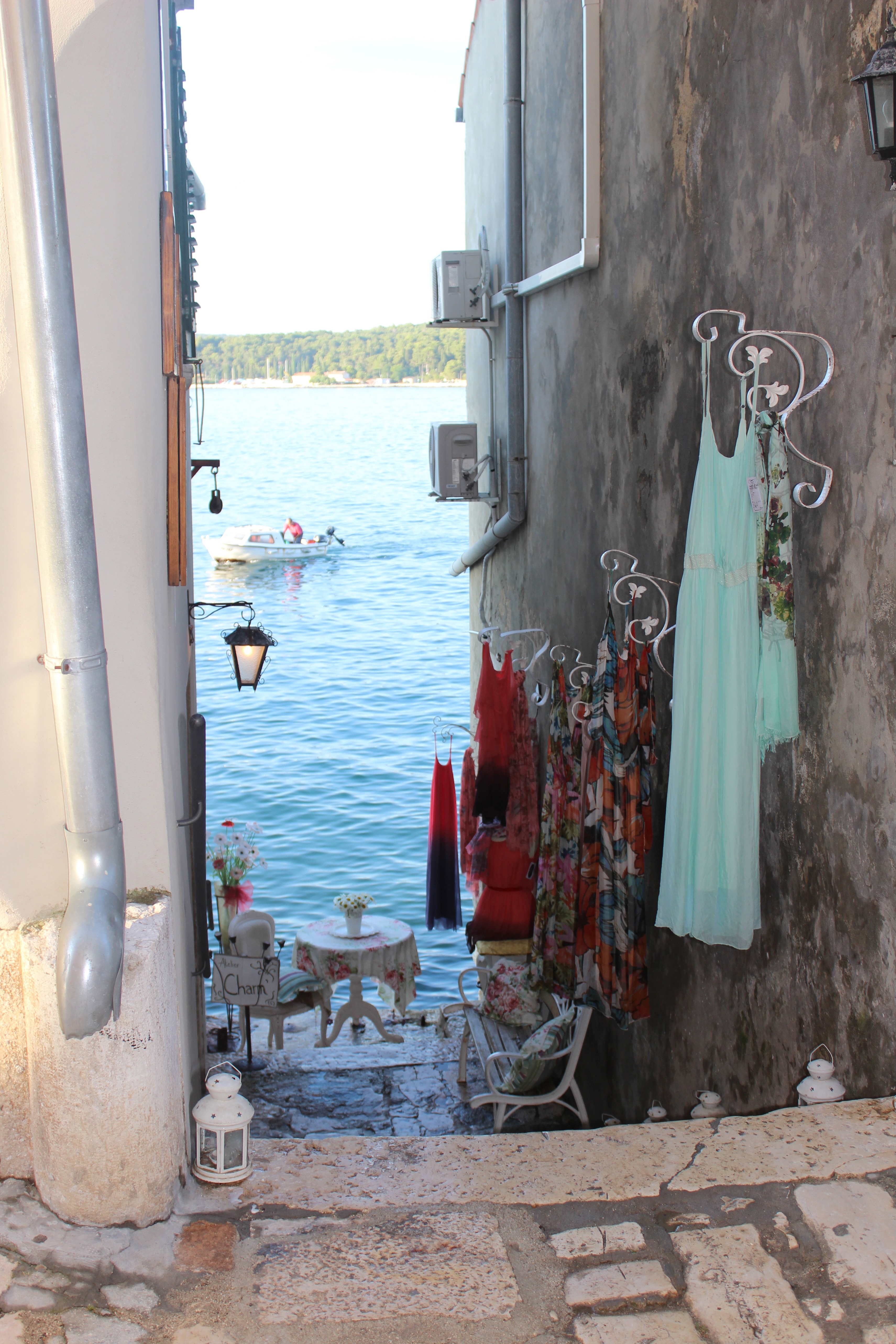
Several of the old town’s most memorable spaces are not formal sights at all. They are narrow slots between houses where the street appears to drop into the Adriatic. Some contain a gallery, a small display or a few chairs; others are purely functional routes to the water. Their power comes from compression: dark stone walls create a frame, and the sea becomes impossibly bright beyond them.
Respect these spaces as lived places. Do not block a doorway, move objects for a photograph or assume every staircase is public. If a passage is clearly part of a business, enter only when it is open and welcome. If it feels residential, take the view from the street and continue.
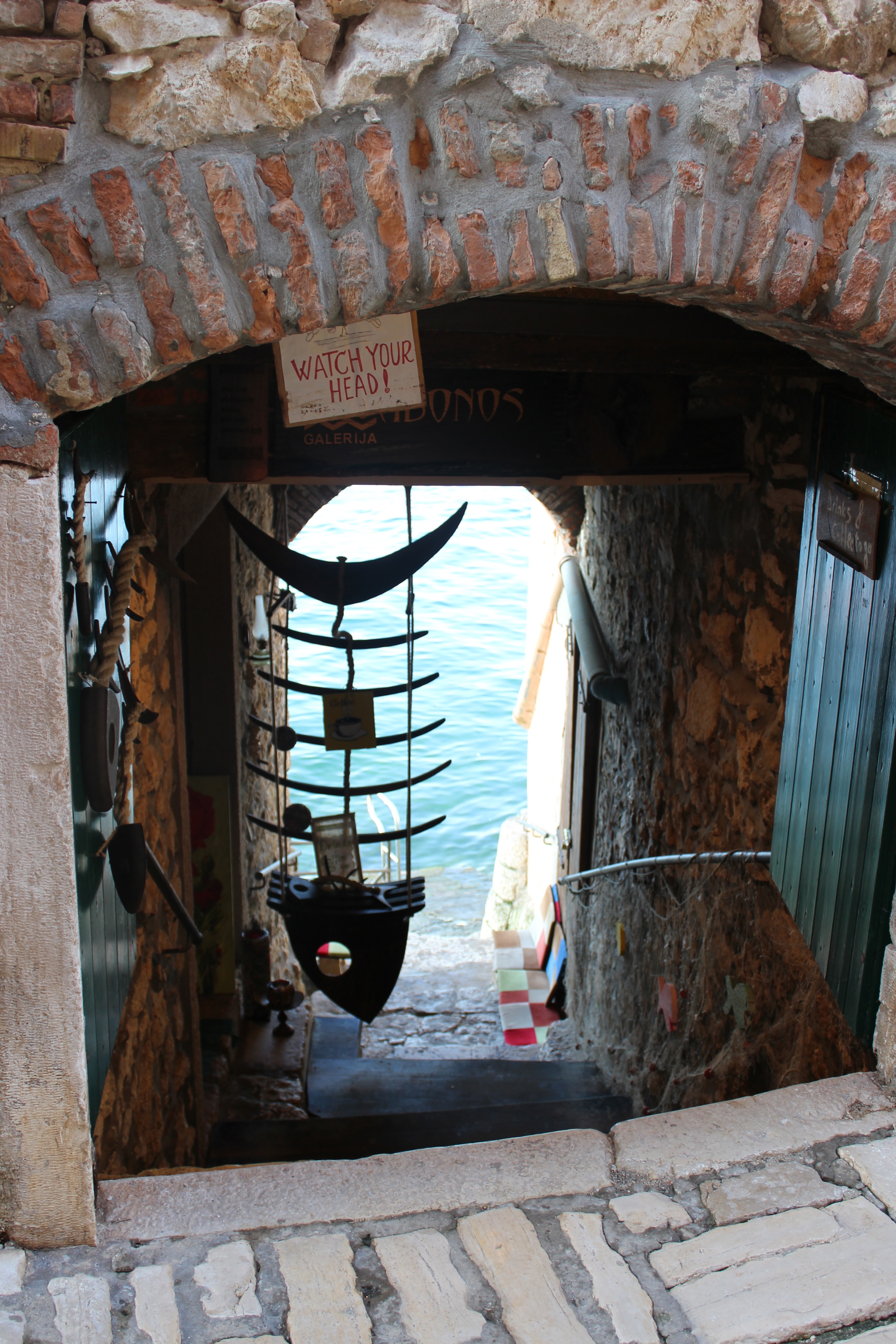
These lanes explain why the route should not be reduced to a list of monuments. The old town once occupied an island, and its relationship with water remains physical. Houses meet rock; stairs meet small landing places; boats pass within view of laundry and kitchen windows. That intimacy is what separates Rovinj from a town whose historic centre sits safely behind a promenade.
4. Reach St Euphemia, Then Stop Looking at the Clock
The Church of St Euphemia dominates the peninsula from almost every approach. The present church was built in the eighteenth century, and its Venetian-Baroque façade completed later. Above it, the approximately 60-metre bell tower carries a copper statue of the town’s patron saint. The statue turns on a spindle and indicates the wind direction.
Even if you do not enter the church or climb the tower, the plateau is worth the ascent. The view rearranges the walk you have just completed: lanes disappear below roofs, islands fill the horizon and the harbour looks close enough to reach in minutes. It is also one of the few broad spaces in the old core, so pause here rather than immediately beginning the descent.
If the tower is open and conditions suit you, check current access details at the entrance. The stairs are steep and irregular; people uncomfortable with heights or enclosed climbs may prefer the outdoor views. Dress respectfully if entering the church, and avoid scheduling the visit so tightly that a service or changed opening time ruins the day.
The plateau can be exposed in heat and wind. In summer, water and sun protection matter even on this compact route. In shoulder seasons, carry a layer: the breeze at the top can feel very different from the sheltered lanes below.
5. Descend Toward Monte for Rovinj at Sea Level
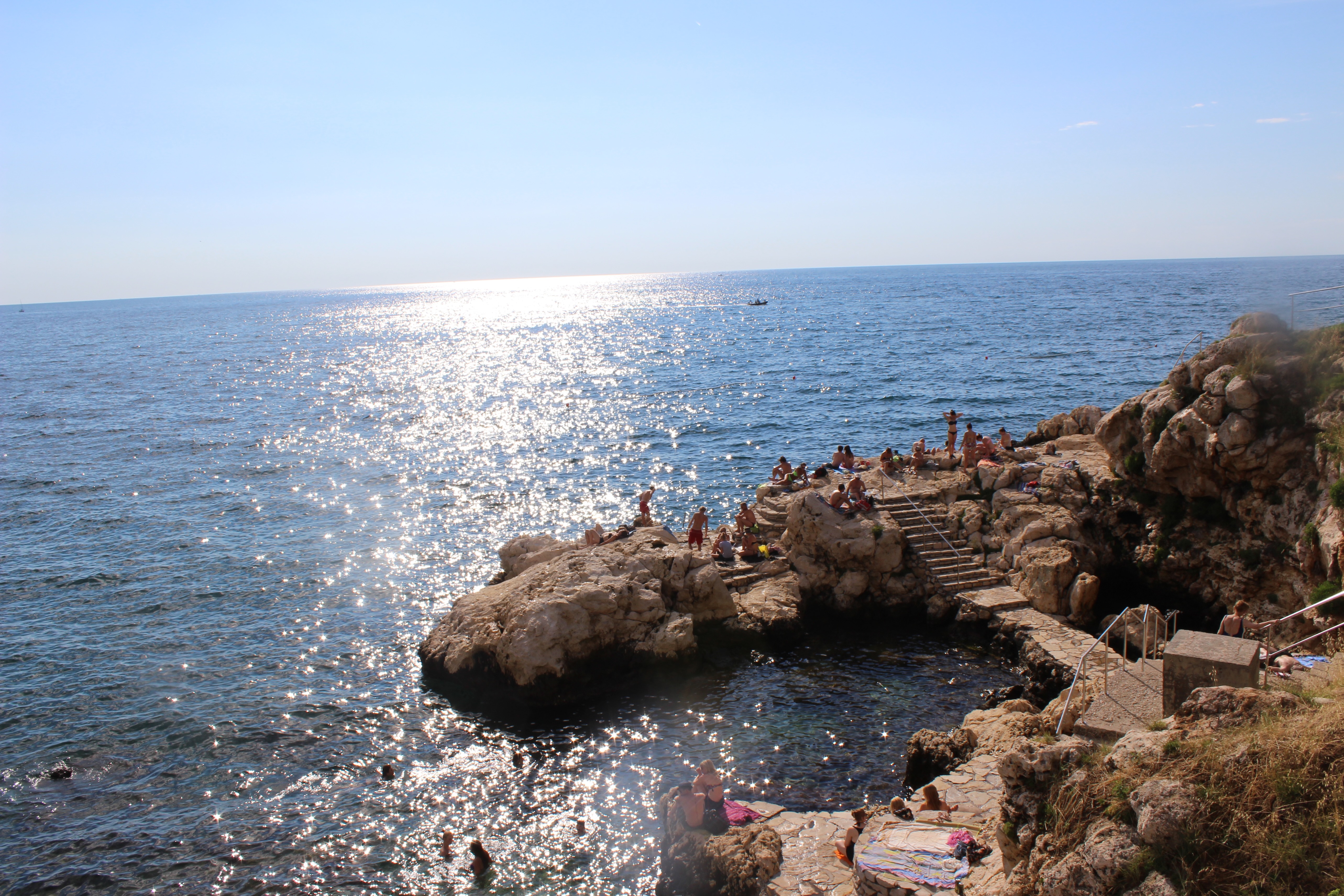
Leave the church by the western side rather than retracing Grisia. The descent is a sequence of quieter lanes, small lookouts and glimpses down to the rocks. Around the base of the peninsula, the Monte bathing area runs for roughly 150 metres. Local names divide it into several sections, including Baluota or Balota, Lanterna and the Gugulijera areas.
This is not a conventional beach with a soft approach, broad shade and a long strip of facilities. It is rocky sea access beside the old town. Some places are more suitable for a careful entry; others appeal to confident swimmers who climb down or dive from the rocks. Inspect the exact access point before committing, and never copy a local jump without checking depth and conditions for yourself.
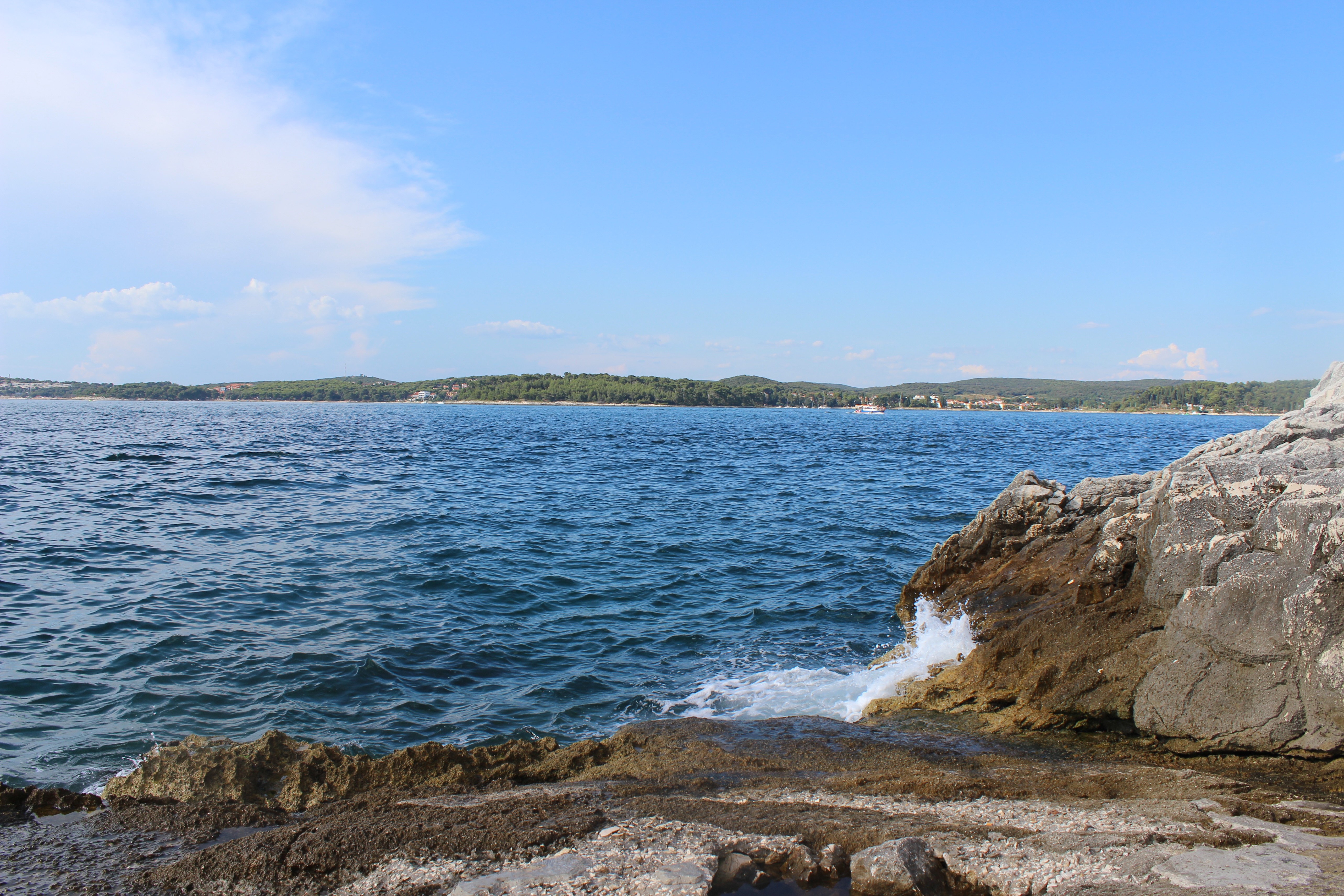
Bring water shoes if you plan to swim. The rock can be sharp, wet surfaces become slippery and natural shade is limited. Keep valuables minimal, watch the sea state and choose an exit before entering. Families with small children should look for the gentler sections identified locally rather than assuming the first ladder or ledge is suitable.
Even without swimming, this side of the peninsula is essential. From sea level, the old town stops looking like a pretty collection of façades and becomes a vertical structure built directly on rock. Waves, walls and windows occupy the same frame. Give yourself time to hear the water rather than treating Monte as another photo stop.
6. Let the Afternoon Open Out Along the Water
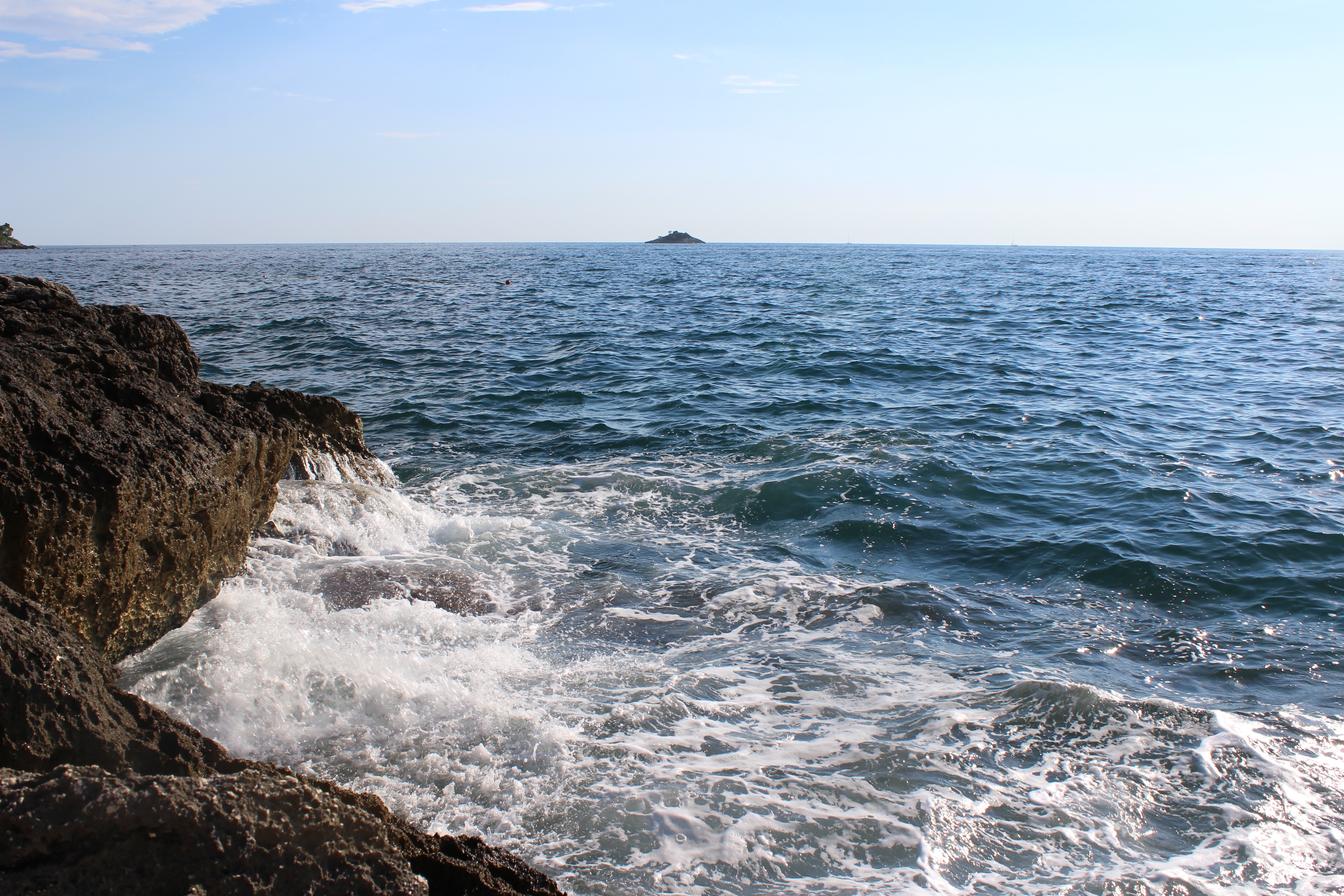
After the enclosed lanes and rocky edge, return gradually toward the harbour. This is the right point for a meal, coffee or simply a long bench pause. You have already completed the historically important part of the route; the remaining hours should be shaped by light rather than by a checklist.
If you want an additional cultural stop, consider the Batana House Eco-Museum, which interprets Rovinj’s traditional flat-bottomed wooden boat and the community built around it. Its safeguarding work is recognised in UNESCO’s Register of Good Safeguarding Practices. Check the day’s opening information before restructuring the route around it.
A boat trip can offer the reverse view of the walk: cliffs, walls and the bell tower read as one continuous skyline from the water. Choose it only if timing, weather and duration still leave you unhurried for sunset. The town is most rewarding when land and sea views complement one another, not when an overfilled schedule turns the return into a race.
For a longer green extension, Golden Cape Forest Park lies south of the centre. It is better treated as a separate half-day or a second-day route than squeezed into this old-town walk. If your wider Istria itinerary includes the east coast too, our guide to why Labin and Rabac belong on every Istria itinerary makes a useful companion. Families planning another coastal day can also use our published Aquarium Pula visitor guide.
7. Build the End of the Walk Around Sunset
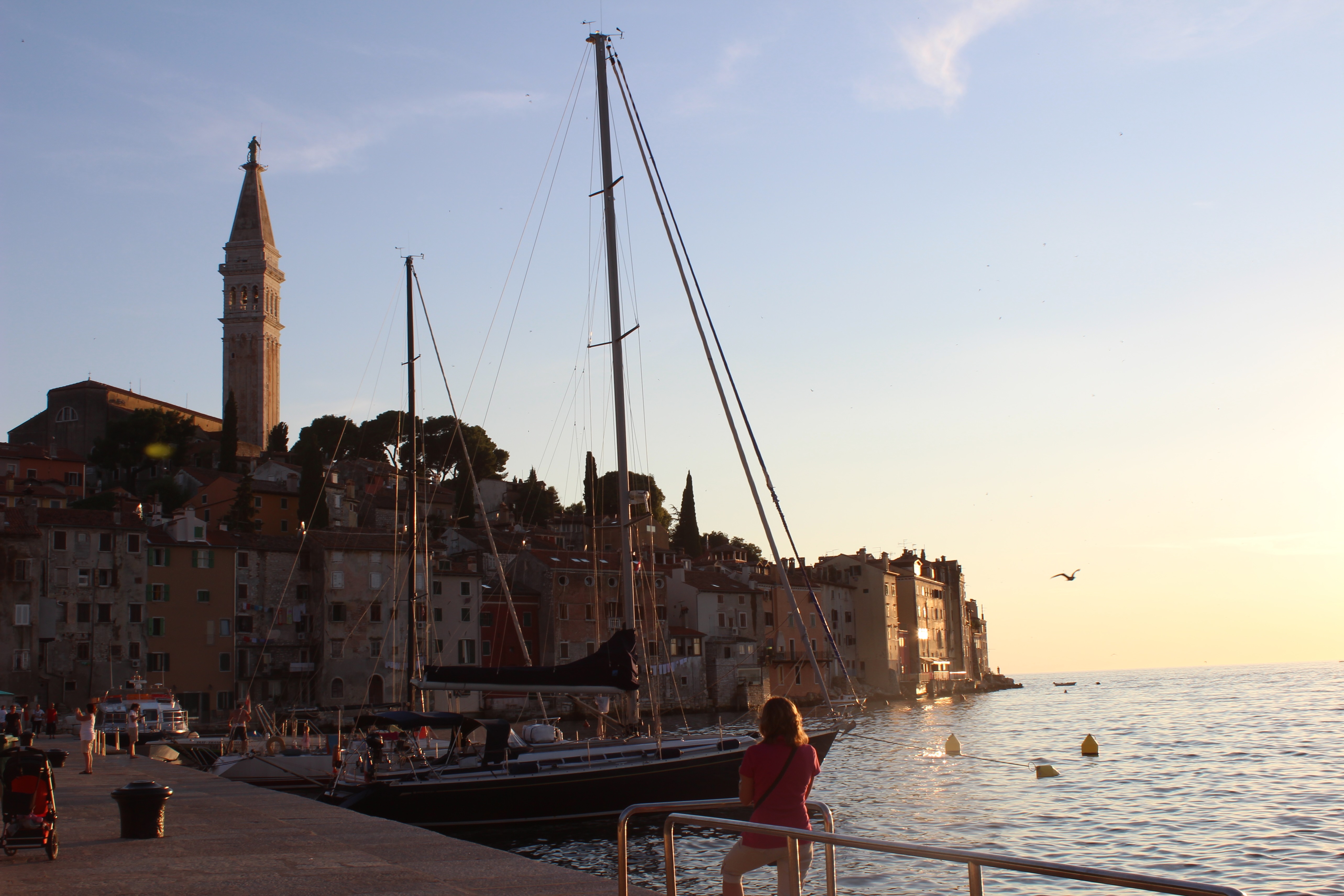
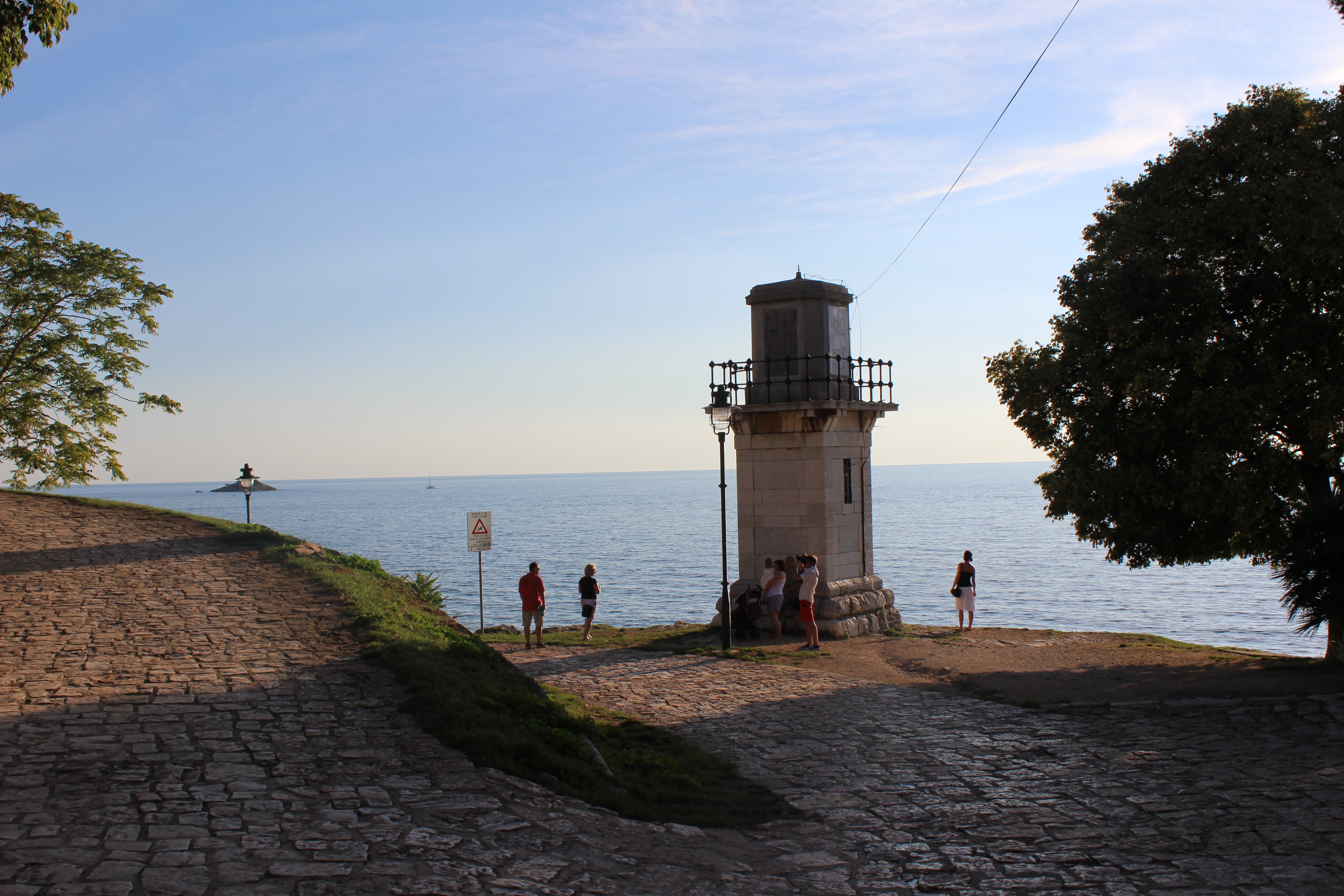
Do not choose a single sunset point too early. Weather, wind and the season change where the final light feels strongest. Begin by watching the bell tower and boats from the harbour, then follow the west-facing edge as the sun lowers. The Francesca Bodi Ascent, the Gnot Brothers Promenade, the Monte rocks and the larger pier are all recognised local sunset locations.
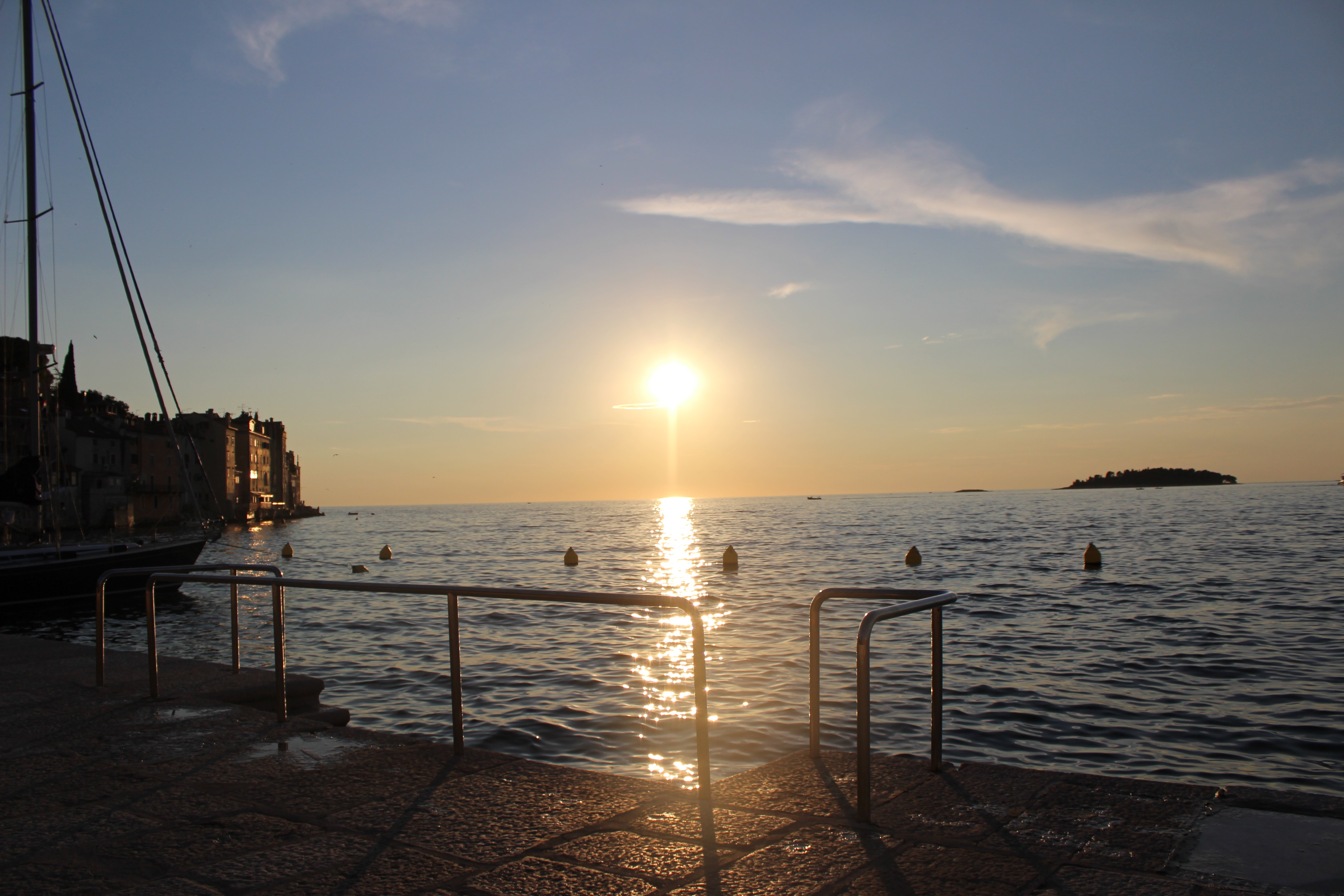
Arrive before the colour becomes dramatic. The best sequence often begins with warm light on walls and masts, continues through the orange horizon, and ends when the old town turns blue and interior lamps appear. If you leave immediately after the sun touches the sea, you miss the part when Rovinj’s architecture becomes most atmospheric.
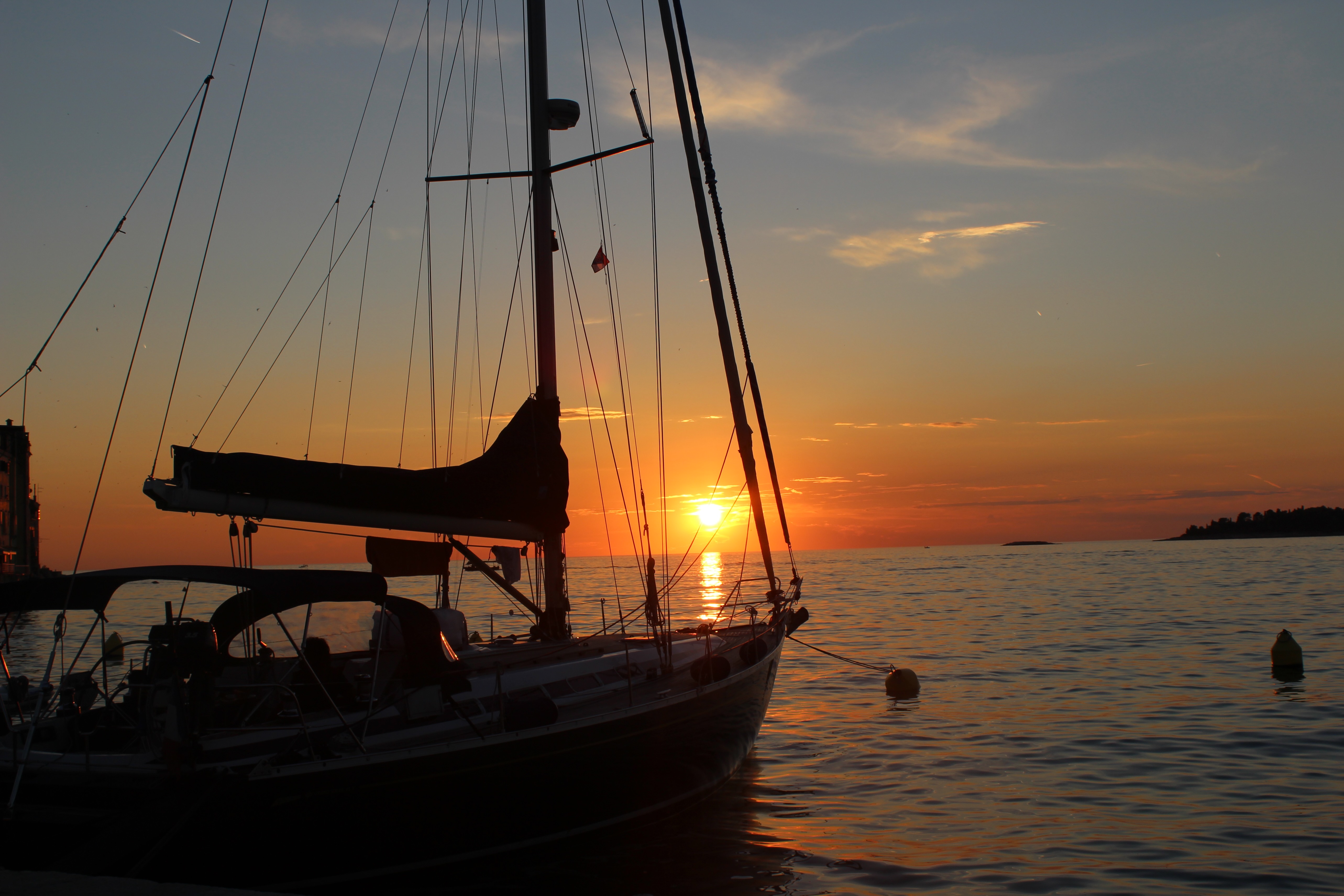
For photographs, expose for the brightest part of the sky and let boats or buildings become silhouettes. Include one recognisable element—the tower, a mast, the waterfront roofline—rather than filling every frame with an empty horizon. Then put the camera away for a few minutes. Sunset is the conclusion of the route, not only its most shareable asset.
Practical Notes for a 2026 Visit
Rovinj’s old town is made for walking but not for every kind of footwear or mobility. Expect slopes, steps, polished stone and occasional narrow passages. Travellers with limited mobility can still enjoy the harbour, lower squares and many waterfront views, but the climb to St Euphemia requires more planning.
In summer, begin earlier, retreat for the strongest heat and return for late light. In spring and autumn, the route can be walked more continuously, but opening schedules may be shorter. Rain makes the limestone especially slippery. Strong wind can affect exposed viewpoints, sea access and boat departures.
Do not rely on a precise parking promise from an old article. Regulations, zones and availability can change. Navigate to an official public car park outside the pedestrian core, check the posted 2026 conditions, and accept a short approach walk. The old town itself is car-free.
| Bring | Why it matters | When it is essential |
|---|---|---|
| Shoes with grip | Smooth limestone and steep lanes can be slippery | After rain and on the Grisia climb |
| Water and sun protection | The church plateau and Monte rocks have exposed sections | Warm-season daytime walks |
| Water shoes | They make sharp, wet rock easier to manage | If swimming at Monte |
| A light layer | Sea breeze increases after sunset and at the plateau | Spring, autumn and windy evenings |
Frequently Asked Questions
Can you see Rovinj old town in half a day?
Yes. Three to five hours is enough for the harbour, Grisia, St Euphemia, the western lanes and a short Monte stop. Add more time for swimming, a museum, the bell tower or a long meal.
What is the best time to begin the walk?
In warm months, start in the morning or later in the afternoon. A late start is especially rewarding if you can remain through sunset, but it may not suit attractions with earlier closing times.
Is the Rovinj old town walk suitable for children?
Yes for children comfortable with slopes and steps. Use caution on polished stone and at the rocky sea edge. Choose gentler, clearly accessible bathing sections rather than treating every ledge as a beach.
Can I do the route in flip-flops?
You can, but shoes with grip are safer and more comfortable. The limestone is uneven, some lanes are steep and wet stone can become very slippery.
Do I need to book anything in advance?
The walk itself requires no booking. Check current 2026 opening information for the church tower, museums and boat trips, and reserve any activity that would be disappointing to miss in a busy period.
Where is the best Rovinj sunset?
There is no single answer. Monte and the west-facing promenades feel close to the sea, while the harbour and pier combine sunset with the town silhouette. Let the day’s clouds and wind decide.
Final Thoughts
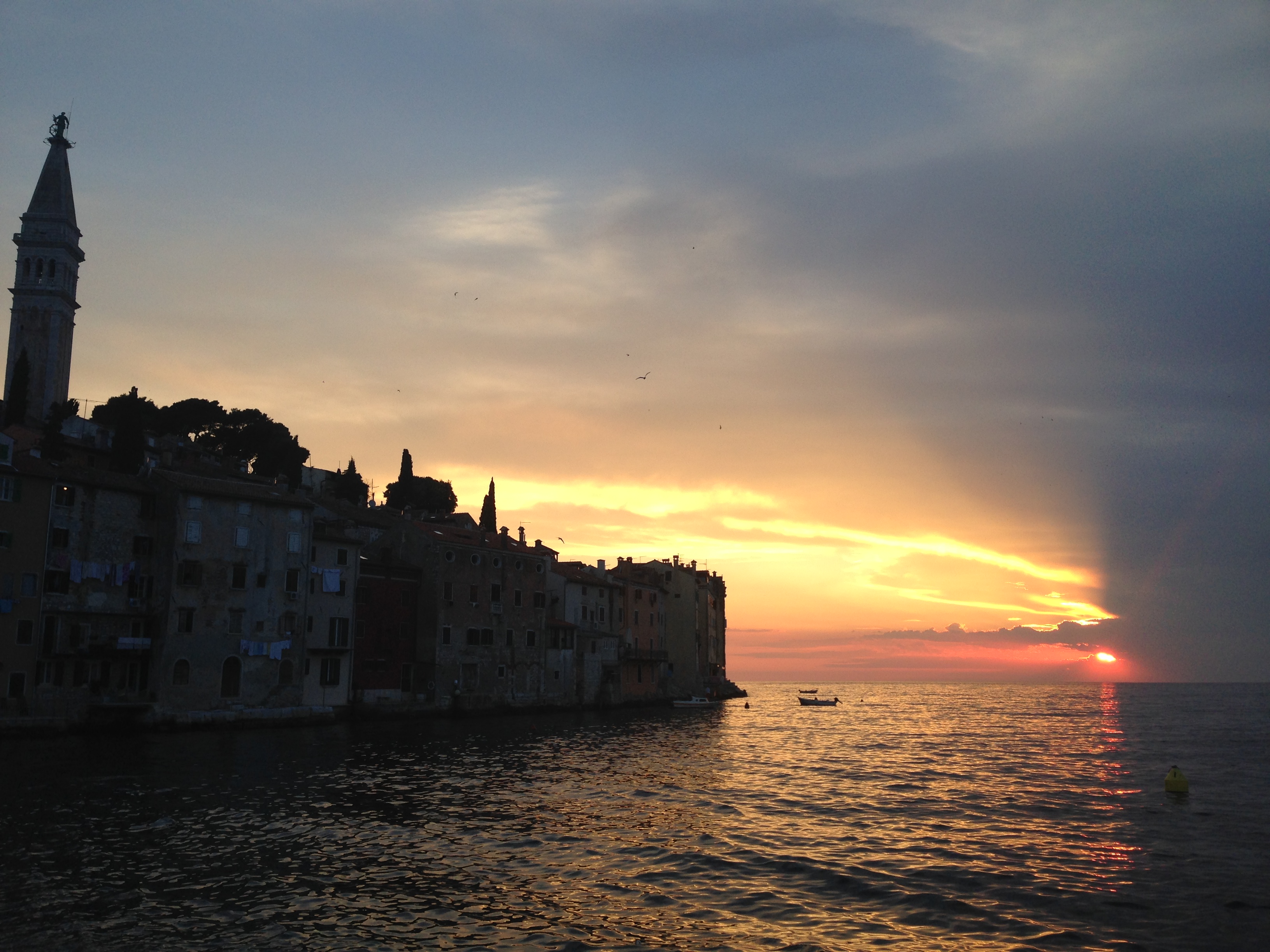
Rovinj earns its reputation, but not because every corner looks like the same postcard. Its real strength is sequence. A bright harbour narrows into shaded stone. A crowded climbing street opens into a private-looking passage. The church plateau releases the horizon, and the western rocks return the town to the sea from which it grew.
Walk upward with curiosity and downward by a different route. Swim only where the access suits you. Leave enough time for the light to change twice: once when the stone becomes warm, and again when the entire peninsula becomes a silhouette.
That is how Rovinj stops being a view you came to collect and becomes a day with a beginning, a middle and a memorable final frame.