
Why Directors Keep Choosing Labin: Light, Stone, and No Tourist Traps in the Frame
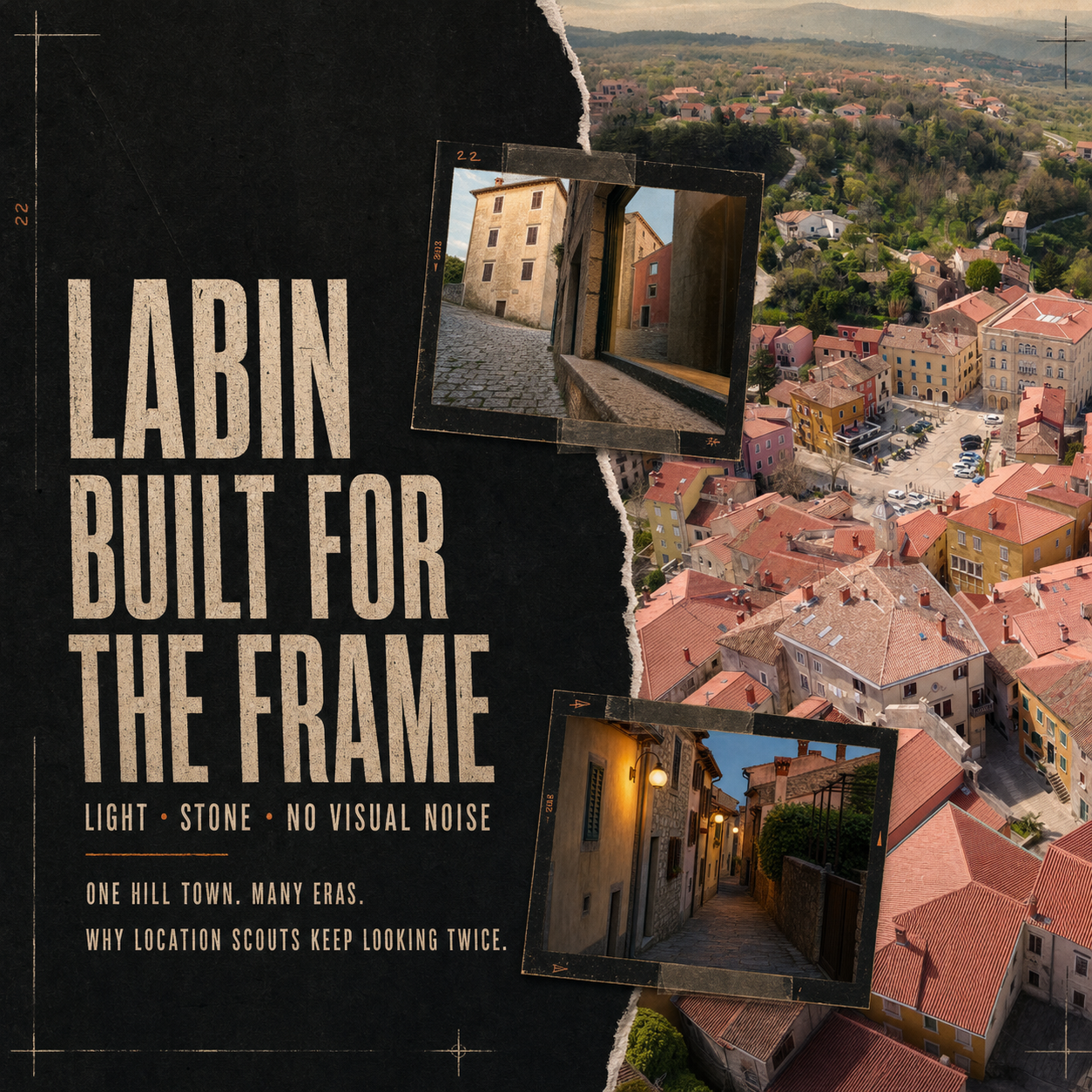
A stone arch frames an ochre wall. A lane climbs toward a Renaissance palace. Around the next corner, the same town opens onto the Kvarner Gulf and the long silhouette of Cres. On screen, these places do not have to play themselves. Labin has already stood in for southern Italy and Belarus, while earlier productions used its streets and industrial landscape to tell distinctly Istrian stories.
That range is the real reason film crews are interesting here. Labin is not a preserved façade with one fixed historical identity. It is a compact, lived town where Venetian, Renaissance, Baroque, Austro-Hungarian and mining-era layers sit within a short walk. A director can change the period, geography and emotional temperature simply by turning the camera.
This article is a visual reading of Labin rather than a claim to quote location scouts. The productions and filming locations are documented; the analysis of light, texture and framing comes from looking carefully at the town itself. For visitors, that distinction creates a better way to explore: not by hunting for a celebrity’s exact footprint, but by noticing what the camera notices.
Key Takeaways

One Town, Several Worlds
Labin’s hilltop panorama, stone lanes, coloured façades and mining heritage create radically different frames within a compact area.

Architecture Without One Date
Its visual layers can suggest the Adriatic, Central Europe or an undefined historical setting without a monumental set.

Less Visual Noise
Narrow pedestrian lanes often avoid the chains, giant signs and dense souvenir frontage that instantly date a frame.

Light Changes the Genre
Pale stone reflects daylight, arches hold deep shadow, and evening lamps turn the same route from romantic to suspenseful.

Walk Like a Location Scout
Move from Titov trg through the lanes to Fortica, then repeat part of the route near sunset to see the town change on camera.
Labin Has Been a Screen Location for More Than Fifty Years
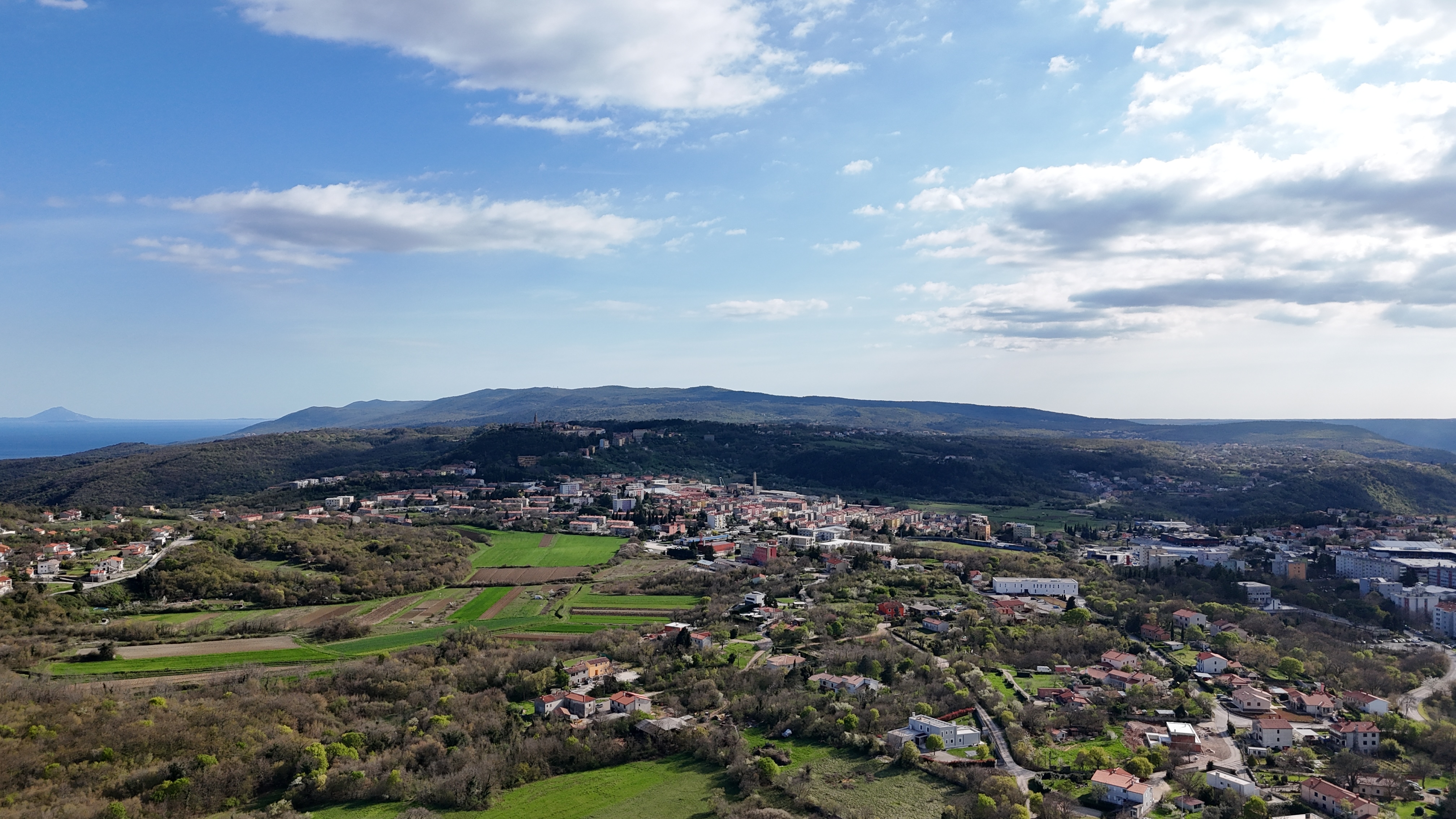
The wider view places the hilltop town, modern neighbourhoods and surrounding countryside in one frame.
The official Film Map of Istria records Labin among the locations for Franco Giraldi’s La rosa rossa in 1973. It lists Daniel Marušić’s television drama Istarska rapsodija in 1978 and Miroslav Mikuljan’s Crveni i crni in 1985 as productions filmed in Labin. Those titles place the town in a long regional screen history rather than presenting it as a discovery of the streaming era.
The modern example is more revealing because the disguise is so pronounced. The Croatian Audiovisual Centre’s Filming in Croatia database lists Labin among the locations for the 2024 series The Day of the Jackal, directed by Brian Kirk and starring Eddie Redmayne and Lashana Lynch. Sky’s own filming-location guide explains that Labin represented Belarus. In other words, an Adriatic hill town was selected not to advertise the Adriatic, but to become somewhere colder, tenser and politically distant.
In May 2024, local reporting documented another transformation. Streets in Labin Old Town were prepared for the British period romance Debutante, whose story is set in the nineteenth century; Labin represented southern Italy. The reported filming area included Giuseppina Martinuzzi Street and Ulica 1. Maja. Put the two recent examples together and the quality that matters becomes clear: the town is specific enough to feel real, yet visually flexible enough to stop insisting on only one identity.
That flexibility does not mean every doorway or scene can be matched precisely from public information. Productions redress streets, control angles and combine several Croatian locations into one fictional geography. A responsible film-location walk therefore treats Labin as the visible material of the story, not as a scavenger hunt built on unverified claims.
The Architecture Does Not Belong to a Single Date
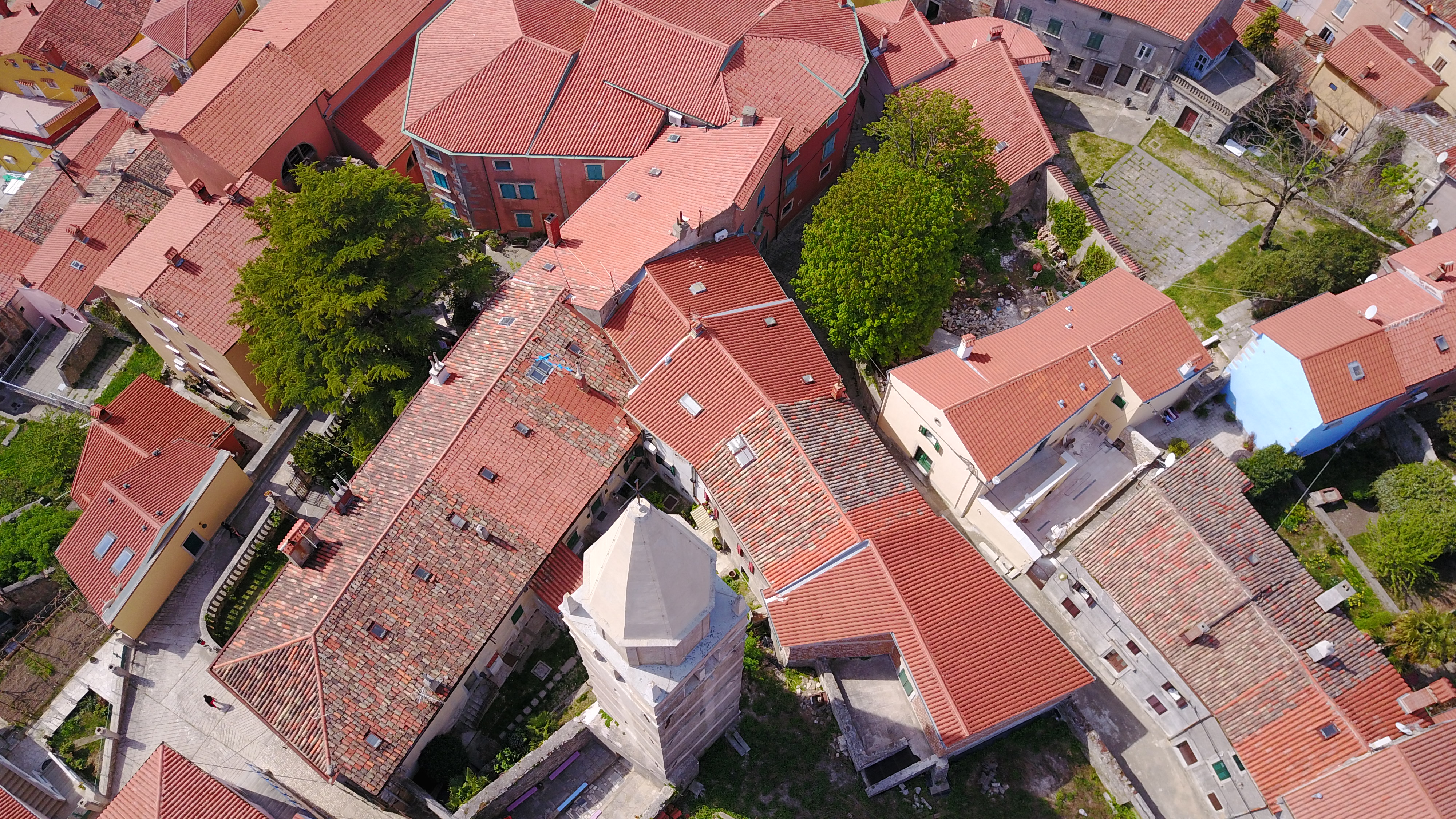
Seen from above, tiled roofs and narrow passages reveal the geometry hidden at street level.
Many beautiful towns are difficult screen doubles because their identity is too famous. One skyline, cathedral or postcard square announces the real place before an actor speaks. Labin works differently. Its strongest images are often medium views: a run of stone steps, a shuttered wall, an arched passage, a balcony, a sliver of coloured plaster. These details belong to the northern Adriatic, but they are not so globally overexposed that the audience immediately rejects another fictional location.
The official tourism board describes a medieval hill town enriched by cultural and architectural heritage, art ateliers and later layers of urban life. Around the historic core, noble palaces, churches, carved portals and modest houses do not form a perfectly uniform period set. For a production, that inconsistency can be useful. A tight frame can emphasise Renaissance proportion; a reverse angle can find rough stone and shadow; a wider shot can include tiled roofs and the coastal horizon.
The Battiala-Lazzarini Palace makes the point dramatically. Its red façade, pale stone details and ordered windows read as civic power. Yet a few metres away, the camera can enter a compressed lane where the walls are more anonymous and time is harder to identify. For a deeper account of the buildings and monuments behind these impressions, read our guide to Labin’s cultural and historical sites.
Labin also has a second visual vocabulary beyond the Old Town: coal-mining infrastructure, rationalist planning and the working landscape of Podlabin and the wider Labinština area. That contrast lets a crew move between aristocratic, domestic and industrial frames without leaving the region. Our story of Labin’s journey from coal to culture explains how mining history and contemporary art now share the same town.
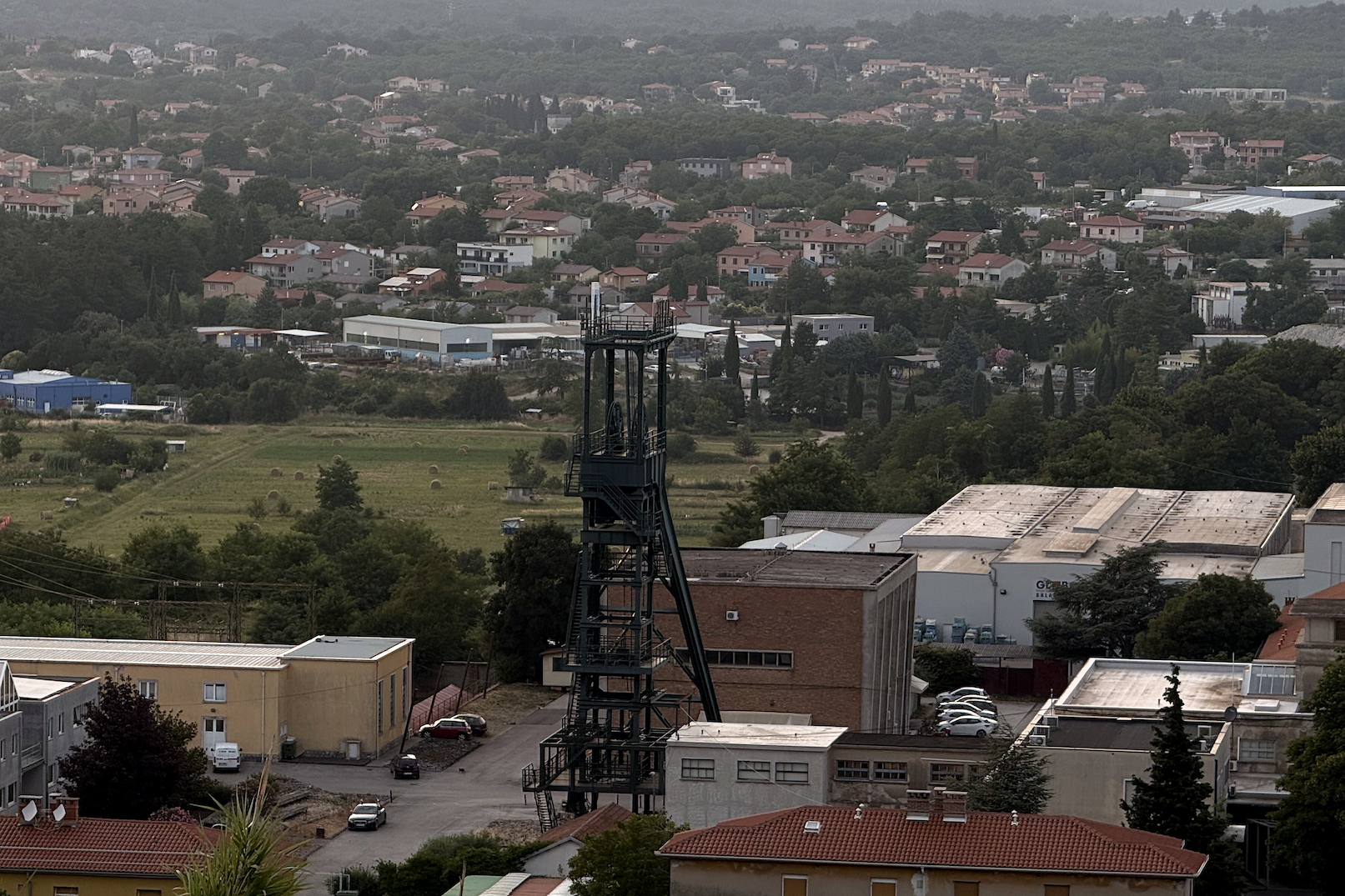
Podlabin adds steel, workshops and industrial scale to the stone-and-plaster vocabulary of the Old Town.
Why “No Tourist Traps in the Frame” Matters
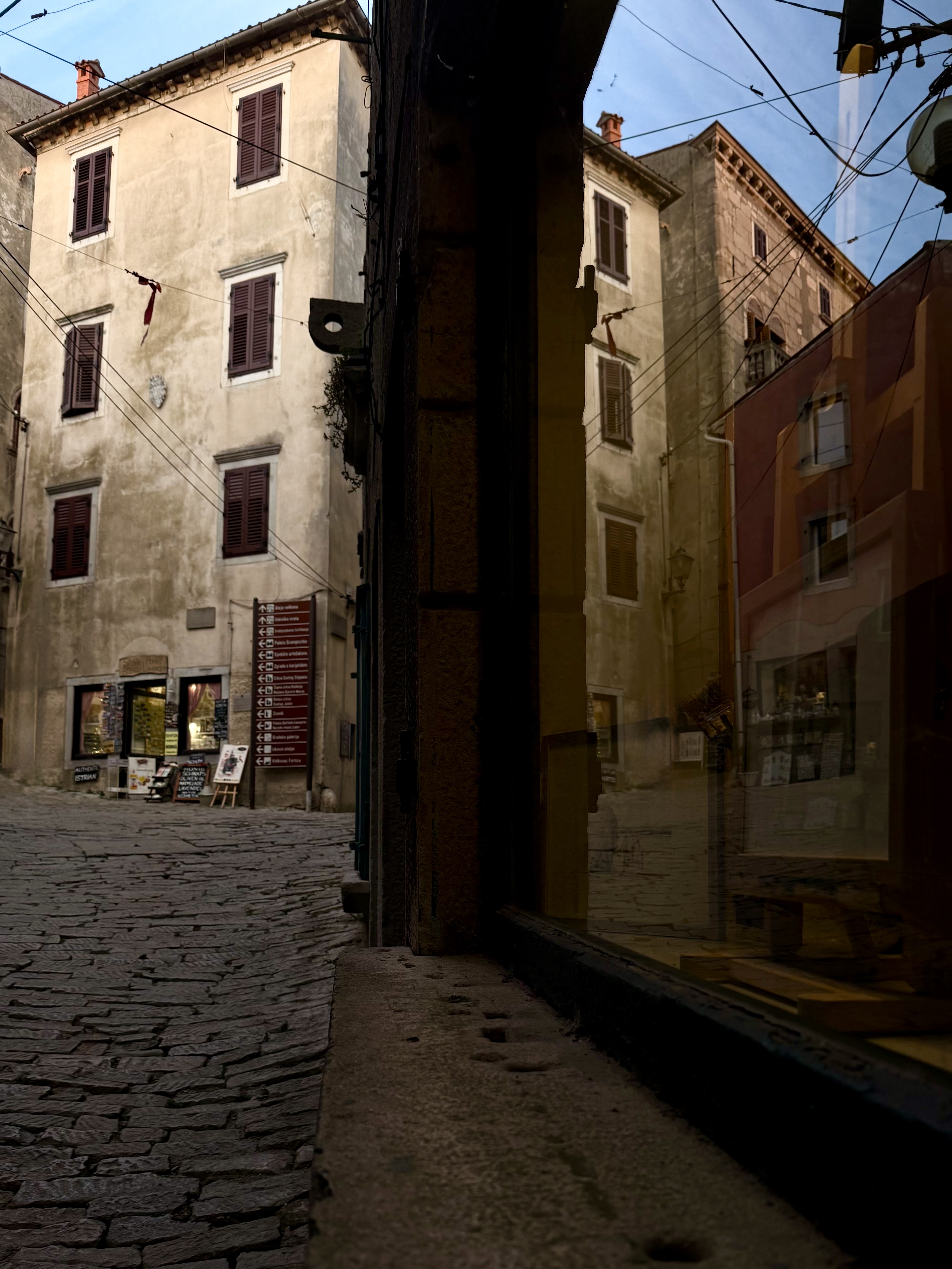
A window reflection gives the same ordinary façade a second angle without leaving the lane.
The phrase does not mean Labin has no visitors, cafés, shops or summer activity. It means many of its most cinematic lanes retain a low level of visual clutter. There are stretches without rows of identical souvenir boards, giant branded awnings or crowds permanently funnelled through one famous photograph. A lens can find stone, plaster, shutters and pavement before it finds a commercial message.
That matters because production design is often the art of subtraction. A contemporary security camera, parking sign or bright menu board can break a nineteenth-century scene. It can also weaken a modern thriller by making the location feel like a holiday brochure. Labin’s compact pedestrian passages give a crew useful sightlines and corners where modern intrusions can be kept outside the frame. This is an observation about what a camera can isolate, not a promise that the town arrives ready for filming. Real productions still require permits, access planning, traffic management, resident coordination and extensive art-direction work.
Visitors can use the same principle without treating the town as a set. Pause beneath an arch and look at what has disappeared from view. Step forward two metres and notice which roofline enters. Turn back and see how the lane’s emotional tone changes. Directors and cinematographers construct meaning through those choices; travellers usually rush through them.
The restraint also protects surprise. Labin is recognisably beautiful, but it has not been reduced to one compulsory angle. That leaves room for the viewer to wonder where a scene was filmed—and for a visitor to form a personal image rather than reproducing a queue’s image.
Light, Stone and the Geometry of the Lanes
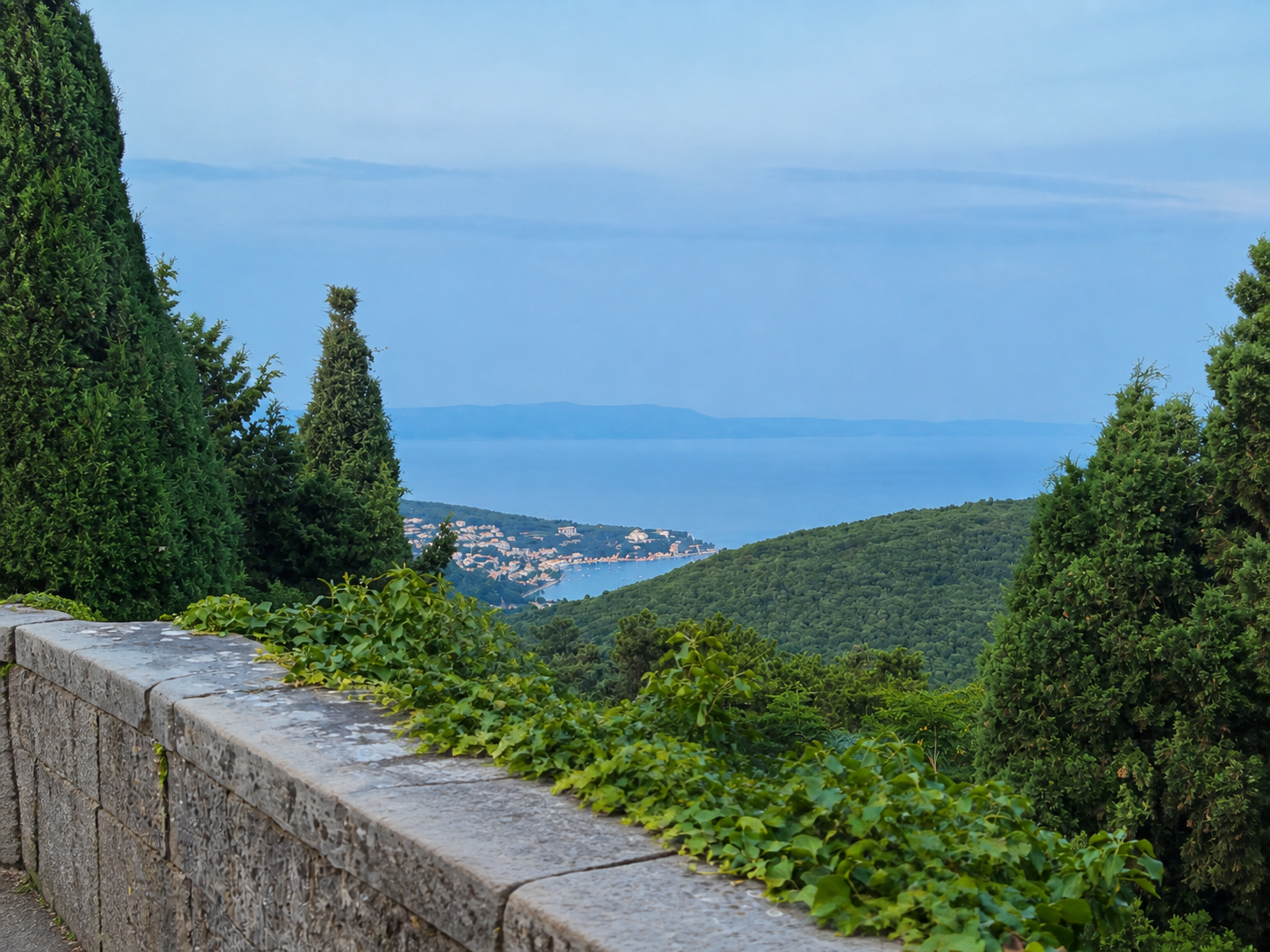
The view opens from a stone foreground to wooded slopes, Rabac and the sea.
Labin’s light is not one permanent golden filter. Its usefulness comes from contrast. Pale limestone and warm plaster bounce daylight into narrow streets, while deep arches create natural black edges around the image. On a clear day, a bright wall can act like a reflector. Move half a block and the same light becomes a hard division between sun and shade.
That geometry gives the town visual depth. Lanes rarely behave like flat corridors: they climb, curve, narrow and reveal partial façades. Steps produce foreground lines; doorways provide frames within the frame; shutters break large walls into a human scale. A camera does not need a landmark in every shot because the route itself creates composition.
At Fortica, the visual language changes again. The official Labin tourism page highlights the view toward Rabac and Cres. The town’s stone enclosure suddenly opens into sea, island and sky, giving a production an establishing image or a deliberate breath after the pressure of the lanes. That sequence—compression followed by panorama—is available to an ordinary visitor on foot.
Near dusk, colour temperature does the storytelling. The sky cools while street lamps warm the stone. A lane that looked historical and welcoming in late-afternoon sun can become secretive at blue hour without changing any physical detail. This is why the best photography walk is not a list of twelve stops. It is one short route observed twice.
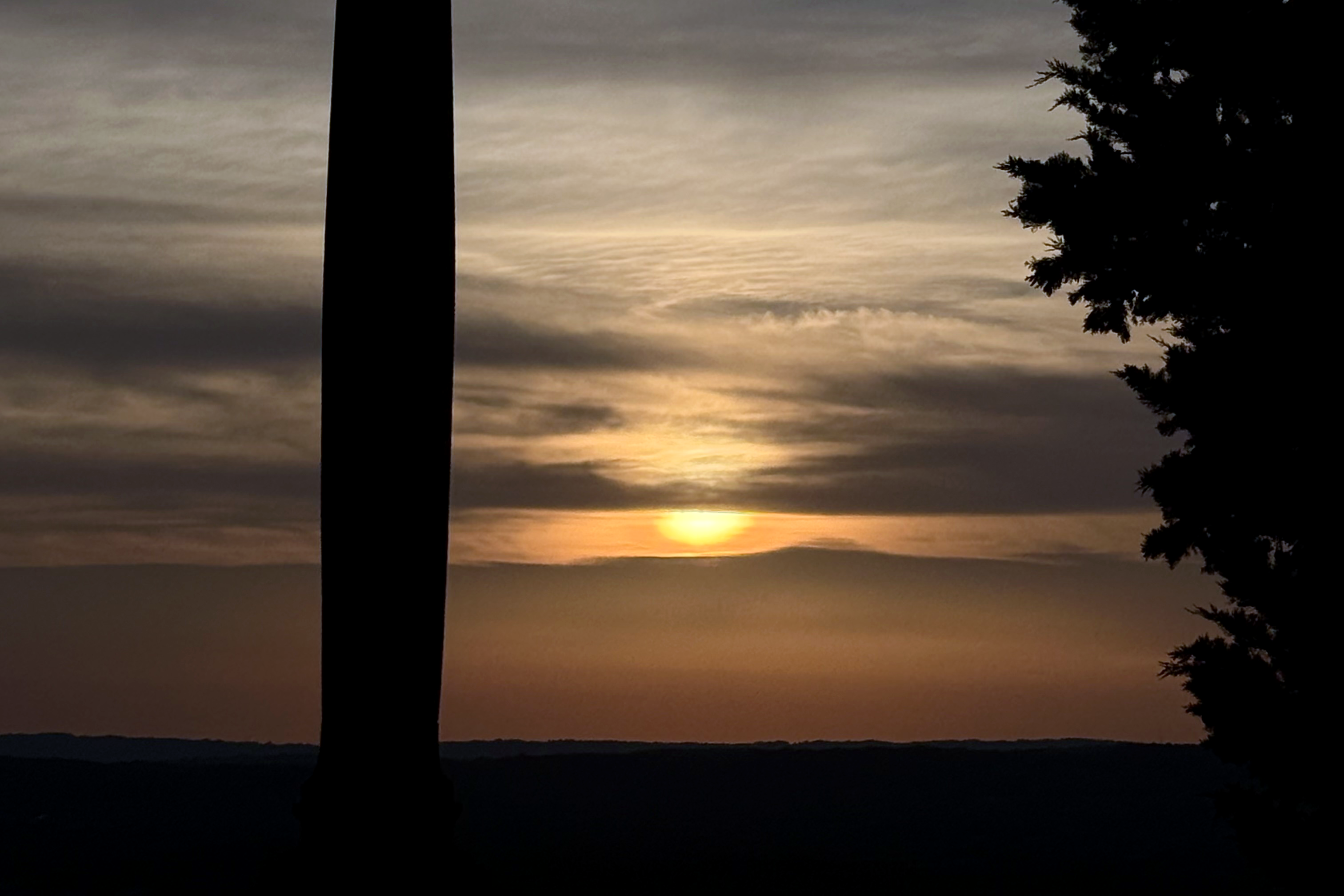
A column becomes a silhouette: the same stone that reflects daylight can frame the last light.
Rabac Gives the Frame a Different Kind of Space
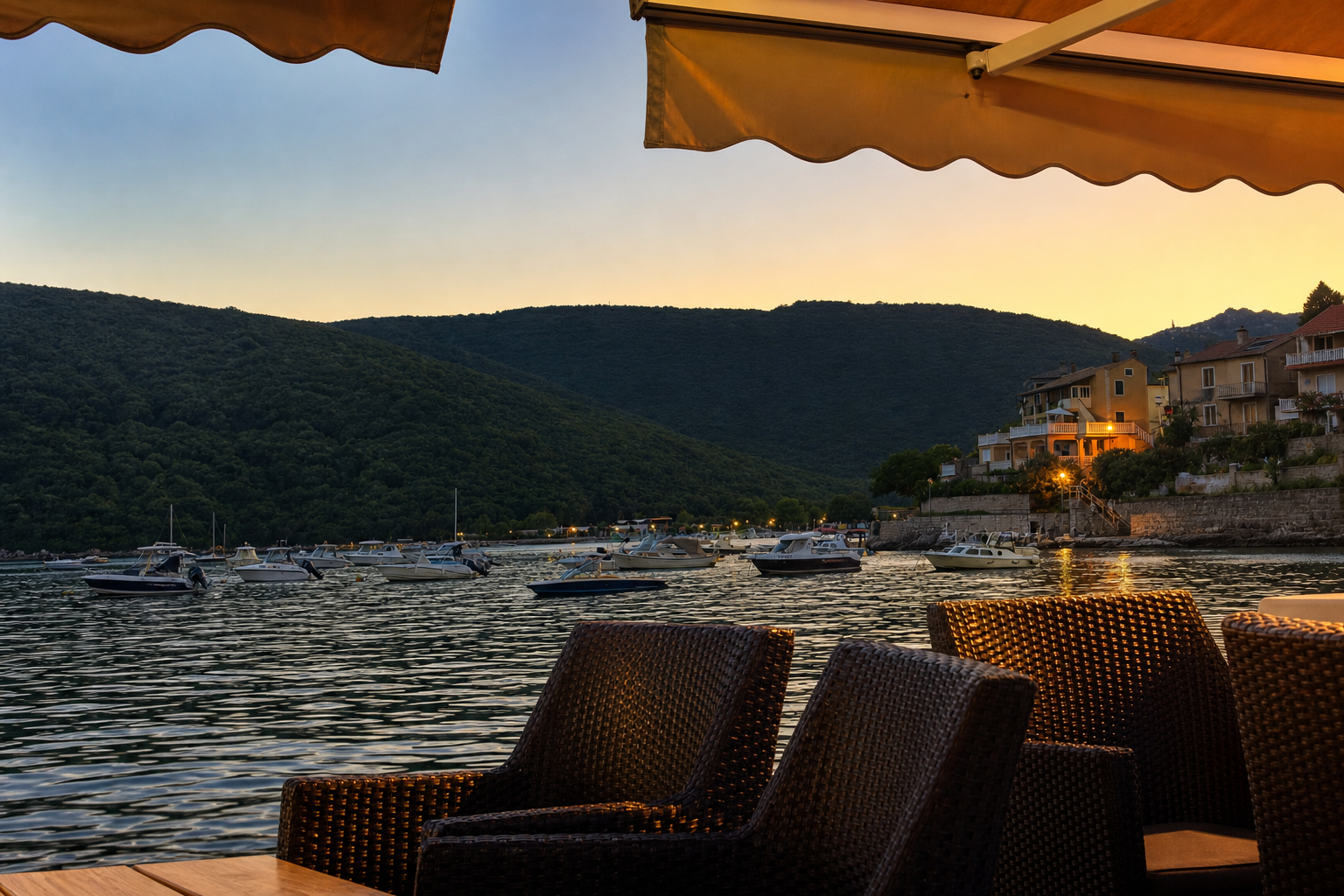
Rabac brings the viewpoint down to water level, with boats in the foreground and homes above the bay.
The coast offers a useful visual counterpoint to Labin’s enclosed streets. In Rabac, the photographs here show a harbour full of small boats, houses above the water and wooded slopes enclosing the bay. The foreground is no longer a doorway or a flight of steps: it is water, a mooring line or the edge of a waterfront terrace. This is a reading of the landscape, not a claim that a particular production filmed at each photographed spot.
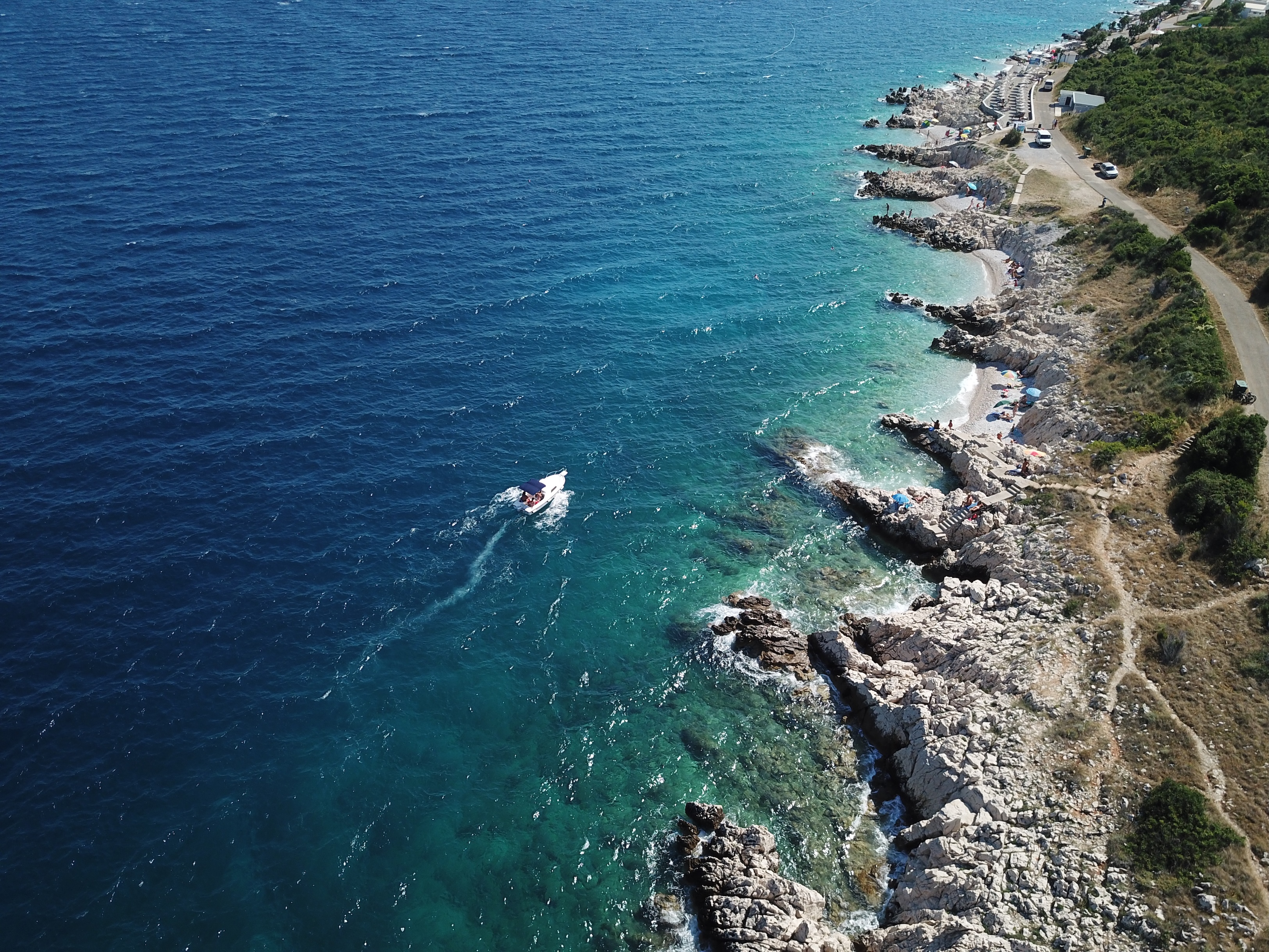
The aerial coast replaces narrow urban lines with curves of pale shore and changing shades of blue.
Around Girandella, an overhead view reveals another composition. Pale coves and rocky points break the coastline into curves, while turquoise shallows turn to deeper blue offshore. You can compare that openness with Labin’s overlapping roofs: both images have strong geometry, but one feels enclosed and the other expansive.
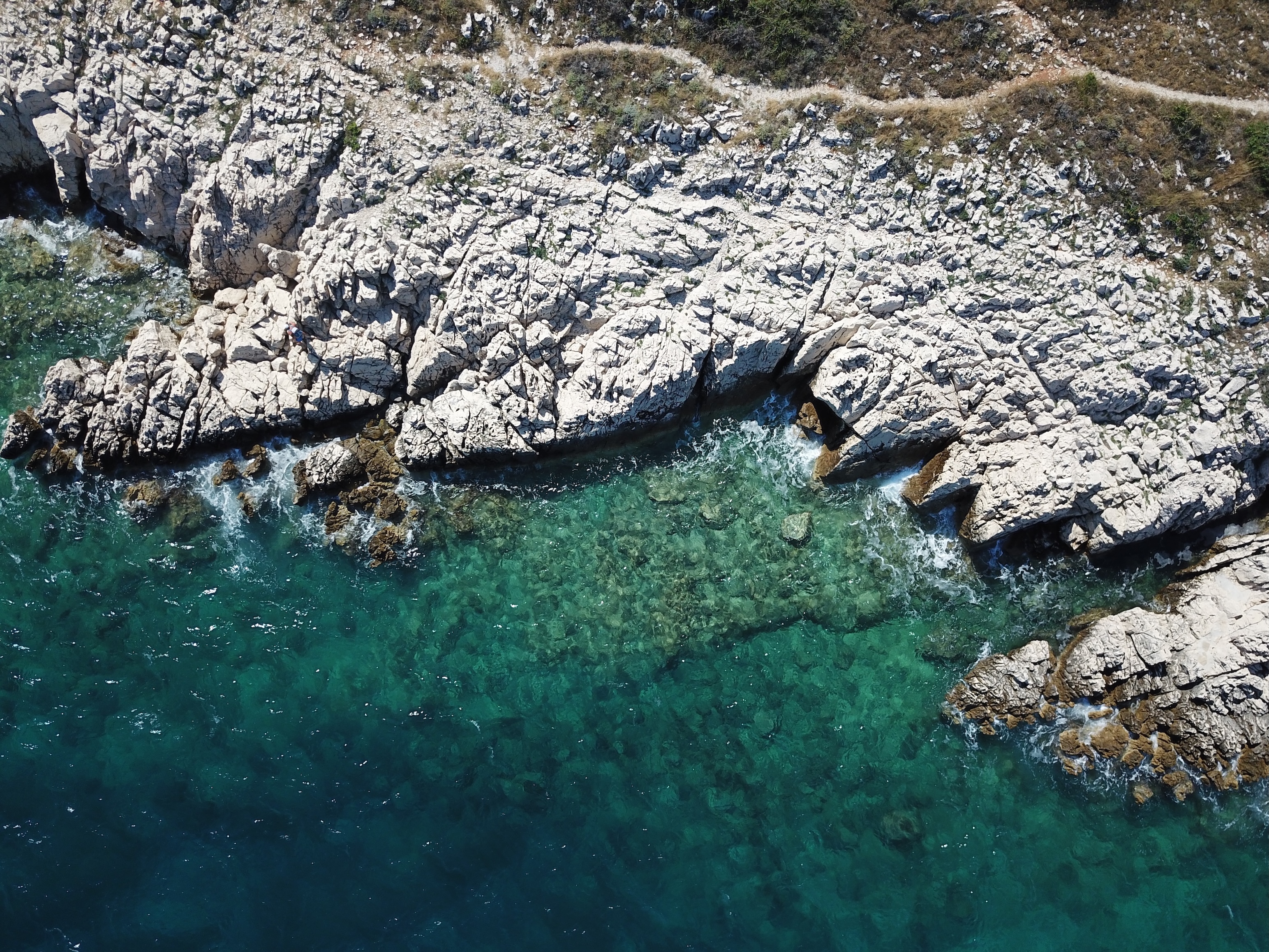
A closer overhead frame isolates rock texture, water depth and the edge between land and sea.
A closer frame changes the coast again. Remove most of the horizon and the picture becomes a study of rock, ripples and submerged shapes. Boats, bathers, paths and buildings are part of the actual place. Including those everyday details can tell a richer story than a postcard-perfect crop.
What the Camera Finds: A Location-Scout Reading
| Labin setting | What the camera sees | Best visual use |
|---|---|---|
| Stone arches | A dark natural border with a brighter second plane beyond it | Reveals, suspense and period-neutral transitions |
| Palace façades | Symmetry, colour, carved stone and visible social status | Authority, arrival and historical wealth |
| Sloping lanes | Movement through depth, layered doors and changing eyelines | Walk-and-talk scenes, pursuit and discovery |
| Fortica panorama | A sudden opening from dense town to Kvarner, Rabac and Cres | Establishing shots, release and geographic scale |
| Blue-hour streets | Cool ambient sky against warm lamps and textured masonry | Romance, mystery and quiet tension |
A Self-Guided “Director’s Eye” Walk
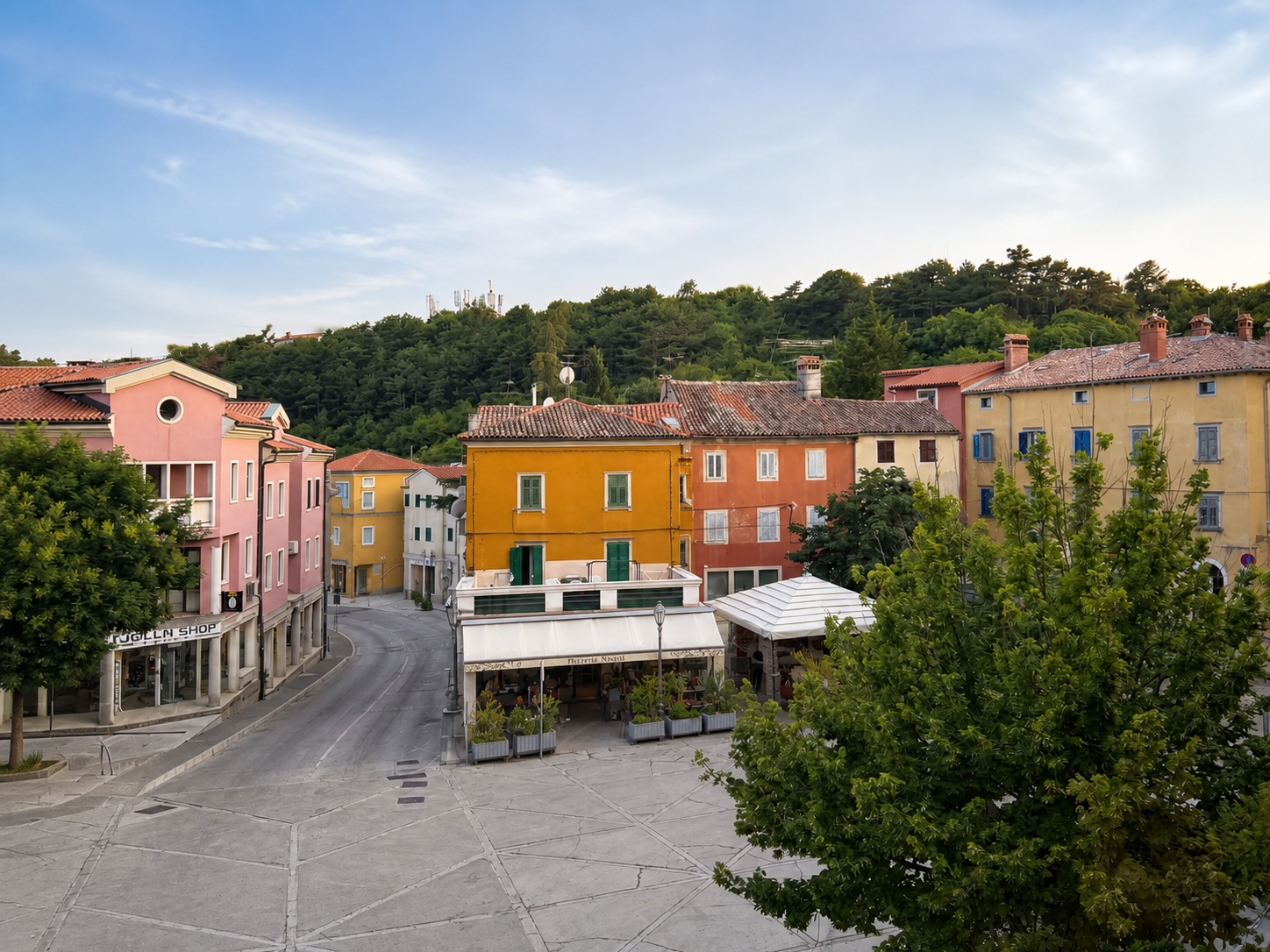
The square shows the everyday town openly; a tighter angle can isolate colour, paving or a single doorway.
Begin at Titov trg, where the scale is public and civic. Do not photograph immediately. First, identify the elements that anchor the real town: paving, parked vehicles, signs, café furniture and the entrances into narrower streets. Then choose one lane and watch how quickly the square disappears.
-
Look for a frame within the frame. Use an arch or doorway to hold a brighter façade beyond it.
-
Change height. Photograph from the bottom of steps, then from the top. The same building will move from destination to backdrop.
-
Use one palace and one ordinary wall. Labin’s character depends on their contrast; photographing only ornament makes the town flatter.
-
Continue to Fortica. Let the panorama explain why this dense stone settlement feels suspended above a much larger landscape.
-
Return near blue hour. Repeat one lane rather than searching for a new checklist. Compare what the light changed.
The route is short enough to combine with a wider Labin and Rabac day. Our Labin and Rabac itinerary shows how the hill town and coast belong in the same plan without turning either into a rushed stop.
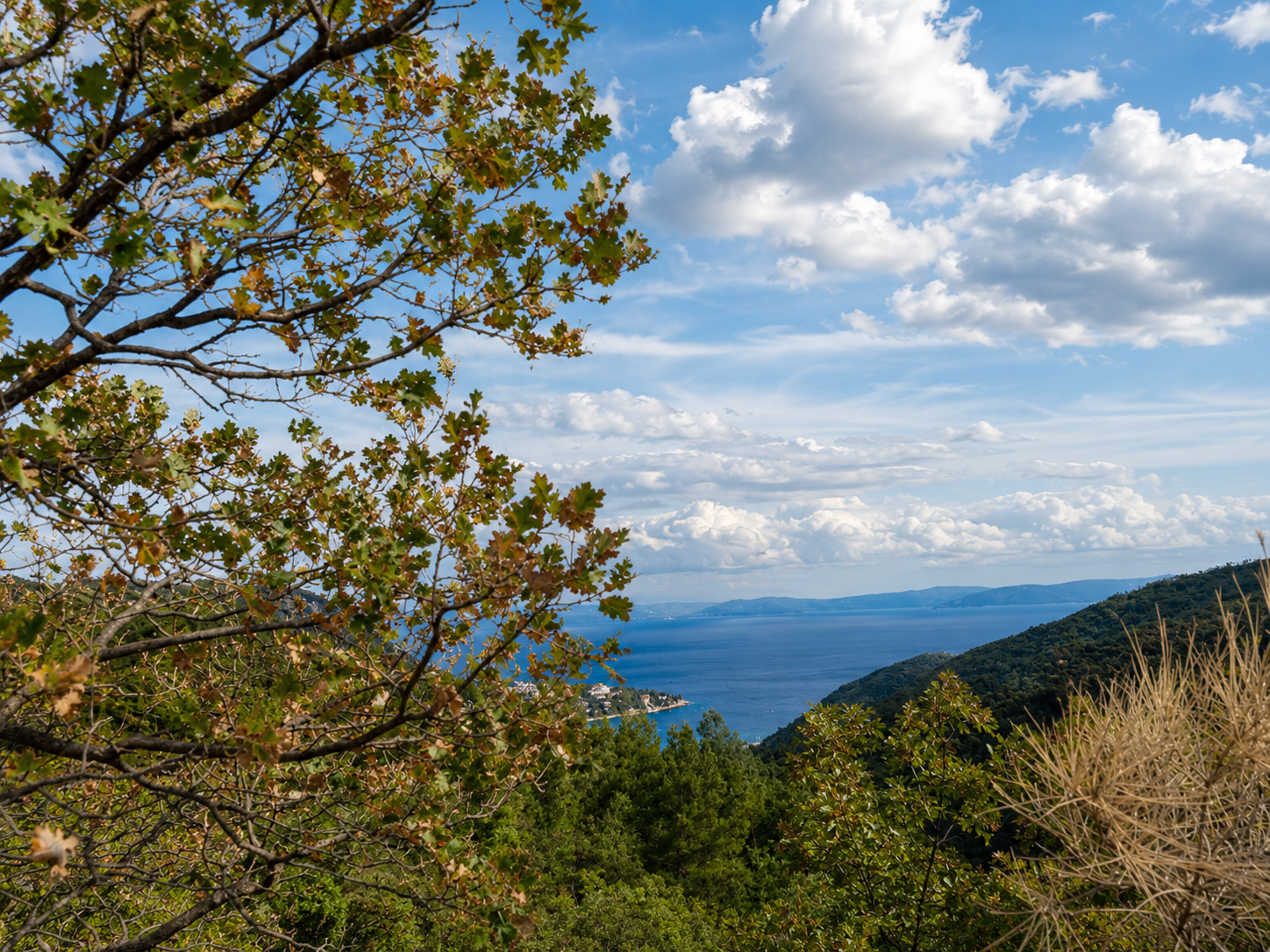
A view through trees gives a third scale between Labin’s enclosed lanes and Rabac’s open waterfront.
Remember that homes, studios, churches and businesses are real spaces. Do not block a doorway, stage people without permission or assume that film history turns a residential lane into public equipment. Drone use, professional filming and controlled setups require separate checks and permissions; this walk is designed for attentive, handheld observation.
Frequently Asked Questions
Was The Day of the Jackal filmed in Labin?
Yes. The Croatian Audiovisual Centre’s Filming in Croatia database lists Labin among the Croatian locations used for the 2024 series. Sky’s filming-location guide states that Labin stood in for Belarus.
Which older films were shot in Labin?
The official Film Map of Istria lists La rosa rossa (1973), Istarska rapsodija (1978) and Crveni i crni (1985) with Labin among their locations. The list demonstrates a screen history extending well before recent international series.
Did Labin represent Italy on screen?
Local reporting on the 2024 British production Debutante states that Labin Old Town represented southern Italy for a story set in the nineteenth century. Preparations and filming were reported around Giuseppina Martinuzzi Street and Ulica 1. Maja.
Can visitors identify exact scenes?
Some streets and broader settings are recognisable, but public location lists do not identify every shot. Productions may redress façades, remove modern details and combine several places. Avoid presenting a precise match as fact unless it is supported by production material.
When is the best light for photography in Labin Old Town?
Late afternoon through blue hour gives the widest visual range: reflected warm light on façades, deep shadows beneath arches and then warm street lamps against a cooling sky. Midday can also be effective if you want harder, more graphic contrasts.
Final Thoughts
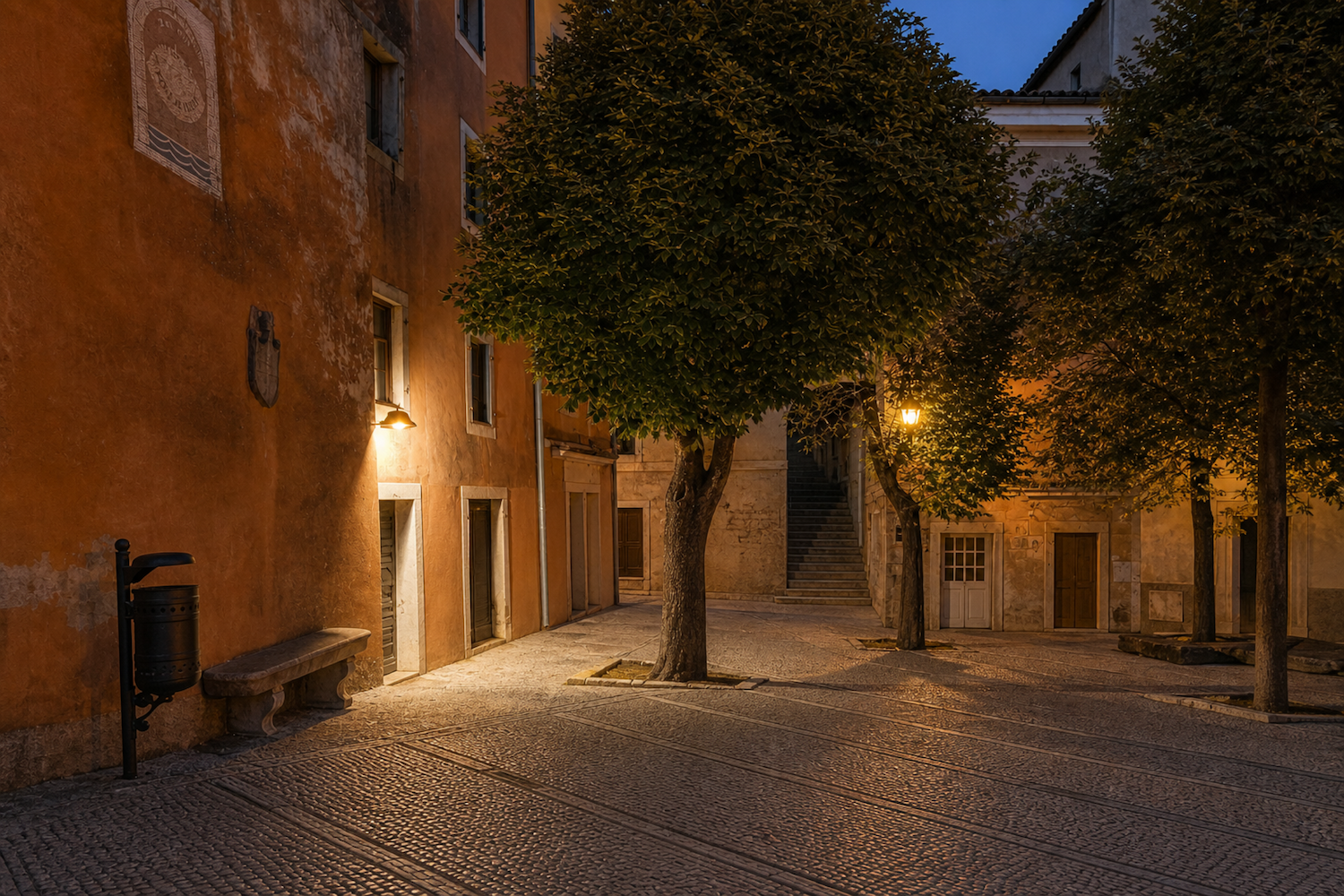
Warm lamps against a cool sky change the mood without changing the town.
Labin’s screen appeal is not a single palace, actor or production. It is the way the town keeps offering alternatives. A bright façade can suggest southern warmth. A shadowed arch can carry a thriller. An industrial structure can recover the mining century. A panorama can place every intimate lane inside the vast geography of the Kvarner Gulf.
Most importantly, the town has not been polished into one compulsory postcard. There is enough history to make a frame believable and enough ordinary life to keep it from becoming decorative scenery. That balance—light, stone, layered time and relatively little visual noise—is what the camera responds to.
Walk slowly and Labin begins to feel less like a location you have seen and more like a lesson in seeing. The director’s trick is not to invent a new town. It is to decide which of Labin’s many towns enters the frame.