
From Coal to Culture: The Story of Labin’s Transformation—Mining Heritage & the Art Republic

For most of the twentieth century, Labin was not known for its medieval rooftops or its views across the Kvarner Gulf. It was known for coal. At its peak in 1942, the mines beneath and around this hilltop town produced 1,158,000 tonnes of coal in a single year — making the Labin coalfield the most productive in the entire Adriatic region and a major industrial force in Mussolini’s Italy and, later, post-war Yugoslavia. Today, the last mine closed in 1999. What happened in the quarter-century since is one of the more remarkable reinventions in European cultural history.
This is a town that faced deindustrialisation head-on and, rather than hollowing out, turned itself into a destination for artists, creatives, and curious travellers who want more than just a beach. The mining shafts are still here — you can walk into one. So are the industrial complexes, the workers’ buildings, and the museums that explain what life underground actually looked like. They sit alongside contemporary galleries, summer art residencies, and a tradition of cultural festivals that draws painters from across Europe every July and August. That combination — raw industrial heritage and living creative culture — is what makes Labin genuinely unlike anywhere else in Istria.
Key Takeaways

Europe’s Most Productive Coalfield
At its 1942 peak, Labin’s mines produced over 1.15 million tonnes of coal in a single year, employing more than 10,000 workers across the region — a scale almost impossible to imagine from the quiet piazzas today.

The 1921 Labin Republic
In March 1921, Labin’s miners overthrew Fascist management and declared a workers’ republic — one of the first organised anti-Fascist uprisings anywhere in Europe, a full six months before Mussolini’s March on Rome.

Walk the Pijacal Complex — Free Entry
The protected Pijacal industrial site is an open-air monument of chimney stacks, winding towers, and the original miners’ bathhouse that you can explore on foot without a guide or entry fee.

Descend 150 Metres Underground
The Labin Town Museum is the only museum in Croatia housed in a Baroque palace with a real mine tunnel inside — visitors follow a 150-metre shaft into the hillside, equipment and all.

30+ Artists in Residence Every Summer
The Labin Art Republic brings over thirty academic painters to town each July and August. Studios open to visitors, galleries fill the old town streets, and performances take place in spaces that were once miners’ break rooms.
Digging Deep: The History of Coal Mining in Labin
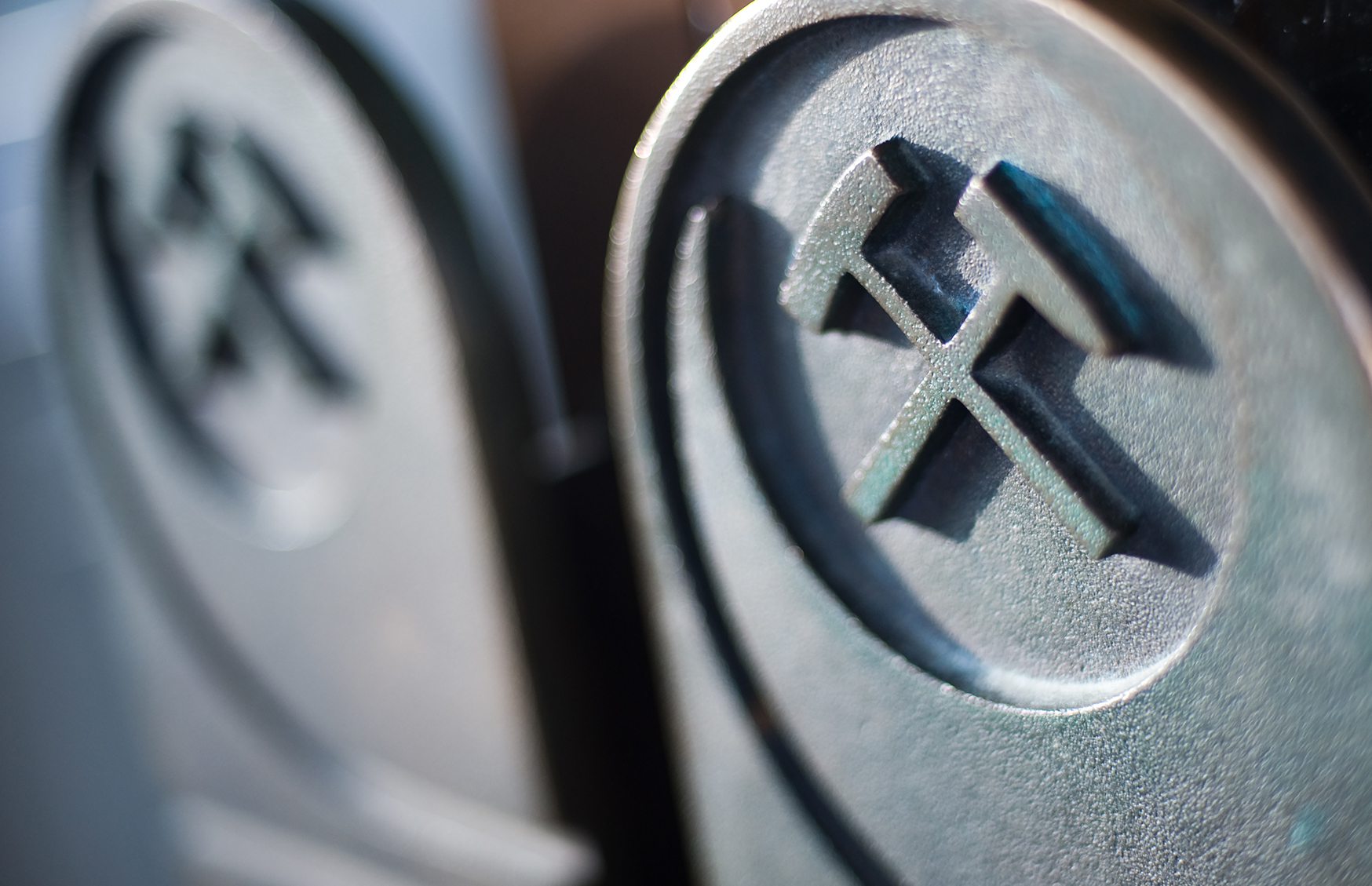
Coal has been known in the Labin area since Roman times — local legend holds that shepherds first noticed the black rock burning when their campfires scorched a hillside — but systematic extraction did not begin until the eighteenth century under Habsburg administration. The real industrial leap came in the twentieth century, when the ARSA (Anonima Risorse Società Anonima) company, backed by Italian capital and later integrated into Mussolini’s state industrial apparatus, turned the Labin coalfield into one of the most technically advanced mines in the Adriatic.
At its height in the 1940s, the Labin coalfield was not a single mine but an entire underground network stretching from the hilltop town down towards the Raša valley and the coast. The main shaft descended more than 500 metres. Ventilation systems, electric conveyors, and compressed-air drilling equipment made Labin technically comparable to mining operations in the Ruhr or Silesia — remarkable for a relatively small coastal town. Workers came from across Istria, mainland Croatia, and the former Yugoslavia, creating a working-class culture that was fiercely communal and, as history would show, fiercely independent.
The mines continued operating under Yugoslav management after 1945, peaking again in the early 1970s before a long, gradual decline set in. By the 1990s, the remaining seams were becoming economically unviable against cheaper imported energy. The last mine in the Labin area closed definitively in 1999, leaving behind thousands of unemployed workers, a landscape of industrial infrastructure, and the question that post-industrial towns everywhere eventually face: what comes next?
The 1921 Labin Republic: When Miners Declared Independence

No account of Labin’s mining history is complete without the story of what happened here in the spring of 1921. The Italian Fascist movement — which would not take national power until October 1922 — was already asserting brutal control over Istria’s Croatian-speaking population, breaking strikes with hired squads and replacing workers’ union representatives with Fascist nominees. Labin’s miners, who had been agitating for better wages and conditions since the end of the First World War, had had enough.
In a remarkably organised move, on 2 March 1921, the workers occupied the mines, expelled Fascist management, set up their own elected workers’ council, and declared what they called the Labin Republic. For approximately 36 days, the miners ran the coalfield as a workers’ cooperative: maintaining safety systems underground, continuing extraction, and negotiating as a unified body. When Italian forces eventually moved in to suppress the uprising, there was no mass violence, but dozens of miners were arrested and the movement’s leaders were tried and imprisoned.
The significance of the Labin Republic extends well beyond its brief duration. Historians recognise it as one of the first organised anti-Fascist uprisings anywhere in Europe, predating the Italian Communist Party’s formal resistance structures by months. Locals are quietly proud of this history — it is part of why Labin has a reputation for stubbornness and independence that the rest of Istria acknowledges with a degree of respect. The cultural heritage of Labin is inseparable from this working-class backbone. You feel it in the architecture, in the town’s self-presentation, and in the way residents talk about their history.
Pijacal: Walking Through a Protected Industrial Monument

Just below Labin’s old town, in the Pijacal district, lies what remains of the most visible surface infrastructure of the mining era. The Pijacal complex was the industrial heart of the operation: winding towers that lowered and raised miners in iron cages, the miners’ bathhouse where workers cleaned and changed before and after each shift, workshops, ventilation buildings, and the characteristic red-brick chimney stacks that still dominate the skyline when you approach Labin from Rabac on the main road.
Much of Pijacal is now a protected cultural monument under Croatian heritage law, meaning it cannot be demolished but has not been fully restored or converted into a polished museum. This gives the complex an honest, unmediated quality that sanitised industrial heritage sites often lack. There is no entry gate, no ticket, no guided tour required — you can walk through it freely and get a genuine sense of the physical scale of the operation. Standing beneath the main winding tower, you understand immediately what it meant to be a miner waiting to descend at the start of a shift: the structure is large, purposeful, and entirely indifferent to comfort.
For photography: morning light hits the chimney stacks from the east, making them sharp against the sky before the haze builds up. By late afternoon in summer the contrast flattens. The complex is a 10-minute walk from Labin’s main square, so it fits naturally into any old-town visit. If you come down from the piazza via the road rather than the steps, you pass directly in front of the most photogenic section of the winding gear.
Inside the Mine: The Labin Town Museum Underground Tour

For most visitors, the centrepiece of any serious engagement with Labin’s mining heritage is the Labin Town Museum (Narodni muzej Labin), which occupies the seventeenth-century Battiala-Lazzarini Palace. The combination of architecture is immediately arresting: ornate stone balustrades and Renaissance window surrounds on the outside; inside, the museum winds through rooms covering Labin’s Illyrian, Roman, Venetian, and Habsburg history before delivering you to something entirely unexpected — the entrance to an actual mine tunnel carved into the hillside.
The underground section runs approximately 150 metres and was a genuine working shaft at the time of its excavation. Visitors follow the passage through a series of exhibits showing the equipment miners used: hand drills, safety lamps, ventilation systems, and the narrow-gauge trolleys that carried coal to the surface. The temperature drops noticeably as you enter — mines stay cold year-round regardless of outside conditions — and the compressed, low-ceilinged passages give you a physical impression of what it meant to spend eight-hour shifts down here. It is a profoundly different experience from reading about it in a display case.
The museum is open year-round, though hours reduce between roughly October and May. Entry is modest — under €5 at last check, but verify on-site. The guided English-language tour, when available, adds substantial context to the tunnel section. If you’re visiting with children over about eight years old, this is one of the more genuinely memorable attractions in all of eastern Istria. Pair it with a walk through Pijacal afterwards and you have a coherent two-hour circuit through the mining era before lunch.
If you want to go deeper into Labin’s historical layers after your museum visit, the dedicated guide to cultural and historical sites in Labin covers the churches, the loggia, the city walls, and the Baroque palaces in detail.
From Miners to Artists: How the Art Republic Was Born
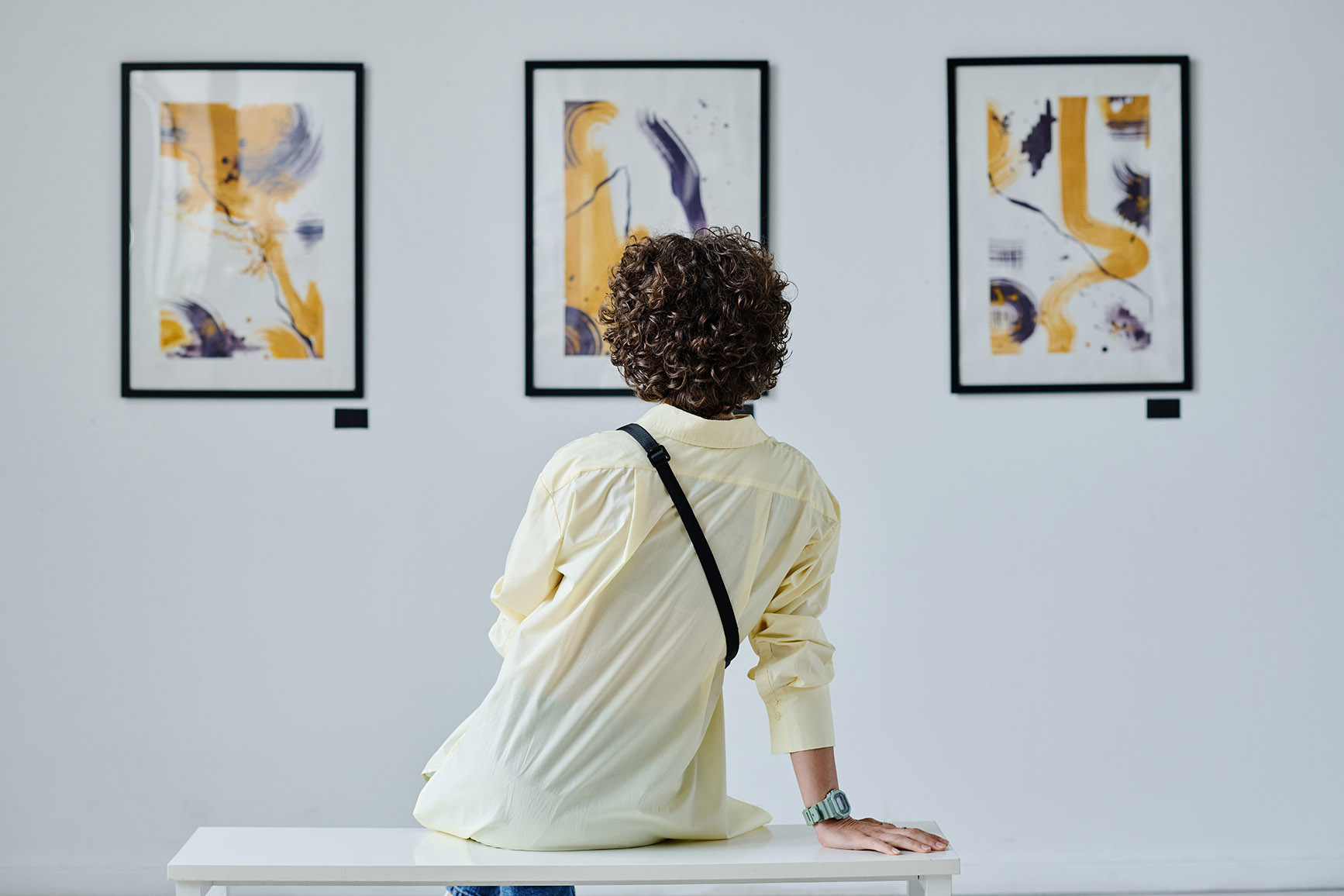
The story of how Labin pivoted from coal to culture didn’t begin with a government programme or an EU regeneration fund. It began in the late 1970s — while the mines were still operating — when a group of Croatian and Yugoslav academics, painters, sculptors, and printmakers started coming to Labin for the summer. They were attracted by cheap studio space, good light, the intact medieval setting, and the general absence of the tourist crowds already descending on Rovinj and Poreč.
Over the following decades, these summer residencies formalised into what became known as the Labin Art Republic — a name that deliberately echoes the 1921 miners’ uprising and frames the cultural transformation as a continuation of the same fierce local independence. The term “republic” here is not decorative: the Art Republic model was always about self-organisation and community ownership of cultural space, not top-down institutional programming financed from Zagreb or Brussels.
By the time the mines actually closed in 1999, the Art Republic was already one of the most established artist residency programmes in Croatia, drawing over thirty academic painters each summer and generating a distinct approach to painting that critics associate with the particular qualities of Istrian light — the blue-grey tones of the Kvarner in the morning, the terracotta reds of the hilltop stone at dusk. Where neighbouring coastal towns responded to deindustrialisation with mass-market tourism development, Labin had already quietly seeded an alternative. Similar patterns of industrial reinvention unfolded nearby — the Mussolini-era mining town of Raša, just 10 kilometres south, tells a parallel chapter of the same story from the same era.
Lamparna: The Heart of the Art Republic

The physical and institutional centre of the Art Republic is Lamparna — named after the lamparnica, the lamp room where miners collected and returned their headlamps at the start and end of each shift. The Lamparna complex occupies a cluster of former mining infrastructure buildings just below the old town, now converted incrementally into the home of Labin Art Express (LAE), the NGO that organises and sustains the Art Republic programme.
The vision that drove Lamparna’s founders was ambitious: they proposed converting the actual mine tunnels beneath the complex into a permanent underground arts venue — bars, galleries, concert spaces, and artists’ studios carved into the living rock, accessible from street level. That full vision hasn’t been realised, but significant parts of it have. Lamparna today hosts exhibitions, film screenings, concerts, and workshops. During the summer months it becomes the primary hub of the Art Republic residency, with studios in active use and a gallery space that rotates work from resident artists on a roughly weekly cycle.
For visitors, Lamparna is most interesting during July and August, when the residency is in full swing. You can walk through working studios, watch painters mid-canvas, and buy work directly from artists without gallery markups. Early July is noticeably quieter than August, when the Croatian coast at its busiest. Outside of summer, check the LAE calendar online — Lamparna runs programming year-round, and there are often worthwhile events in May, September, and October that most visitors never hear about.
The Art Republic Today: Galleries, Studios & How to See It

The most honest way to experience the Art Republic as a visitor is to spend a morning walking Labin’s old town streets with no fixed agenda. The galleries are clustered in and around the main piazza and the lanes leading off towards the Fortica rampart. Several occupy private houses with their front doors open; others fill former civic buildings and workshops. There is no single gallery-district map because the art is embedded in the town’s fabric in a way that feels organic rather than staged — which is precisely what makes it work.
Most galleries are free to enter. The resident artists are generally present in the morning hours before the afternoon heat sends everyone to the shade or down to the sea. Conversations happen naturally: many of the painters speak English, German, or Italian, and the work ranges considerably — some painters work in bold expressionist colour; others are more austere, using eastern Istrian light for something closer to contemplation than expression. There is no house style, which is part of the appeal.
If you’re visiting Labin’s morning market (held daily in the lower town, wind down by 10am), combine it with a gallery walk. By 8.30am you can buy fresh vegetables, local cheese, and honey from the Labinština hills; by 9.30am the gallery doors are open and the light is still cool and clear. That combination — local food, contemporary art, medieval stone, sea below — is the most efficient way to understand why this town has worked as a creative hub for decades.
For those based in Rabac, the drive up to Labin is under 10 minutes. The old town is compact enough that a thorough visit — Pijacal, museum tunnel, gallery walk, lunch — fits comfortably into a half day, leaving the afternoon free for the sea, a walk on Sentona’s Trail between the two towns, or simply doing nothing particularly efficiently.
Quick Facts: Labin Mining Heritage & Art Republic
| Topic | Detail |
|---|---|
| Coal peak production | 1,158,000 tonnes (1942) |
| Workforce at peak | 10,000+ workers across the coalfield |
| Main shaft depth | Over 500 metres |
| Mine closure | 1999 (last active shaft) |
| Labin Republic date | March–April 1921 (approx. 36 days) |
| Museum name & location | Narodni muzej Labin, Battiala-Lazzarini Palace, old town |
| Museum tunnel length | ~150 metres into the hillside |
| Museum entry fee | Under €5 (verify on-site; guided EN tour available) |
| Pijacal access | Free, open access — no ticket required |
| Art Republic season | July–August (Lamparna active year-round) |
| Resident artists per summer | 30+ academic painters |
| Distance from Rabac | ~5 km, under 10 minutes by car |
Frequently Asked Questions
Can you visit the Labin mine tunnel without a guide?
The mine tunnel is accessed as part of the Labin Town Museum (Narodni muzej Labin) visit. Entry is ticketed and the underground section can be walked independently, though guided tours in English are available and add significant context. The Pijacal industrial complex nearby, by contrast, is freely accessible at any time — no ticket required.
When is the best time to see the Labin Art Republic?
The residency runs at its most intense in July and August, when 30+ artists are working and studios are open to visitors. Early July is quieter than August. Lamparna runs programming outside the summer season too — check the Labin Art Express (LAE) website if you’re visiting in spring or autumn, as there are often concerts and exhibitions most visitors don’t know about.
Is the Pijacal complex safe to walk through, and do you need to book?
Pijacal is an open-access protected monument — no booking, no entry fee, no restrictions. It is a roughly 10-minute walk from Labin’s main piazza, going downhill towards the lower town. Some structures are in various states of preservation; stay on the paths and exercise normal caution around older buildings.
How does Labin’s mining history connect to Raša?
Labin was the main coal extraction centre, while Raša was built from scratch in the 1930s as a planned Fascist model town to house Italian miners and their families — a different chapter of the same industrial story, just 10 km to the south. Visiting both in a single day gives you the full picture of what the coal economy looked like on the ground in this part of Istria.
Is Labin worth visiting if you have no interest in mining or art?
Yes. The mining and art history adds layers, but Labin’s medieval old town is rewarding on its own terms — the Venetian loggia, the Baroque palace, views across to Cres and the Velebit mountains on clear days, and a food scene that punches above its weight for a town of this size. A full day in Labin is satisfying even for visitors who arrive knowing nothing about coal mines or art residencies.
Conclusion: A Town That Chose Its Own Story

What Labin has done since 1999 is not something that happened by accident or by policy. The Art Republic was already decades old when the last mine closed. The town had been rehearsing its reinvention long enough that when the moment came, there was something real to build on — a community of working artists, a tradition of self-organisation, and a set of industrial buildings too historically significant to demolish and too architecturally distinctive to ignore.
The result is a place where you can stand in a Baroque courtyard looking at a contemporary canvas by a Ukrainian painter on a summer residency, knowing that 50 metres below your feet there are mine tunnels that once employed ten thousand people. That layering of time, purpose, and reinvention is what makes Labin worth more than a quick stop. It is, without needing any marketing language to say so, genuinely different from anything else in Istria.
If you’re staying in Rabac, the drive up takes less time than finishing your coffee. Come for the museum tunnel, stay for the galleries, and leave via Pijacal. By the time you’re back at the beach, you’ll see the chimney stacks on the hill behind the town with entirely different eyes.