
One Coast, Three Realities: Resort Rabac, Fishing Trget and Industrial Koromačno
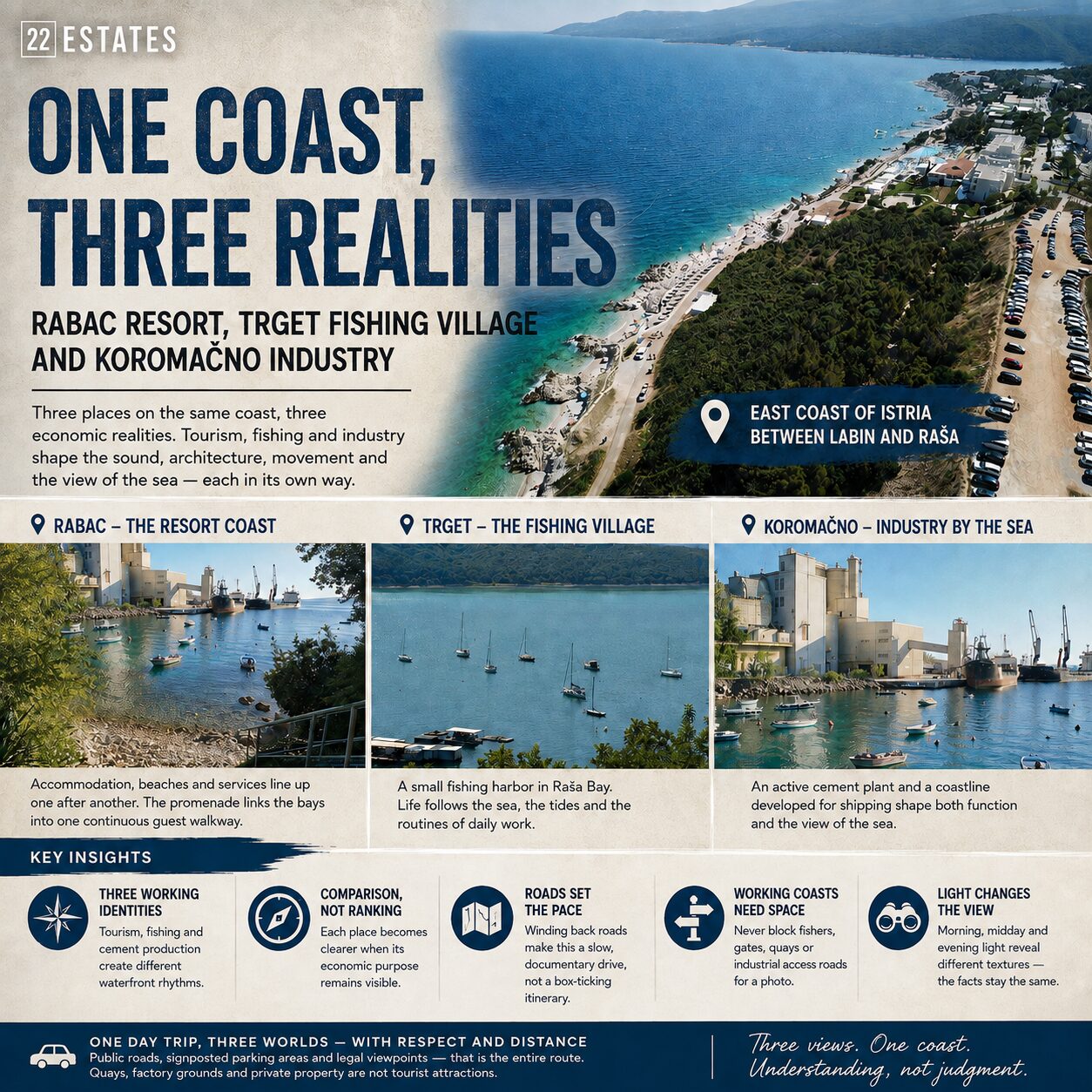
Rabac, Trget and Koromačno face the same eastern-Istrian sea, yet their waterfronts speak three economic languages. Rabac organises the shore around visitors and a continuous promenade. Trget remains a small fishing harbour inside the Raša Bay. Koromačno lives beside an operating cement plant and a coast engineered for maritime industry.
The point of linking them is not to rank resort, fishing village and industrial settlement. It is to see how work changes sound, architecture, movement and the visitor’s gaze. A beach platform, a mooring line and a loading quay each meet water for a different reason.
The three stops can form one local road trip, but local roads are winding and working areas demand respect. Travel times vary with traffic and stops. Public roads, signed parking and lawful viewpoints are the entire itinerary; quays, yards and industrial property are not attractions to enter.
Key Takeaways

Three Working Identities
Tourism, fishing and cement production create distinct waterfront rhythms.

Comparison, Not Ranking
Each place becomes clearer when its economic purpose remains visible.

Roads Set the Pace
Winding local routes make this a slow documentary drive, not a rushed checklist.

Working Shores Need Space
Never block fishers, gates, quays or industrial access for a photograph.

Light Changes the Reading
Morning, midday and late light reveal different textures without changing the facts.
Rabac: The Coast as a Continuous Guest Route
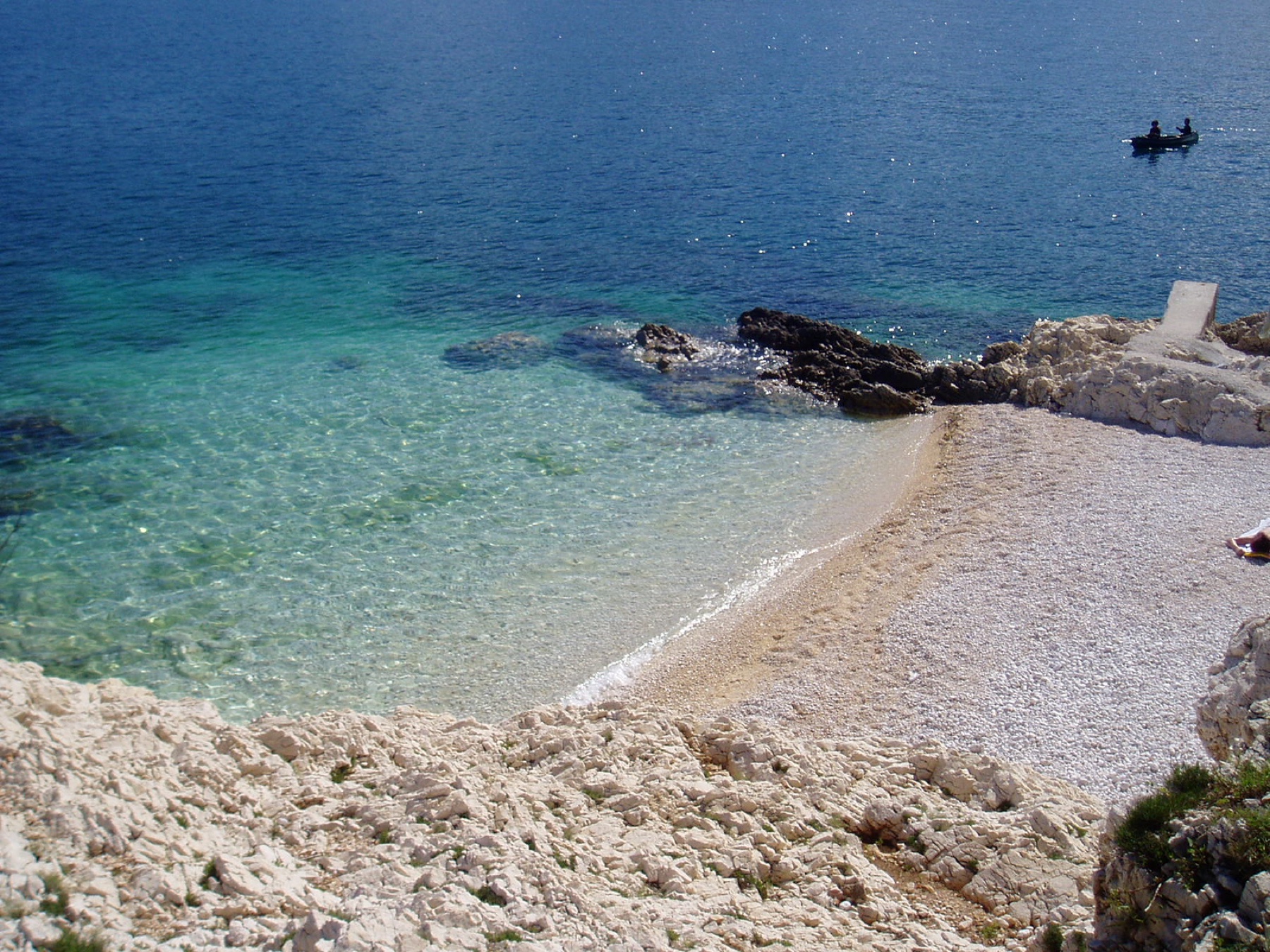
In Rabac, accommodation, beaches and services line a steep shore. The promenade links them into a sequence, so a visitor can move from bay to bay without repeatedly returning to a car. That continuity is the town’s strongest resort infrastructure.
Official descriptions of Girandella list pebble, rocky and paved areas alongside restaurants, shops, activities and diving services. The designed ease is genuine, but it concentrates movement. Our honest Rabac guide explains the trade-off.
The Resort Gaze Looks Along the Water
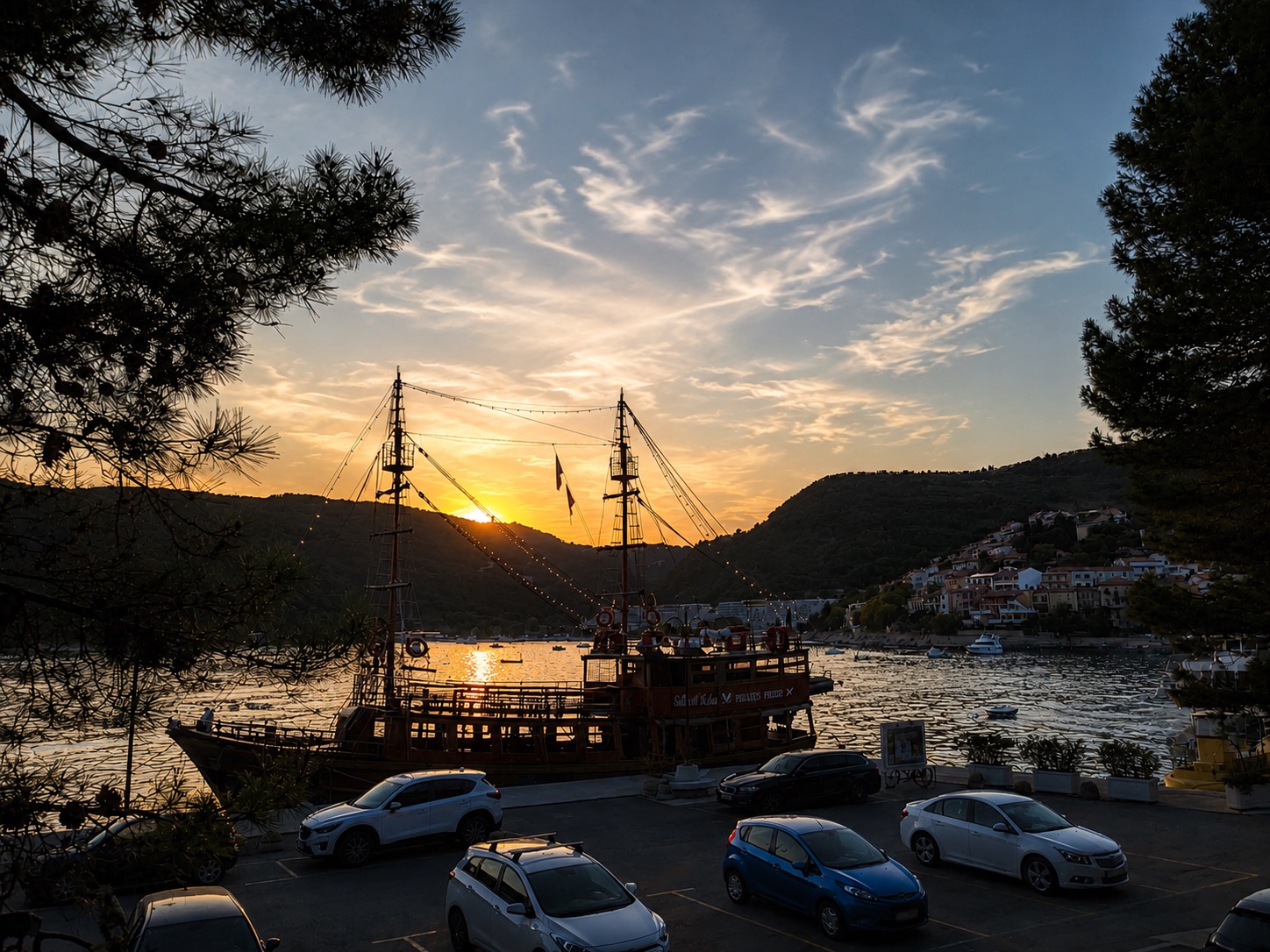
Rabac’s visual rhythm is lateral: promenade, planted edge, terrace, beach and repeating blue water. Signs and paths invite the next stop. Boats are usually read as recreation or excursion, and shore furniture signals that the guest is expected to remain.
That does not make the waterfront artificial. It means the coast has been adapted around hospitality. Photograph it honestly by including movement and built surfaces, not by cropping every trace of service to manufacture an untouched cove.
| Waterfront | Dominant economy | Visual rhythm | Best reason to stop | Key limitation |
|---|---|---|---|---|
| Rabac | Tourism | Linear promenade and beach sequence | Walkable resort coast | Seasonal pressure |
| Trget | Fishing and local harbour work | Moorings, boats and compact village edge | Read the Raša Bay | Working space, few attractions |
| Koromačno | Cement production | Plant, quarry logic and maritime loading | Understand industrial coast | Restricted areas and industrial backdrop |
Leaving the Promenade Changes the Scale
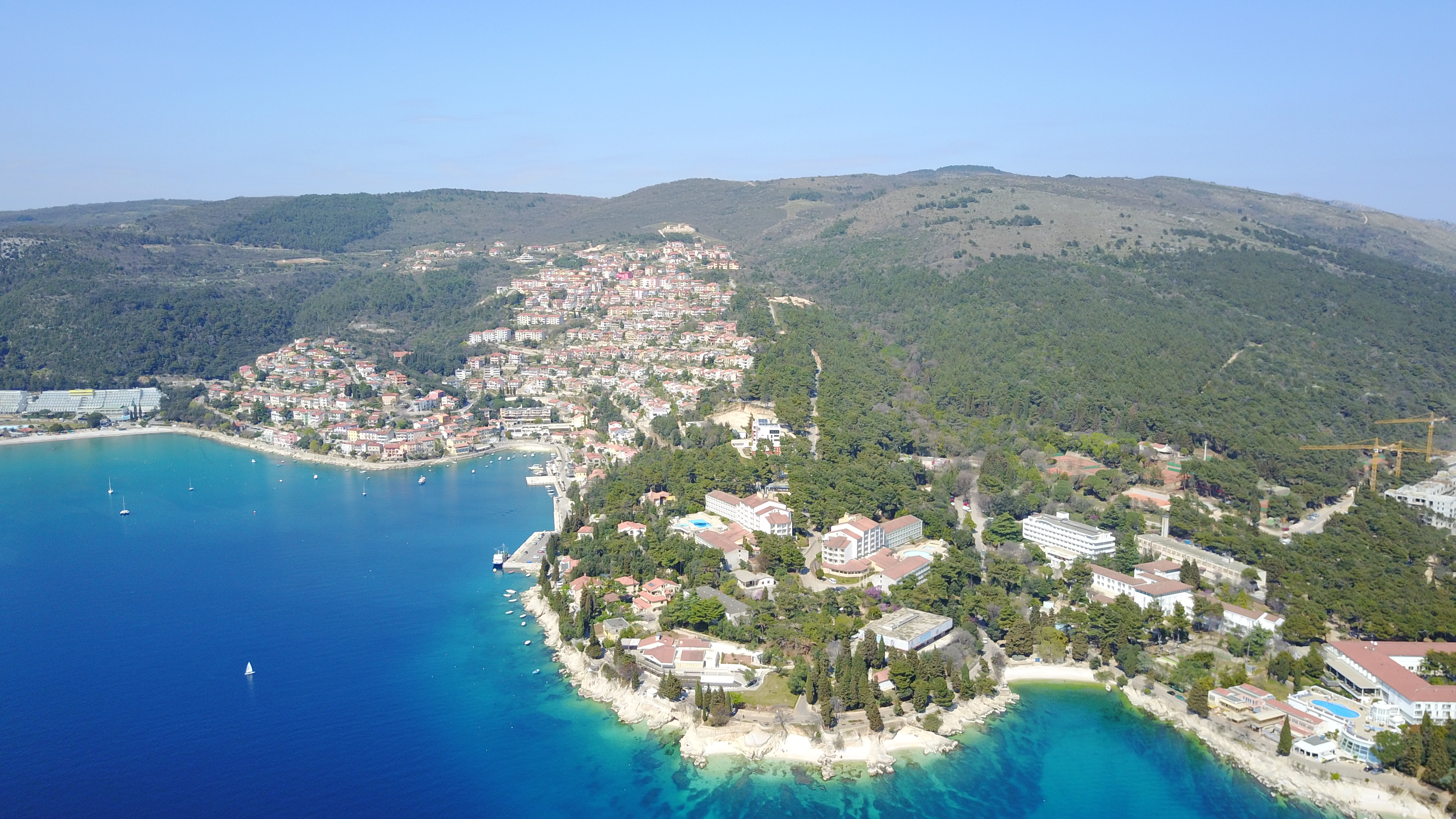
The route away from Rabac breaks the continuous guest experience. Local roads curve through steep terrain and settlements appear as separate episodes. That change is useful: the coast stops behaving like one destination and becomes a series of working relationships with the sea.
A view from the water can reveal the same transition from another angle. Our guide to a private boat trip from Rabac is useful context, but this article remains a road-based reading with no assumption that a harbour berth or boat service is available.
Trget: A Harbour inside a Long Bay
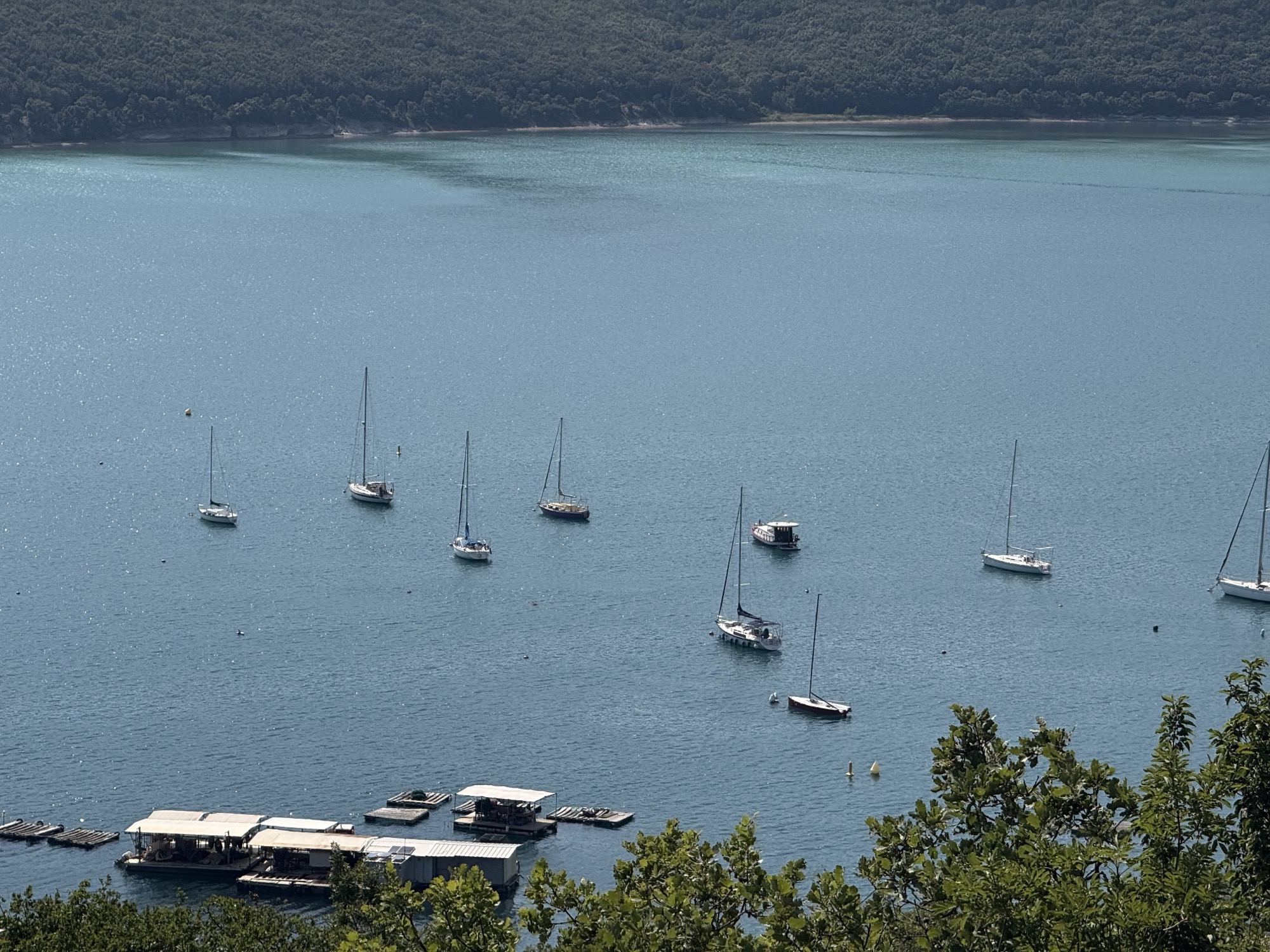
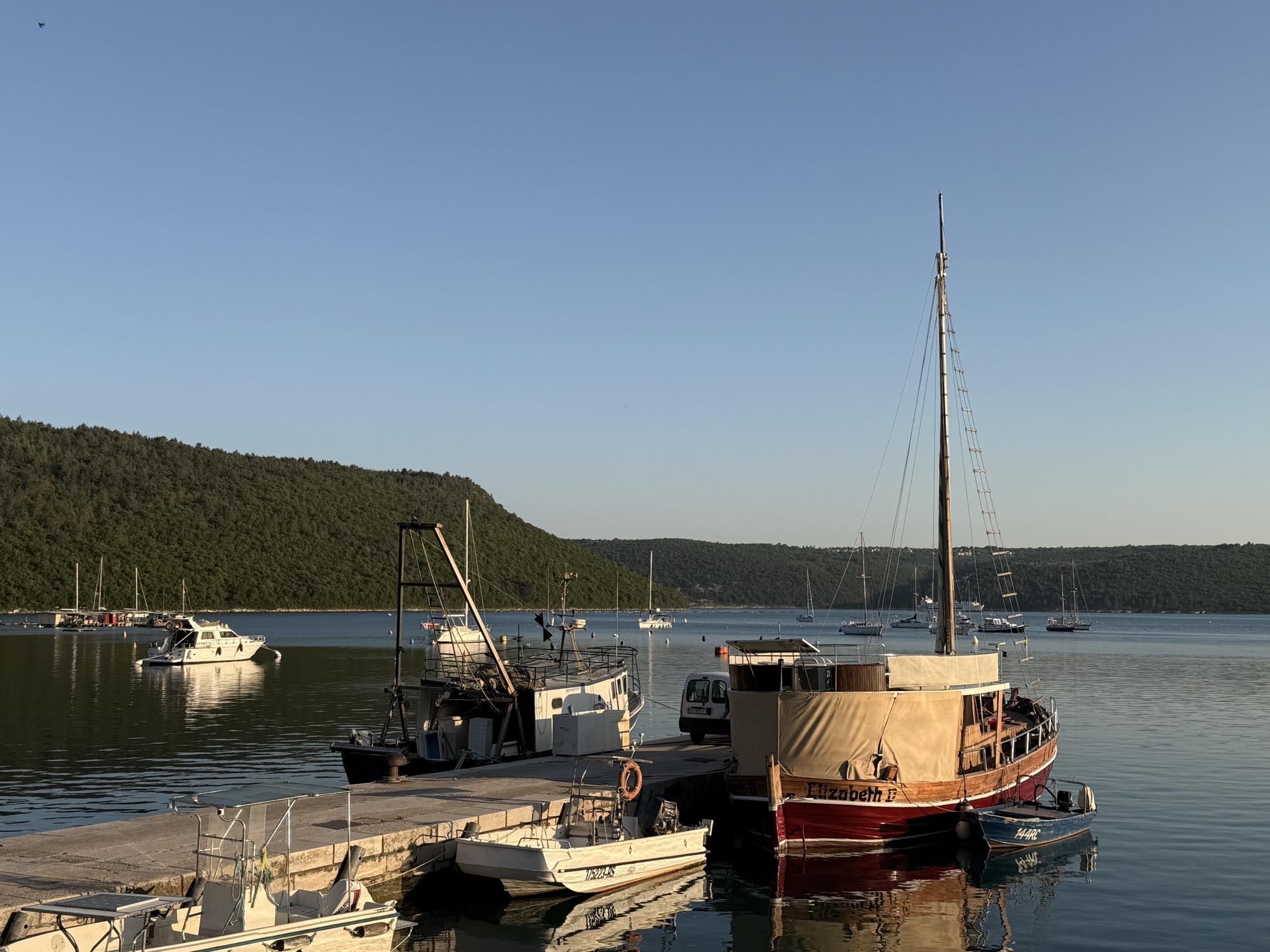
Trget sits inside the Raša Bay rather than on the open Kvarner. The village edge meets sheltered water through moorings, small boats and working access. Its scale is compact, and the surrounding bay carries as much of the visual story as the buildings.
Official regional material describes Trget as a fishing village. The name is associated with movement across the bay, linked to “trgetarenje” and the Latin traiectum. That older crossing logic fits a place where water is corridor as well as scenery.
Fishing Space Is Not a Theme Park
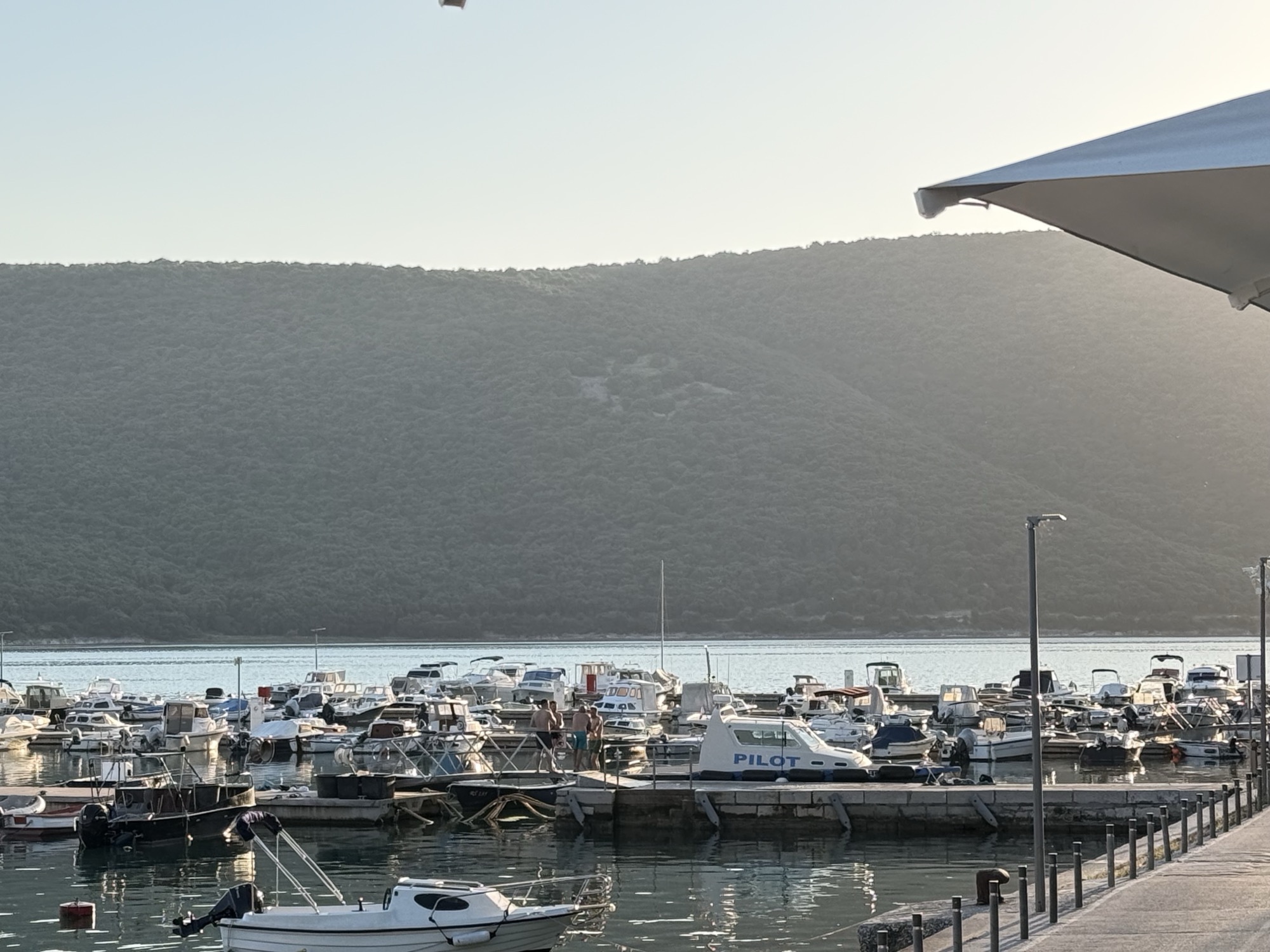
Nets, crates, lines and quay edges are tools, not styling. A visitor should never move gear, stand in a work route or frame a resident at close range without consent. If a boat is unloading, wait or step away rather than treating activity as a free performance.
Read our detailed Trget and Raša Bay guide before the stop. It sets expectations for a small harbour rather than promising a long list of attractions. The reward is context and atmosphere, not entertainment infrastructure.
Coal Shipping Changed the Village’s Context
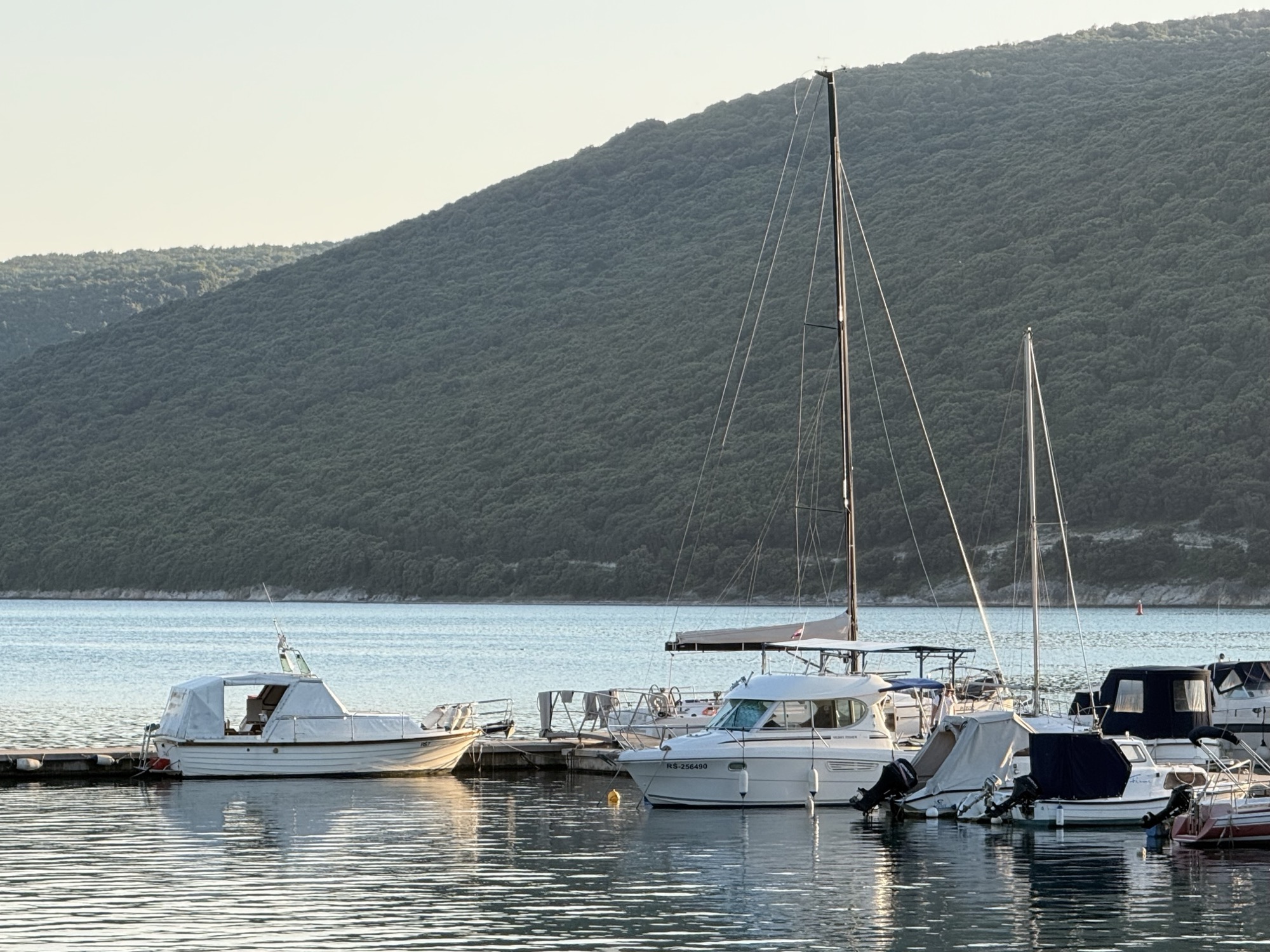
Trget grew after a coal-shipping port was built nearby in the late nineteenth century. Fishing life therefore shares the bay with a wider industrial history. The water connected inland extraction to maritime transport long before visitors arrived to photograph boats.
The valley route explains that connection best. Follow our Raša River valley drive to see how river, road, former mining landscapes and bay converge. Do not enter working port areas at Bršica.
Koromačno: Raw Material Meets Sea Transport
The cement plant at Koromačno was founded in 1926. The site offered limestone and marl raw materials together with sea access for transport. The settlement and shoreline cannot be understood by pretending the plant is an accidental object in the background.
The operator’s local history presents that development, while the plant remains operational under Holcim Croatia. Company descriptions of modernisation and decarbonisation are company-reported plans, not independent proof of environmental outcomes.
Clear Water Does Not Erase Industry
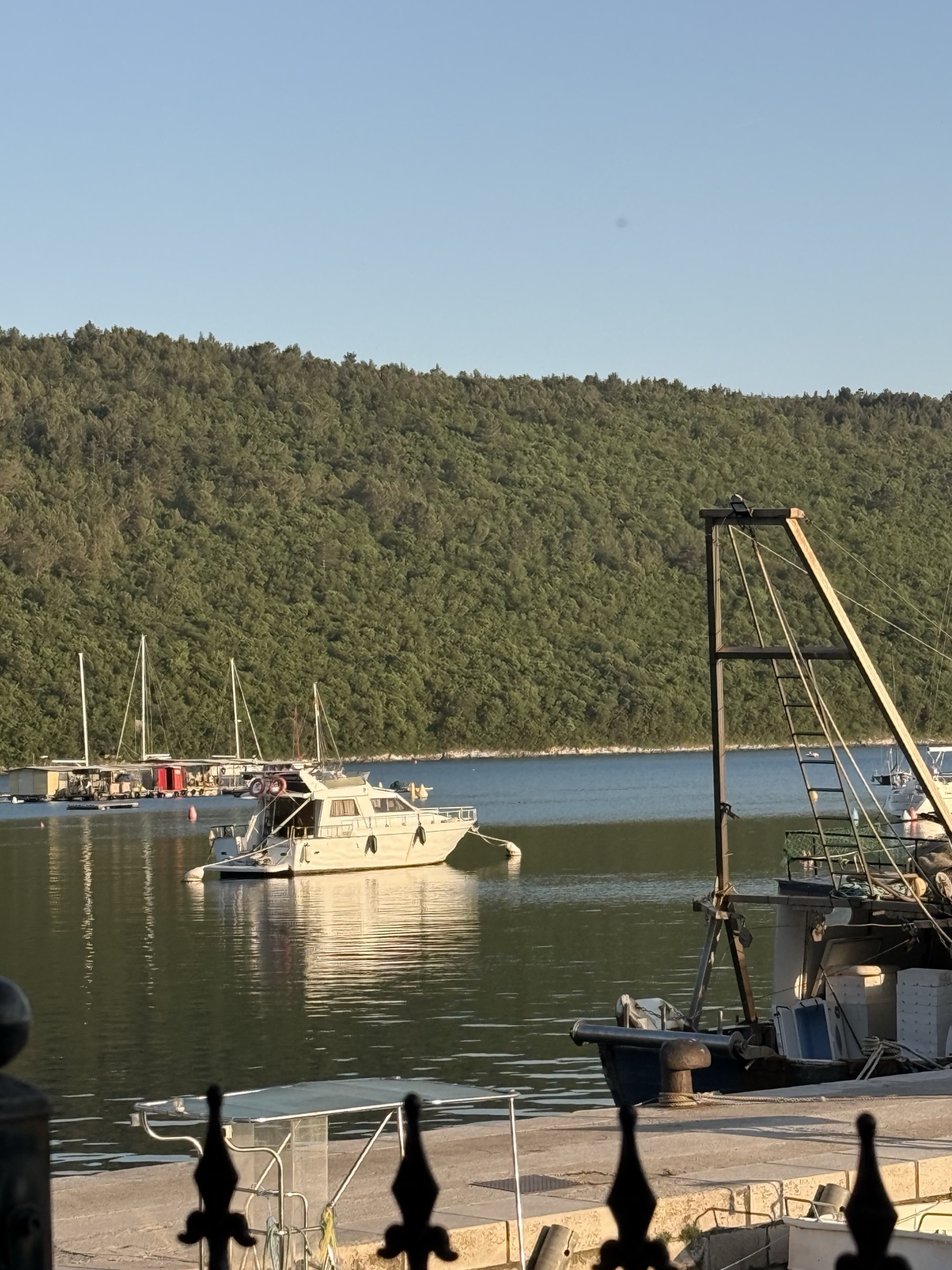
Koromačno’s visual tension is immediate: clear-looking water and rugged pale shore occupy the same frame as industrial structures. One reality does not cancel the other. A photograph that hides the plant misrepresents the visit; a photograph that shows only machinery misses the coast.
Our article on the Koromačno paradox explores that coexistence in depth. Decide whether the contrast interests you before driving. It is not a conventional resort substitute, and working land must remain outside the visitor itinerary.
A Respectful North-to-South Documentary Route
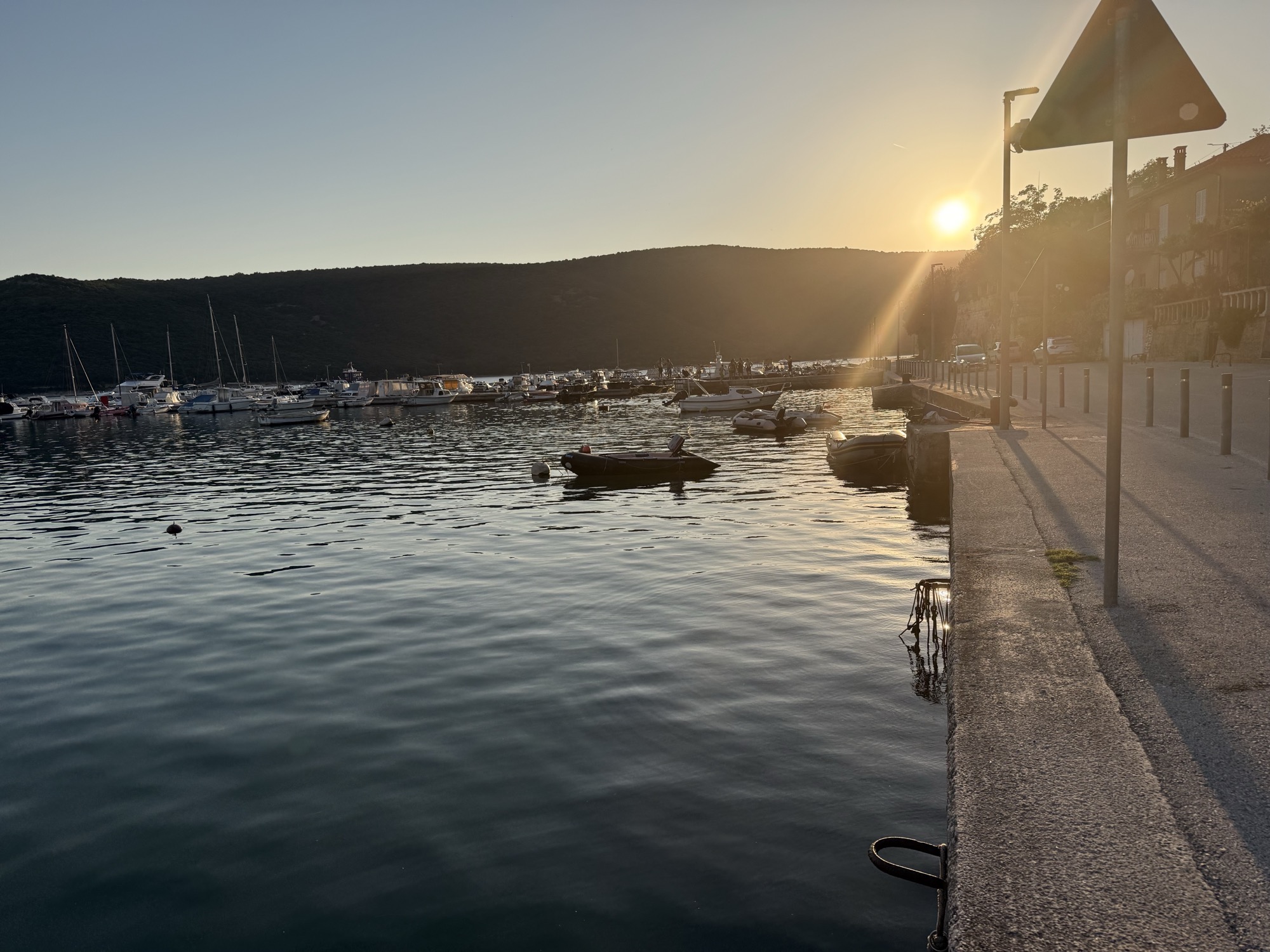
Start in Rabac early, when the promenade reveals its design before the busiest part of the day. Continue toward the Raša Bay and give Trget time around midday, when harbour geometry is legible even if the light is hard. Reach Koromačno later only if road and weather conditions remain comfortable.
This sequence is a photographic suggestion, not a timetable. Traffic, summer heat and local work take precedence. If you cannot park lawfully, do not improvise on a bend or at a gate.
- Rabac: walk a short promenade section and include both natural shore and resort infrastructure.
- Trget: observe from public harbour edges without blocking boats or gear.
- Raša Bay: stop only at lawful pull-offs and read the long inlet as a transport corridor.
- Koromačno: use public viewpoints; keep all industrial entrances and quays clear.
- Return before fatigue or darkness turns a documentary drive into a road-safety problem.
What to Photograph in Each Place
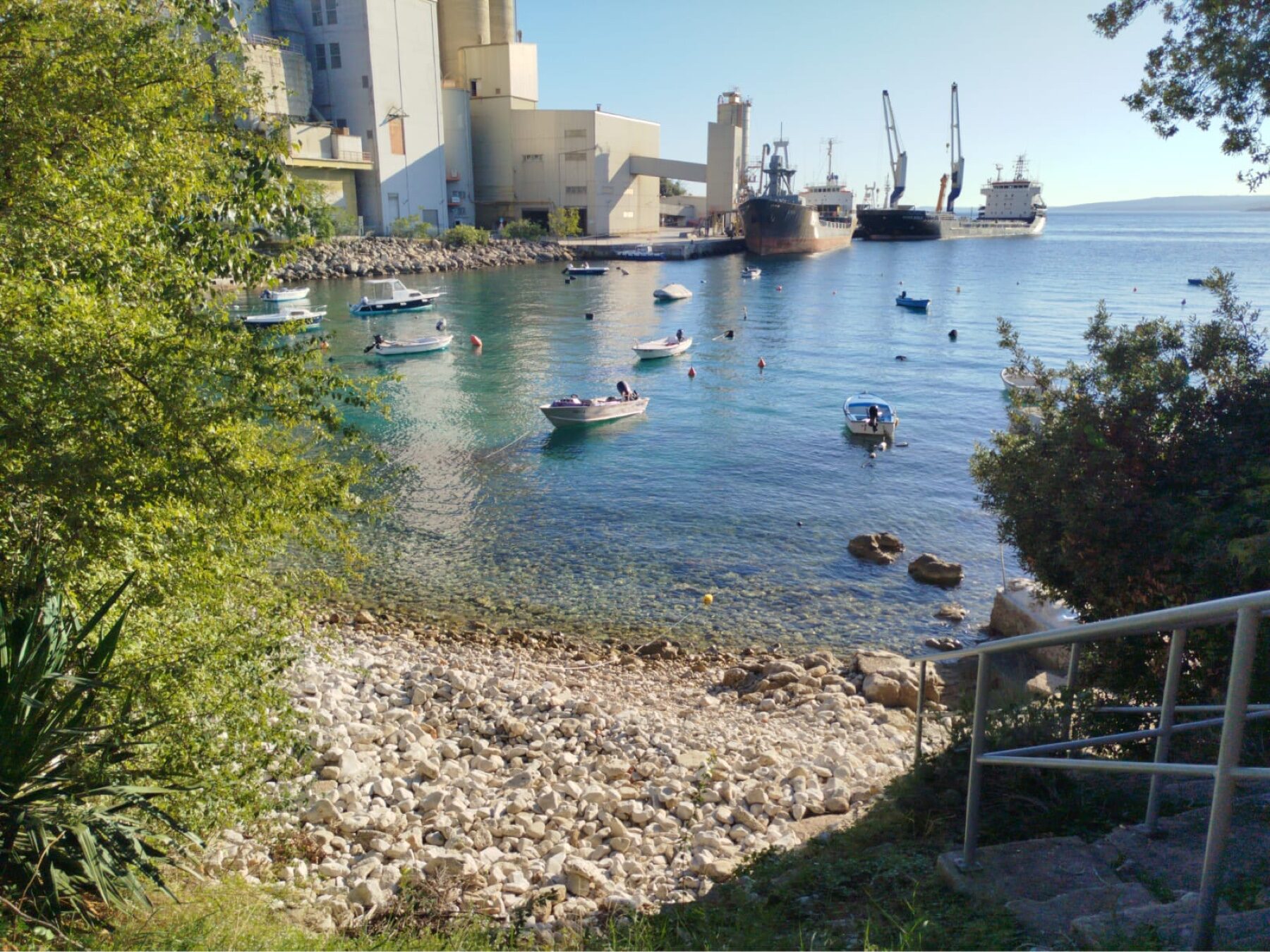
In Rabac, photograph repetition: promenade lines, beach platforms and movement between bays. In Trget, photograph relationships: boat to house, mooring to sheltered water, village to the long bay. In Koromačno, photograph scale: the human settlement between steep land, clear sea and industrial plant.
Avoid the same postcard formula at all three stops. The article is strongest when each frame reflects the place’s actual economy. Do not invent drama by trespassing, using a worker as an anonymous prop or obscuring readable safety signs.
Sound Completes the Comparison
A still image cannot capture the full distinction. Rabac may carry footsteps, conversation and leisure boats. Trget can be quiet until a small engine or working movement interrupts it. Koromačno’s industrial presence can be heard as well as seen.
Sound changes with hour, weather and operations, so describe only what is present during the visit. Do not promise silence in Trget or constant noise in Koromačno. The value lies in noticing what organises the waterfront at that moment.
Frequently Asked Questions
Can all three places be visited in one day?
Yes, with an early start and a deliberately slow plan, but winding roads, traffic and stops make exact timing unreliable.
Is Trget mainly a tourist village?
No. It is a small fishing harbour in the Raša Bay. Visit for context and atmosphere without expecting resort infrastructure.
Is the Koromačno plant still operating?
Yes. Treat all industrial ground, quays and access roads as working or restricted unless clearly marked otherwise.
Which stop is best for swimming?
This article does not rank swimming sites. Rabac has the most developed beach infrastructure; every location still requires a same-day condition check.
May I photograph workers or fishing activity?
Use public places, keep work routes clear and seek consent for identifiable close portraits. Never move equipment or enter restricted areas.
Final Thoughts
Rabac, Trget and Koromačno prove that a coast is never only scenery. Hospitality, fishing and cement production each construct a different edge between land and water.
The road trip works when those realities remain intact. Walk, watch and photograph from public space; compare without ranking; and leave working people enough room to continue the life that gives each waterfront its meaning.