
Rovinj in 30 Details: Doors, Laundry, Stone Alleys and Working Boats
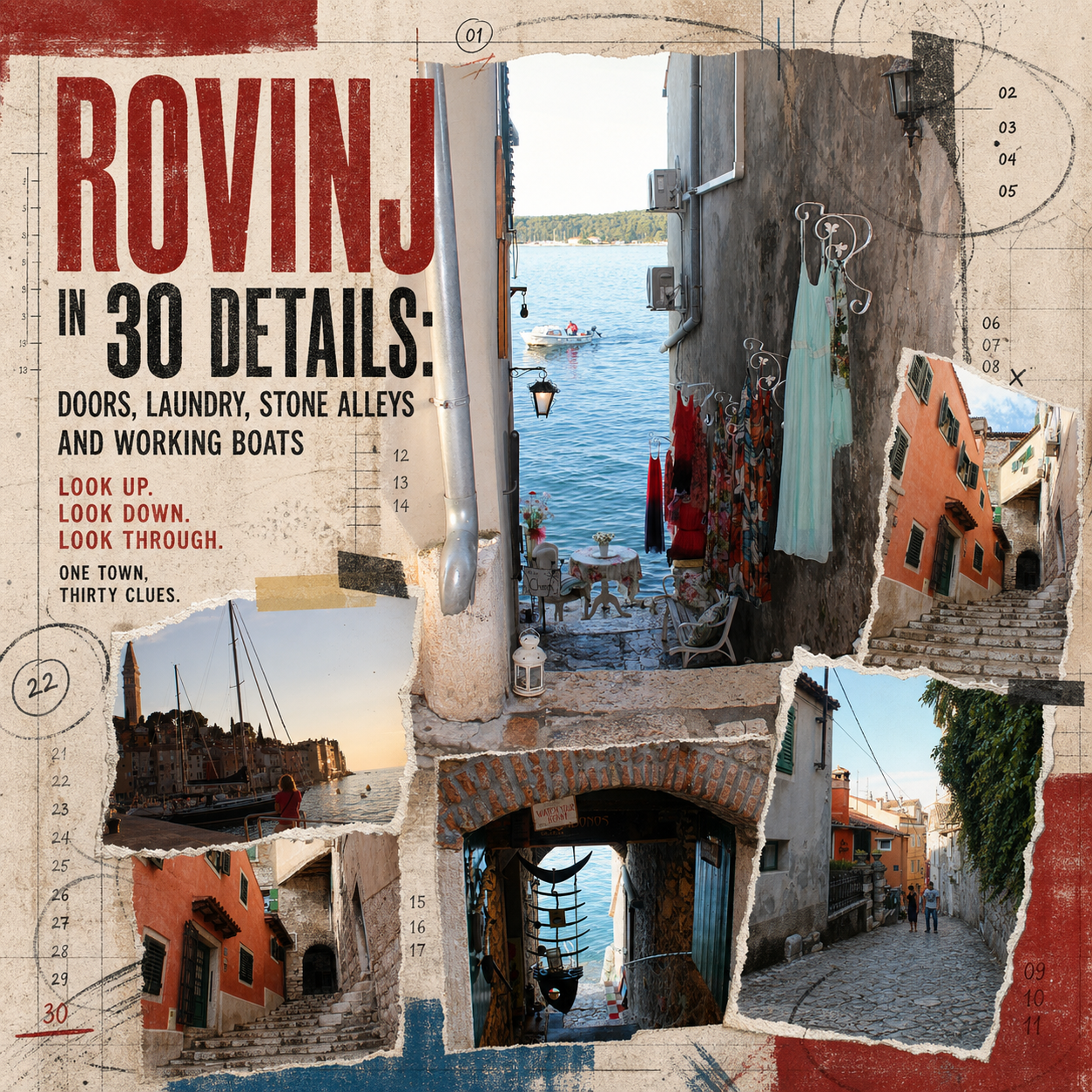
Rovinj is easy to reduce to one photograph: the old town rising from the sea, with the bell tower of St Euphemia above a tight cluster of roofs. That view deserves its fame, but it tells only the largest part of the story. The town becomes more interesting when you stop trying to fit it into a postcard and begin reading what sits at eye level, underfoot and between the houses.
This is a guide to thirty such clues. Some are architectural—a polished threshold, a patched wall, a shutter fixed at an angle. Others are domestic: washing above a lane, a chair placed where the shade lasts, plants squeezed onto a sill. The maritime details are just as revealing: mooring rings, swim ladders, ropes, boat shapes and passages that end abruptly in blue water.
You do not need specialist knowledge or a checklist in your hand. Walk slowly through Rovinj Old Town, look up and down more often than forward, and let the small things change the pace. The aim is not to collect thirty objects. It is to notice that Rovinj remains a living town inside its extraordinary scenery.
Key Takeaways

Look Beyond the Skyline
The strongest details appear in side lanes, on worn thresholds and inside passages where the sea is visible only at the end.

Read Repairs as Part of the Architecture
Stone, brick, plaster and newer fittings overlap because these buildings have been adapted repeatedly, not frozen in one century.

Follow the Town Back to the Water
Ropes, ladders, boats and sea-facing doorways show that Rovinj’s old core is a maritime neighbourhood, not merely a viewpoint.

Observe Without Staging the Town
Photograph from public space, keep entrances clear and remember that laundry, doorways and windows belong to somebody’s daily life.
Details 1–5: Read the Town Before Entering It
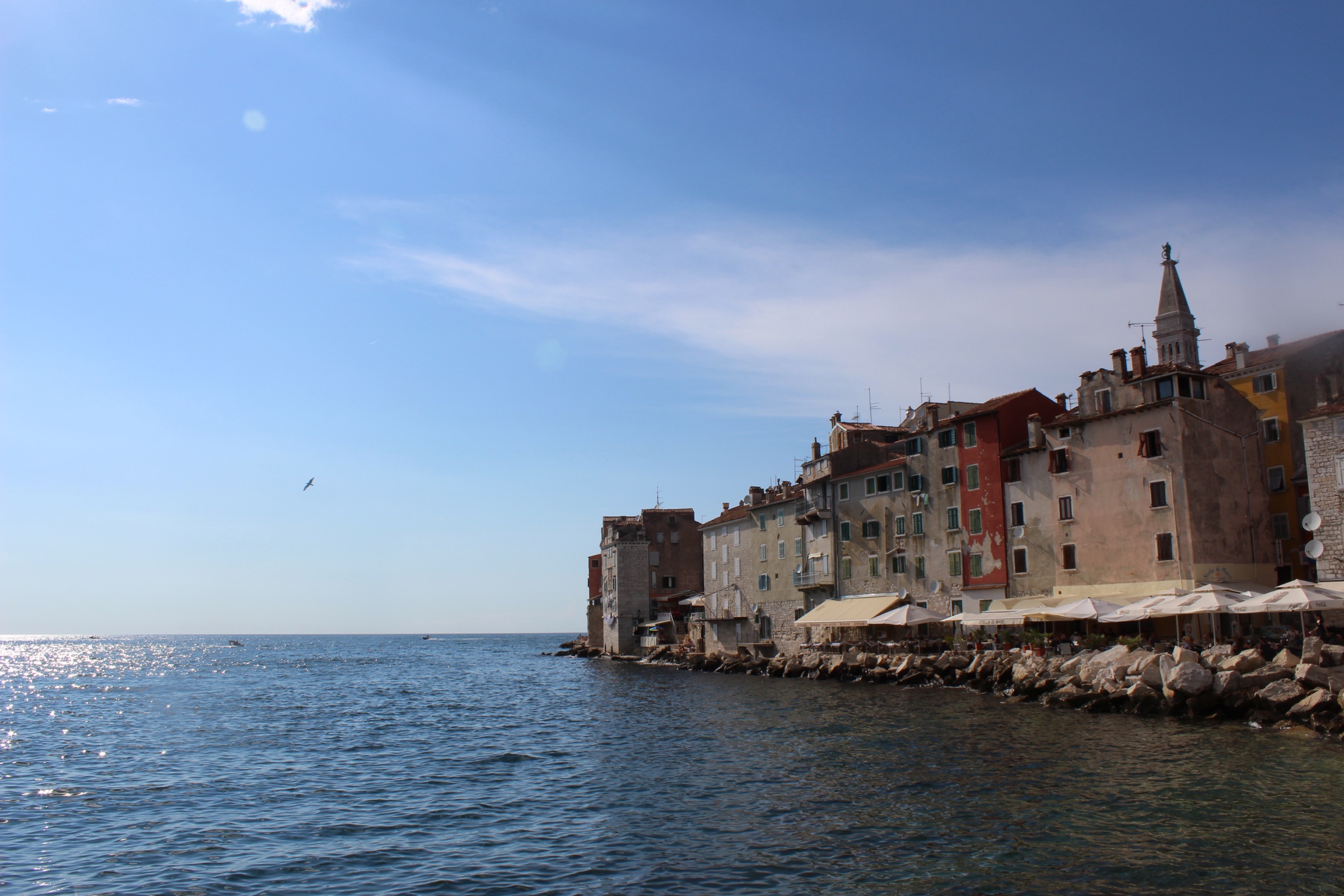
1. The houses meet the sea without a polite transition. From the waterline, Rovinj’s outer walls appear to rise directly from rock. There is little visual space between domestic architecture and the Adriatic, which explains why water keeps reappearing unexpectedly inside the street network.
2. The bell tower works as a compass. St Euphemia’s tower is not only a landmark; it tells you which way the peninsula climbs. Lose sight of it in a lane and you can still infer its direction from the gradient.
3. The skyline is made from unequal houses. From a distance the old core looks unified. Closer inspection shows different heights, patched roofs, irregular windows and walls that refuse a clean grid. The harmony comes from accumulation, not uniformity.
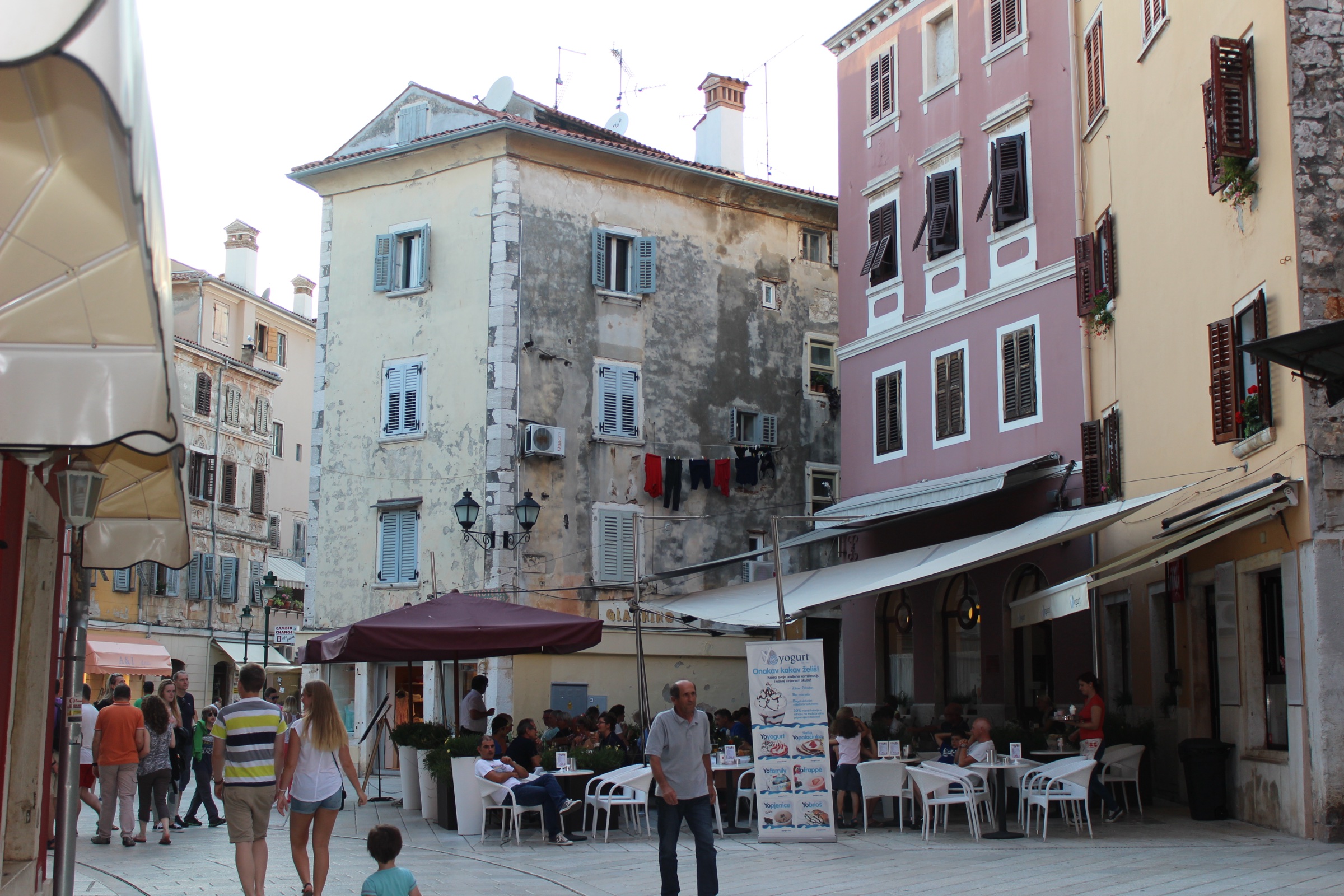
4. The lower squares behave like hinges. They connect harbour movement, café life and the first uphill streets. Stand at the edge rather than the centre and watch how residents cut diagonally through a space that visitors tend to cross slowly.
5. Façade colour is never one colour. Venetian red, ochre, pale blue and tired grey have been bleached, repaired and repainted at different times. Look at the edges around shutters and signs, where older layers often remain visible.
If this is your first visit, our one-day walking route through Rovinj gives the larger structure. This article deliberately slows that route down.
Details 6–10: Stone Records Movement
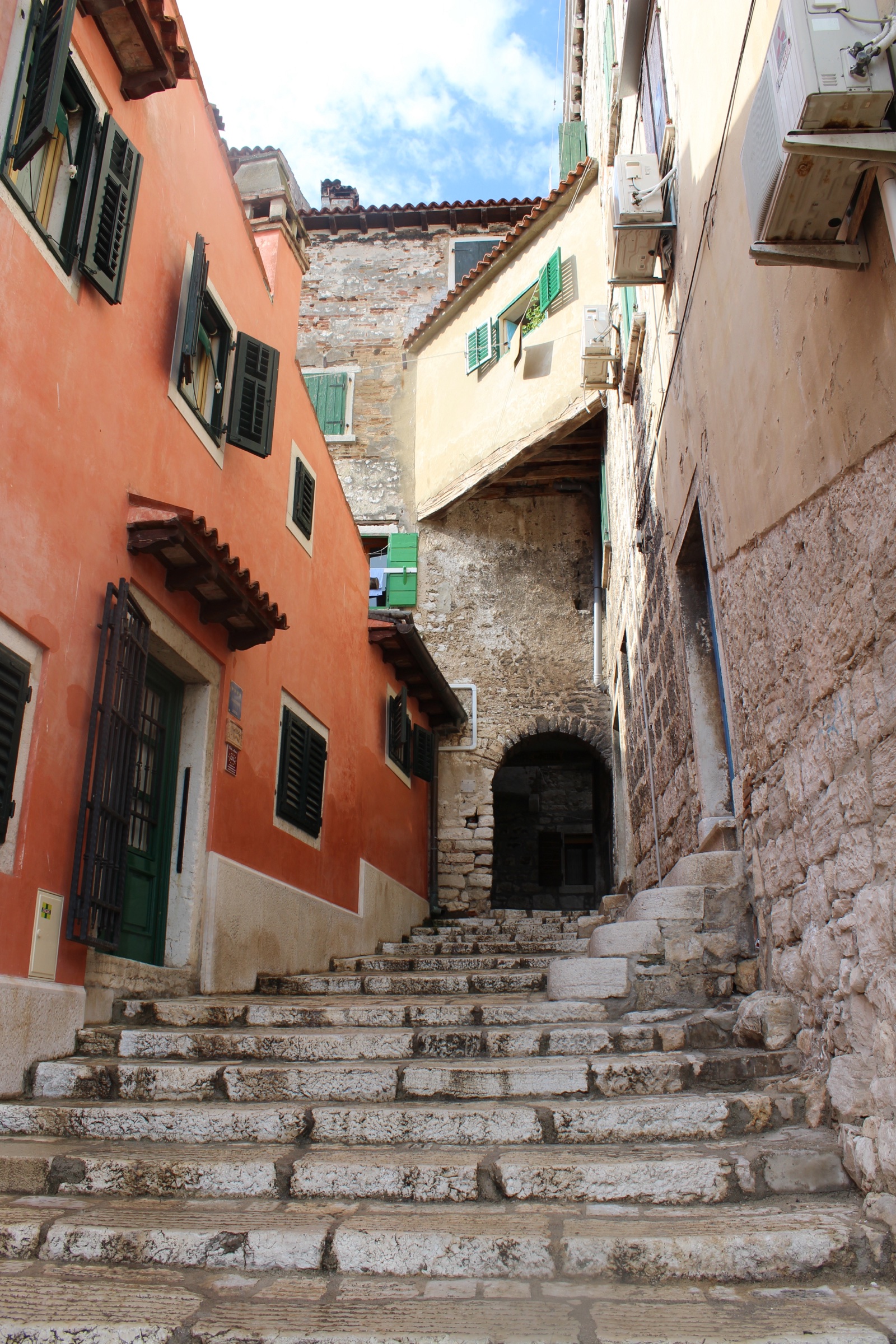
6. The centre of a paving stone can shine more than its edge. Centuries of shoes, carts, rain and cleaning have polished frequently used lines. On dry days the surface glows; after rain it can become extremely slippery.
7. Steps rarely agree on a standard height. Some are shallow, others surprisingly tall, and repairs have changed their rhythm. Walk with attention rather than looking only through a camera. Good shoes matter more here than completing a route quickly.
8. Thresholds reveal which doors still work hardest. A rounded edge, a newer patch or a polished strip suggests repeated use. Never block an entrance while framing it; these are homes, workshops and storage rooms.
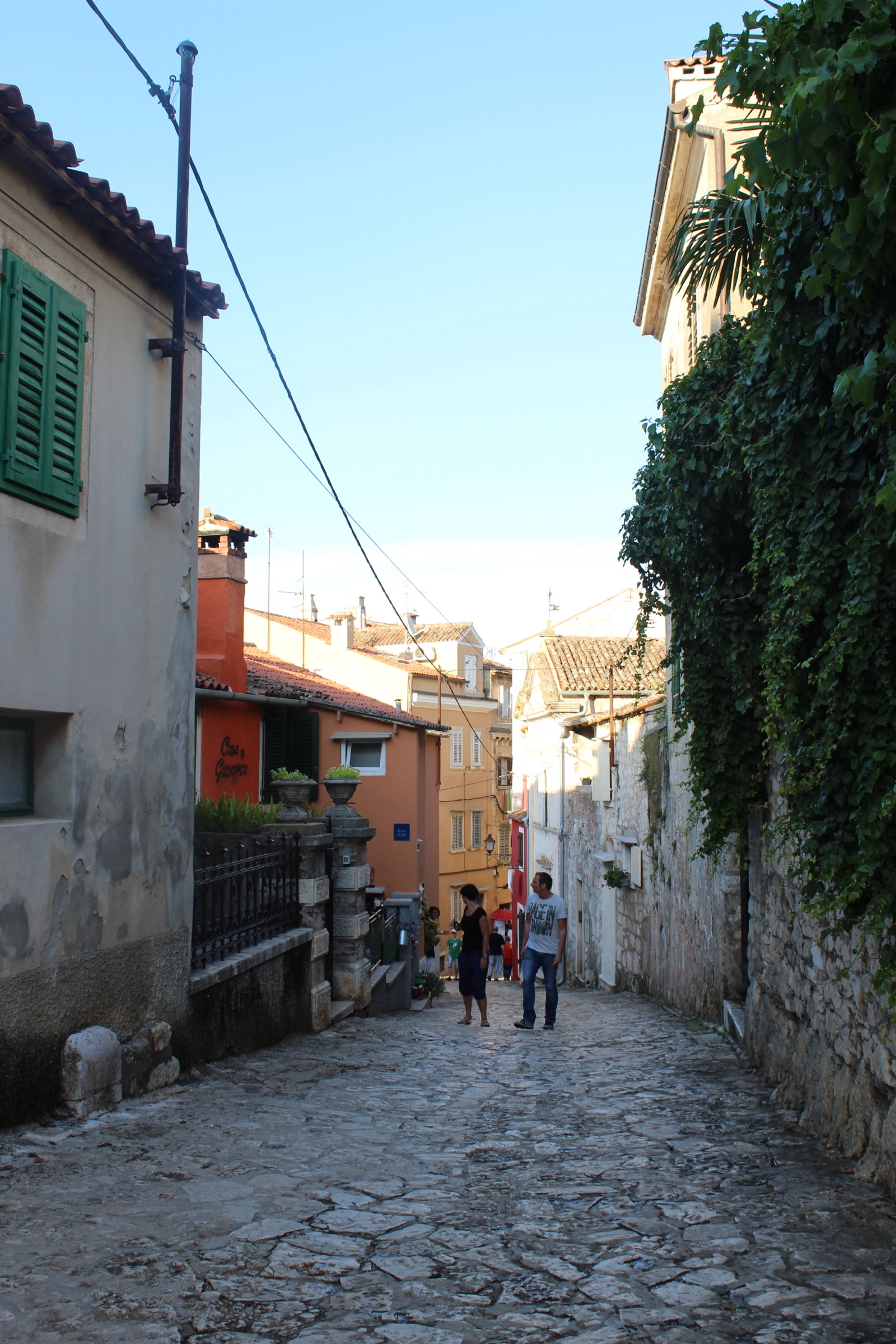
9. Repairs form a second map. Brick infill, pale mortar, electrical channels and small concrete corrections show where an old structure has been asked to support modern life. Do not read every mismatch as neglect; adaptation is one reason the centre remains inhabited.
10. Drainage is built into the street. Slopes, narrow channels and the angle of paving direct sudden rain downhill. A lane that feels picturesque in sunshine is also a piece of practical infrastructure.
Details 11–15: Doors, Shutters and Domestic Signals
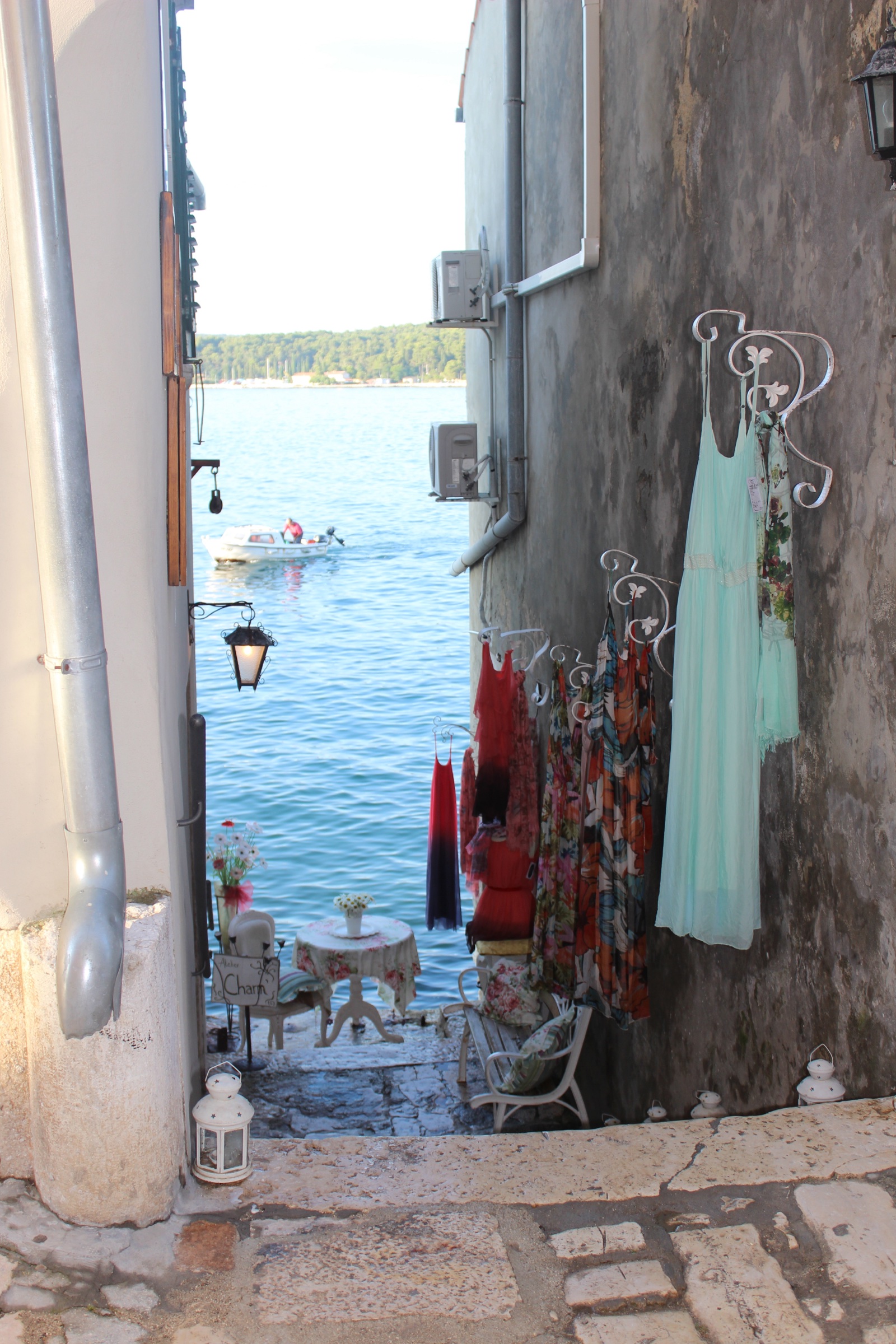
11. Green shutters are working equipment. They regulate glare, heat, privacy and airflow. Their different angles often tell you more about the sun than a weather app: fully closed against hard light, cracked open for air, folded back in shade.
12. Doors have several lives. A heavy wooden door may protect a home, cellar, workshop or boat-storage space. New locks, bells and cables sit on old frames because the function changes faster than the stone around it.
13. Laundry marks the scale of the lane. A shirt or sheet overhead makes the distance between opposite façades suddenly legible. It is a compelling photograph, but it is also private life in public view. Use a wider scene and avoid isolating personal garments or looking through windows.
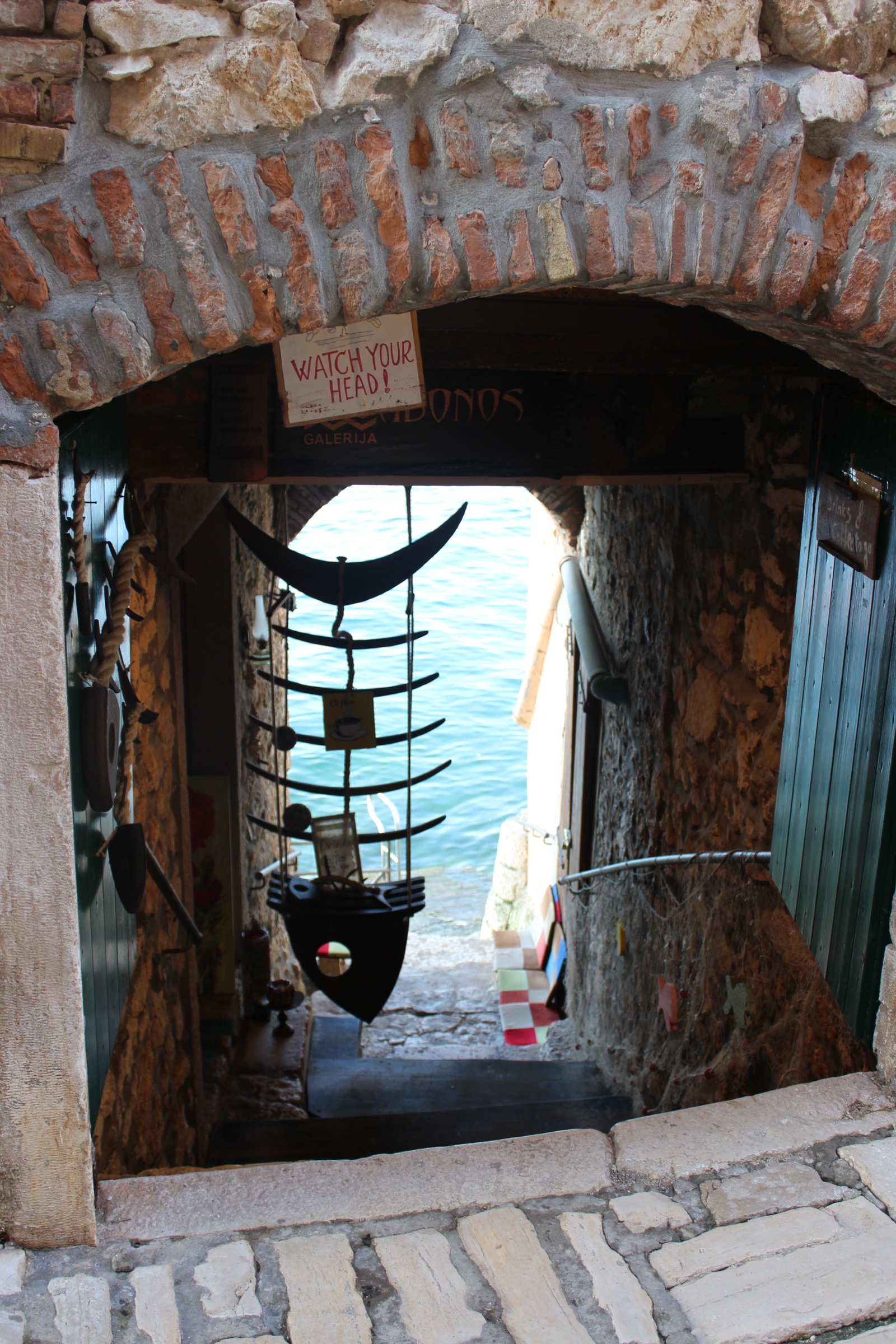
14. Small signs negotiate between languages and uses. Rovinj-Rovigno’s bilingual identity appears in official names, while gallery notices and handwritten messages add more layers. Photograph readable text accurately or leave it small; a fragment without context can mislead.
15. A chair can identify the best microclimate. One seat beside a wall may mark morning shade, evening conversation or the place where a doorway catches air from the sea. Ordinary furniture often explains a street better than a monument plaque.
How to Photograph Details Respectfully
| Subject | Best approach | Useful light | Avoid |
|---|---|---|---|
| Stone and steps | Shoot slightly across the surface to reveal wear | Low side light | Standing where others must pass |
| Doors and shutters | Include enough wall to show context | Open shade | Looking through private windows |
| Laundry and balconies | Use a wide street composition | Soft morning light | Turning domestic life into spectacle |
| Passages to the sea | Expose for the bright water, then lift shadows | Morning or late day | Blocking a shop or residence |
| Boats and ropes | Show the boat in relation to quay and town | Early harbour light | Stepping onto working equipment |
Details 16–20: Art Appears in the Gaps
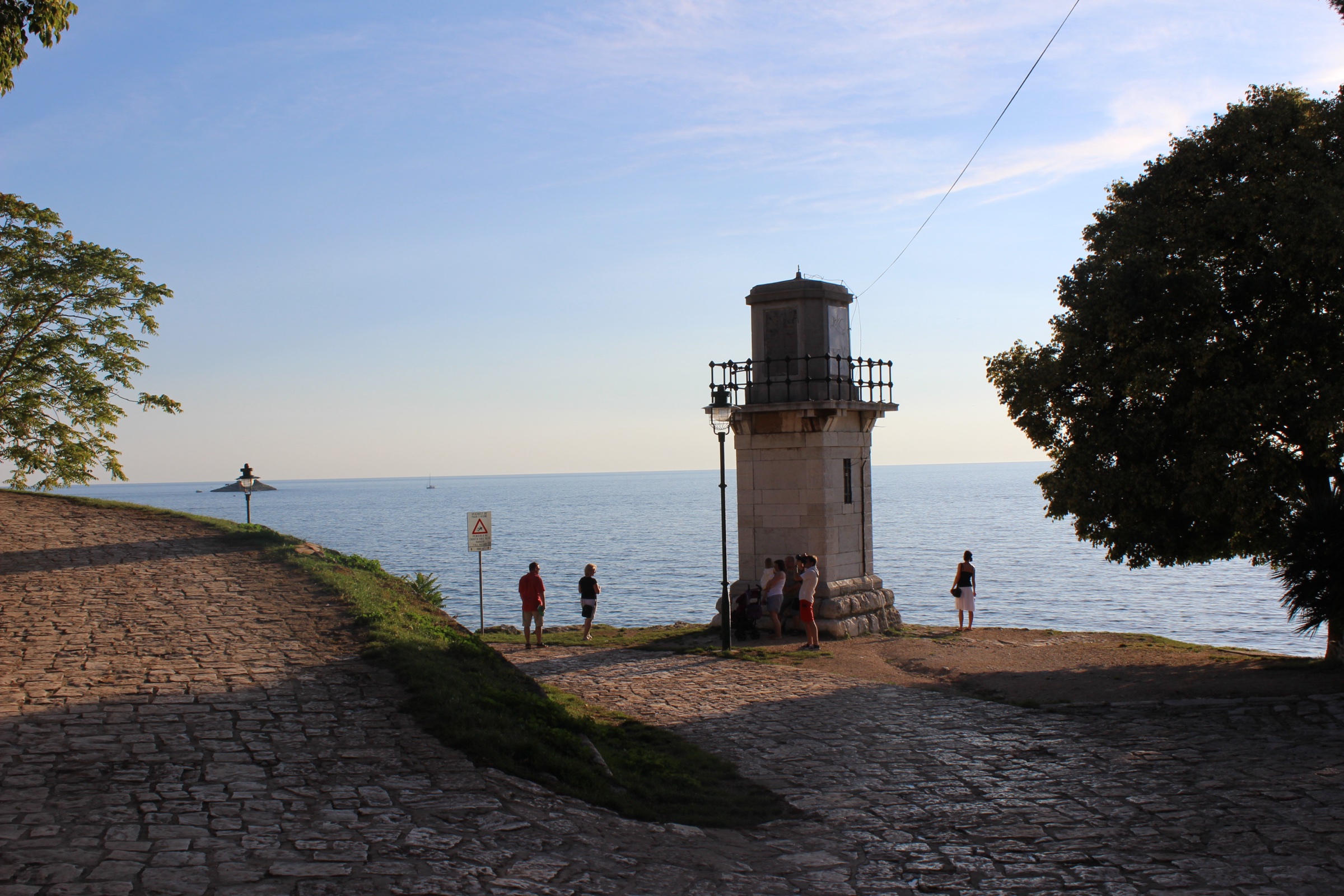
16. Grisia is a street before it is a gallery. Art displays are part of its identity, but the incline, polished stone and narrow frontage control how everything is seen. Look at how frames, easels and signs adapt to surfaces that were never designed as white-cube exhibition walls.
17. Empty wall space is valuable. In a dense old town, a few clear centimetres can hold a lamp, number, cable, shelf or small artwork. The visual richness comes from negotiation rather than decoration added all at once.
18. Arches compress one view and reveal another. A dark passage makes the sea beyond look brighter; a low arch changes posture and pace. Step to one side after taking the photograph so the threshold remains usable.
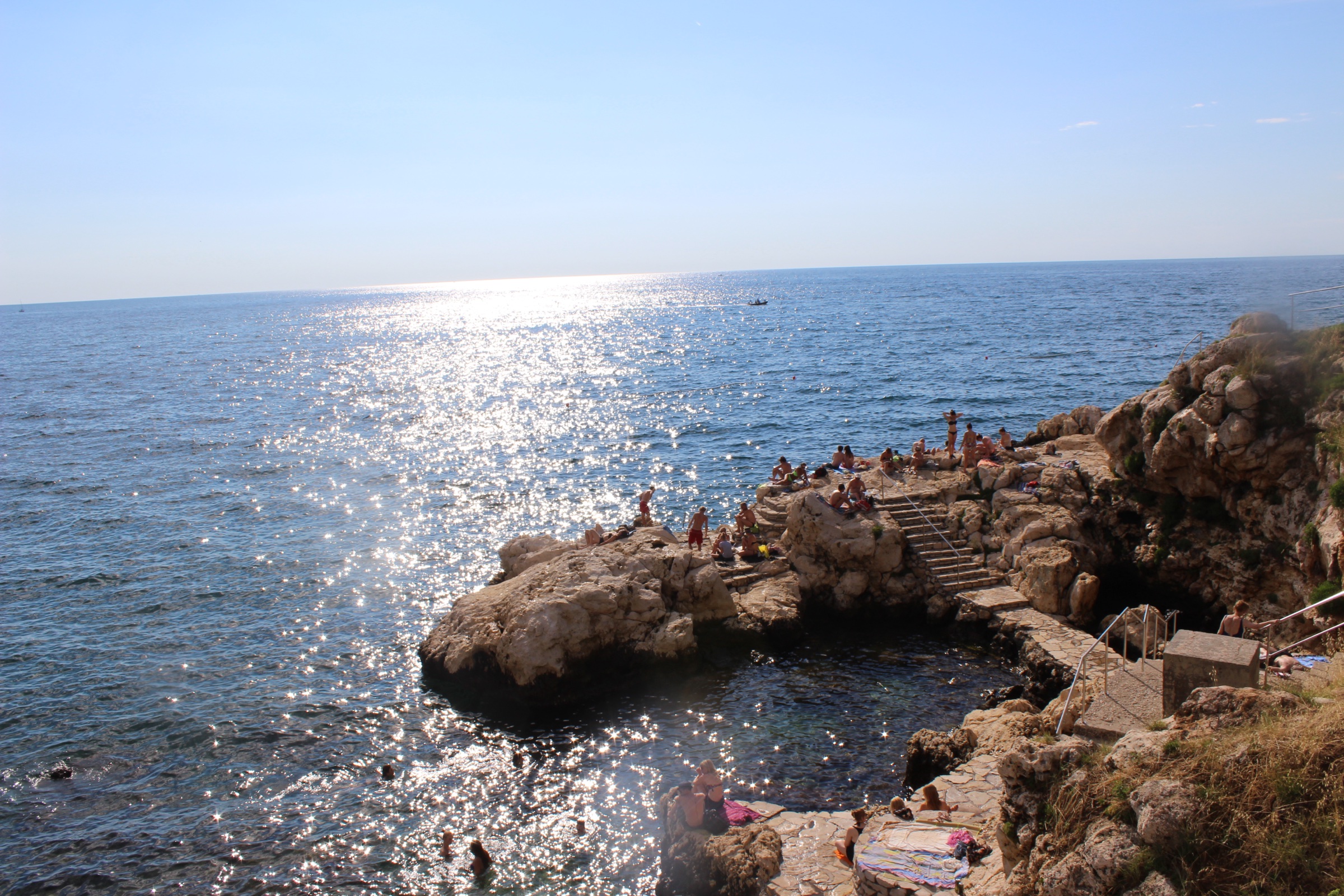
19. The town’s edge can become a beach without sand. Flat rocks, steps and ladders create informal access to the water. They are beautiful in calm weather but exposed when waves rise, so judge conditions rather than copying where somebody stood in a photograph.
20. The best frame often contains an interruption. A towel, cable, plant, handrail or swimmer prevents the old town from becoming a museum set. Rovinj’s details matter because the historic fabric is still being used.
Details 21–25: Every Lane Remembers the Sea
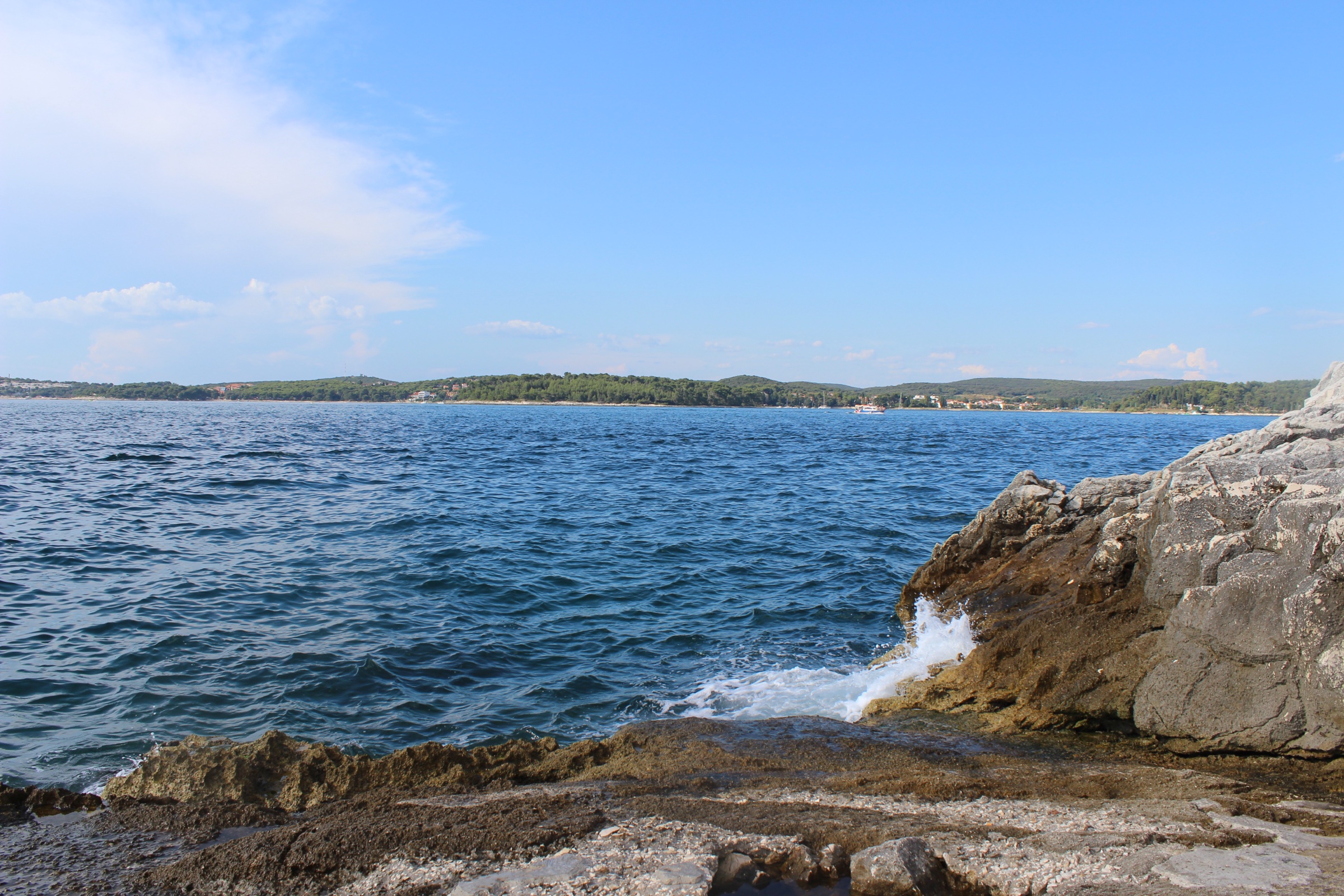
21. Limestone changes colour at the waterline. Dry rock, wet rock and submerged rock create three distinct tones. That transition makes even a simple shore photograph describe depth.
22. Salt leaves its own surface. Metal dulls, paint lifts and stone collects pale residue. These are not flaws to remove from the picture; they explain the cost of living beside the sea.
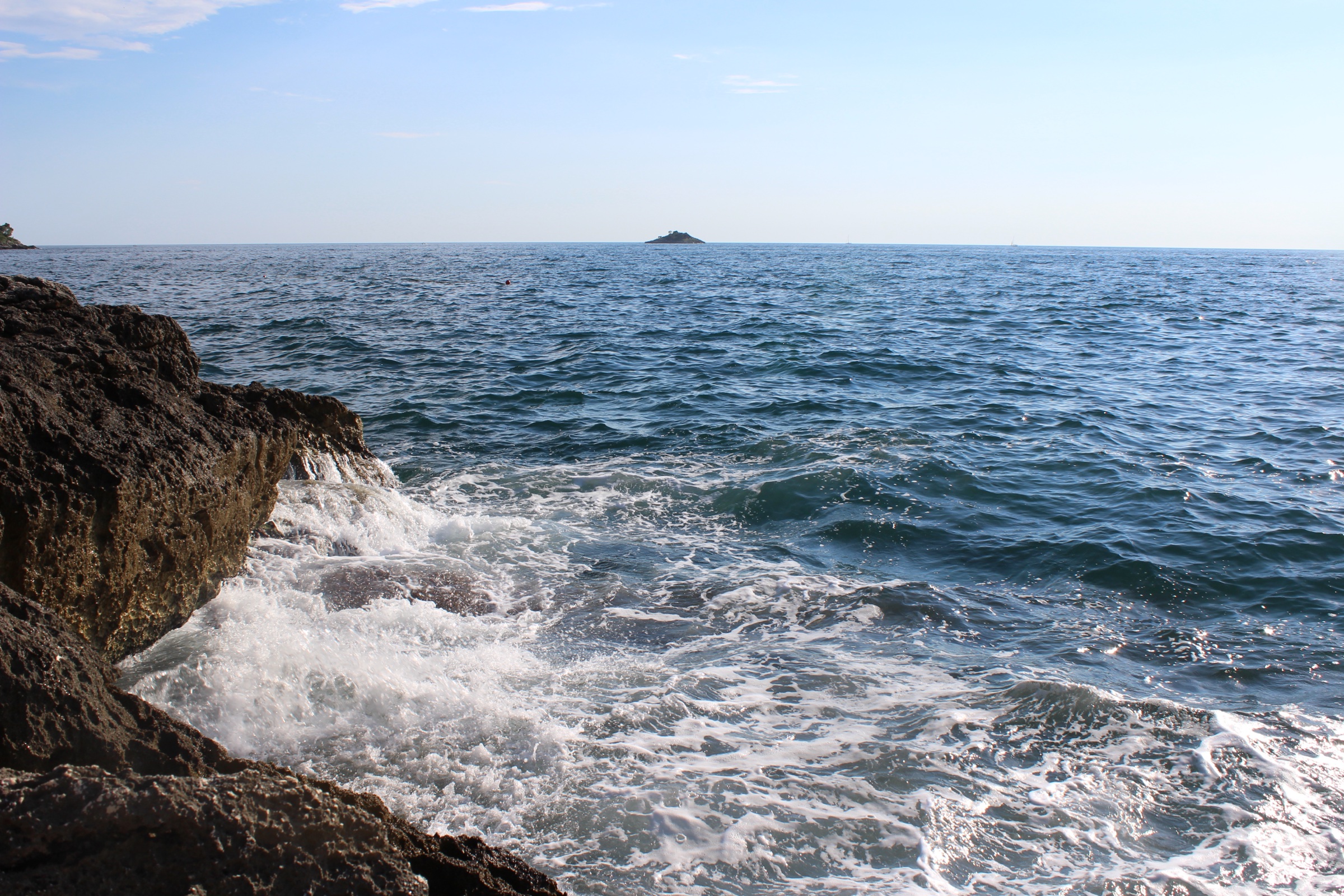
23. A small boat gives the horizon scale. Without it, the glittering sea can become abstract. With it, distance, weather and the human size of the coast return to the frame.
24. Mooring hardware is street furniture. Rings, cleats, ropes and fenders occupy the threshold between quay and water. Look, but do not move or sit on working gear.
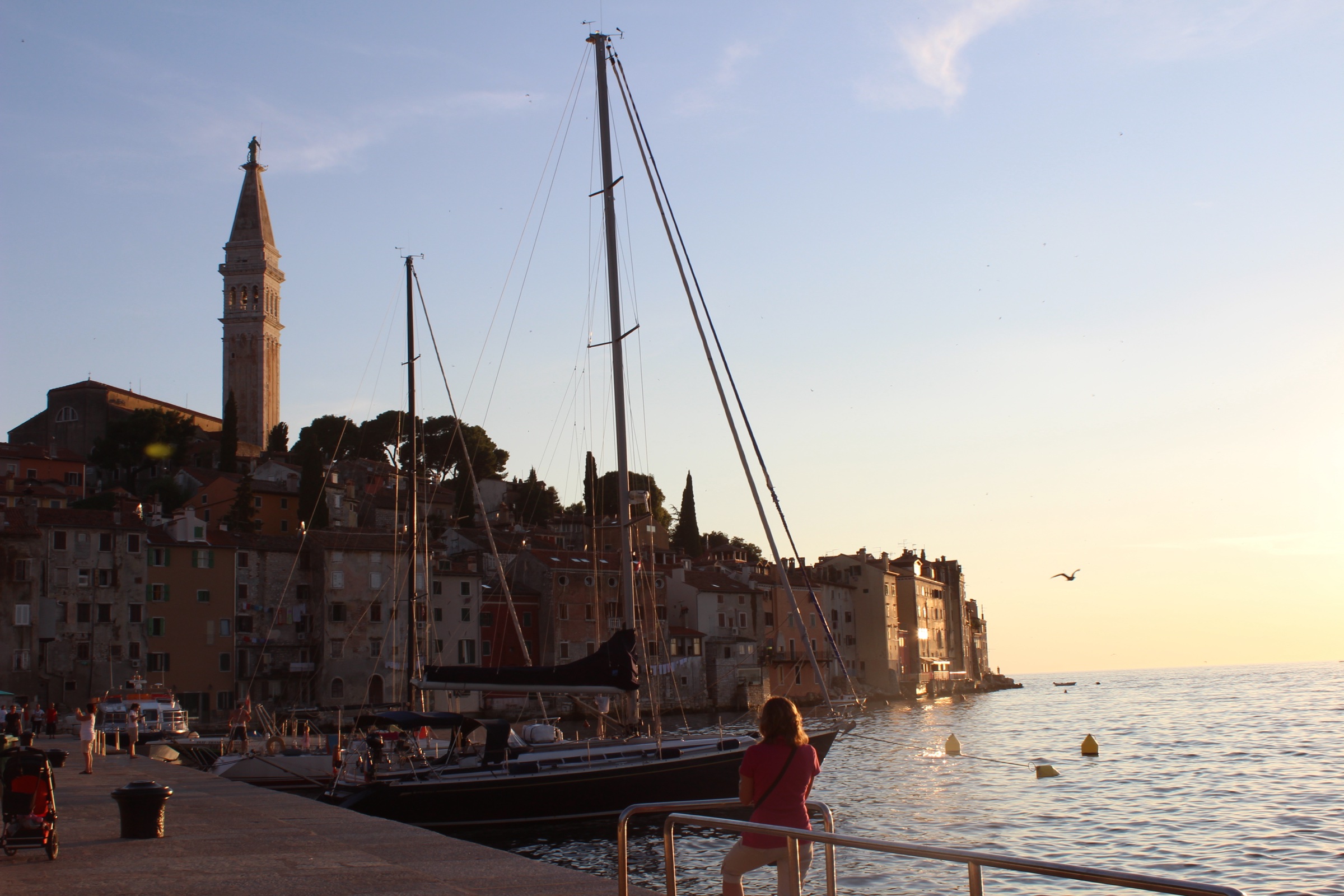
25. The batana is recognised by its modest scale and flat-bottomed form. Not every small boat in the harbour is a batana, so avoid labelling one from a distant silhouette. The official Batana Eco-museum explains how this traditional vessel connects fishing knowledge, boatbuilding, language and community memory.
For a fuller account of the harbour before visitor traffic dominates it, read our article on Rovinj’s working waterfront.
Details 26–30: Evening Simplifies the Town Again
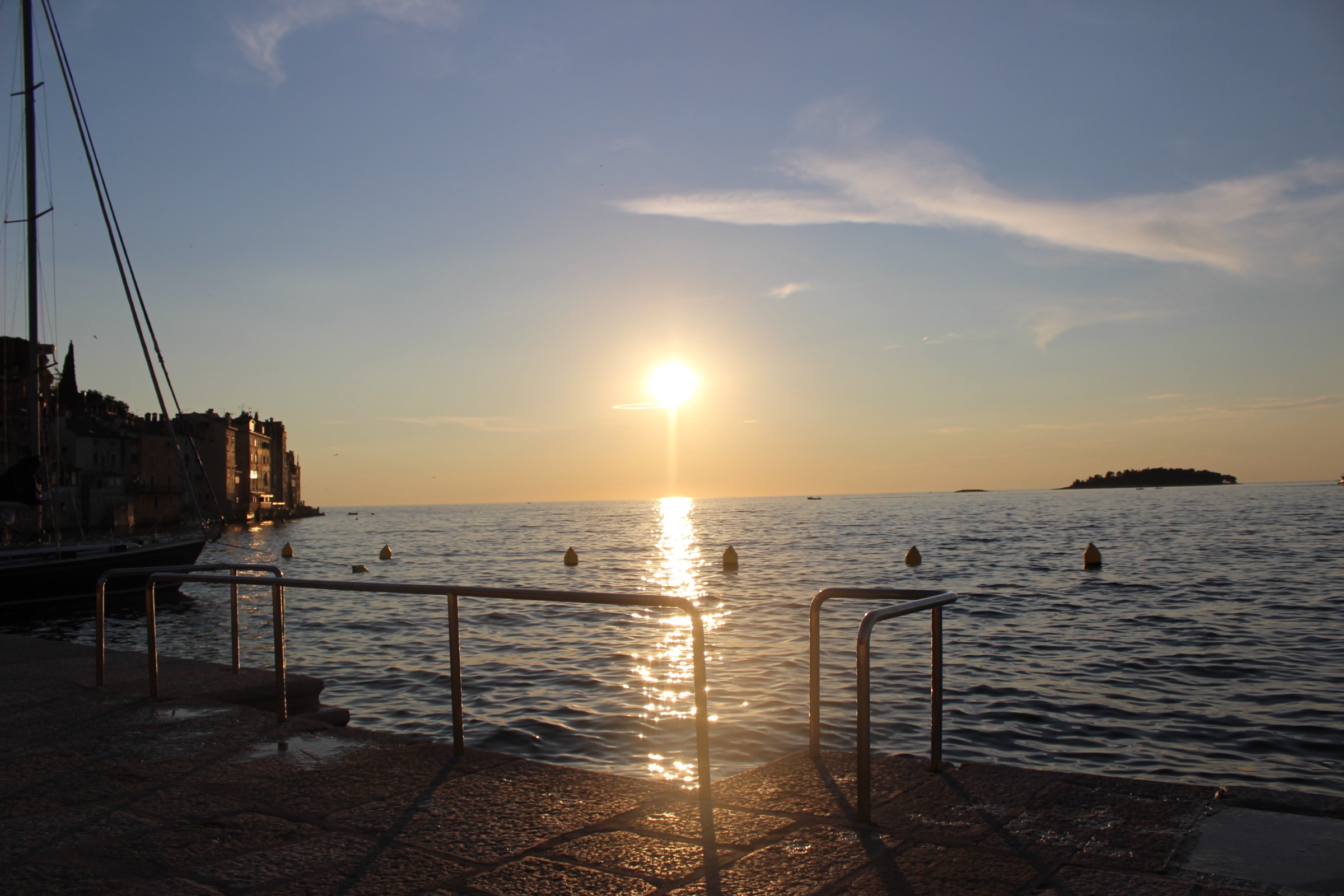
26. A swim ladder is both invitation and warning. It identifies an established entry point, but it does not guarantee safe conditions. Check waves, depth and your return route before entering.
27. Handrails catch the last light before stone does. Metal edges can outline a route after the lane itself has fallen into shadow. Evening rewards side glances more than broad views.
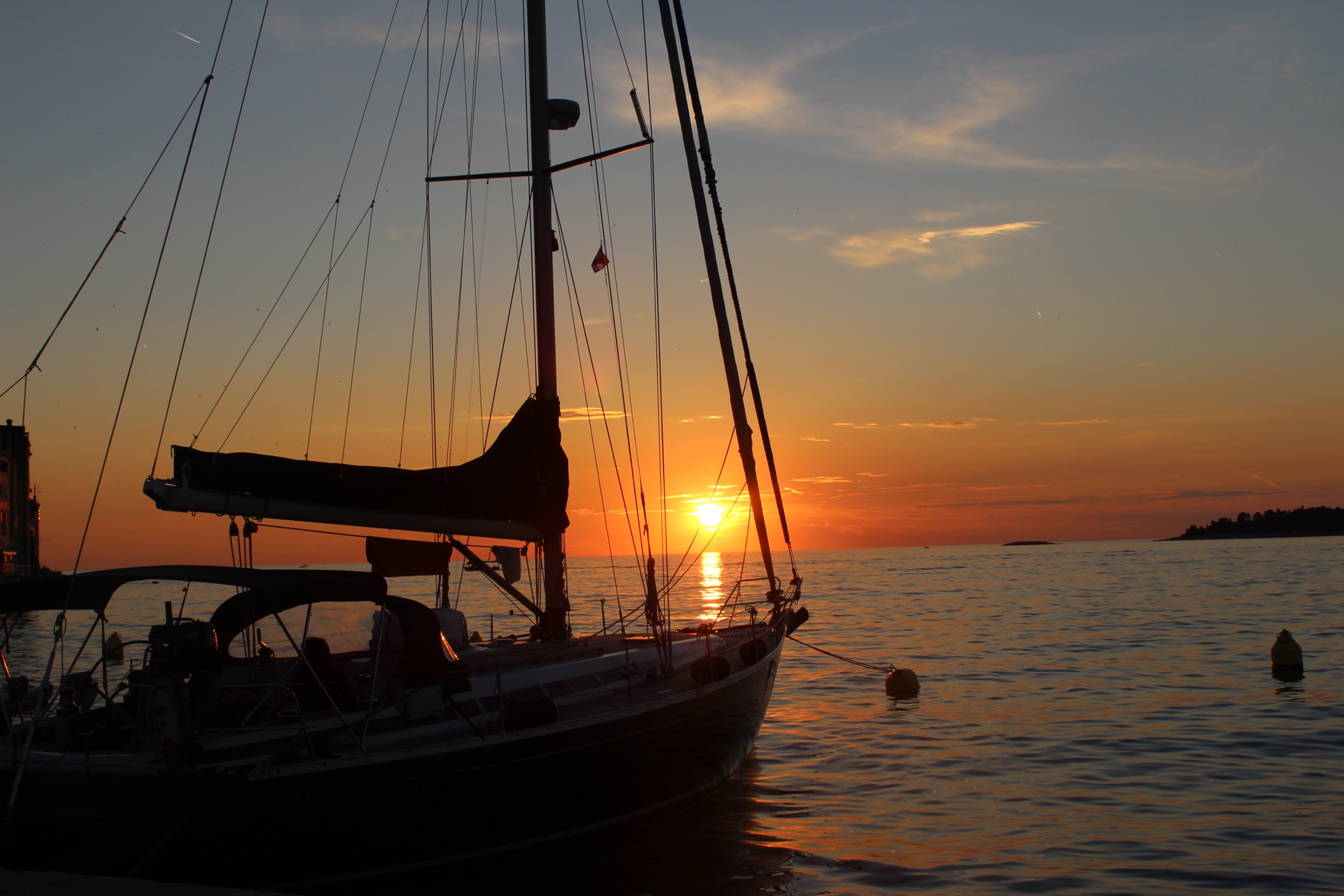
28. Rigging turns into line drawing. Against a bright horizon, masts and ropes simplify into geometry. Leave space around them rather than filling every part of the composition.
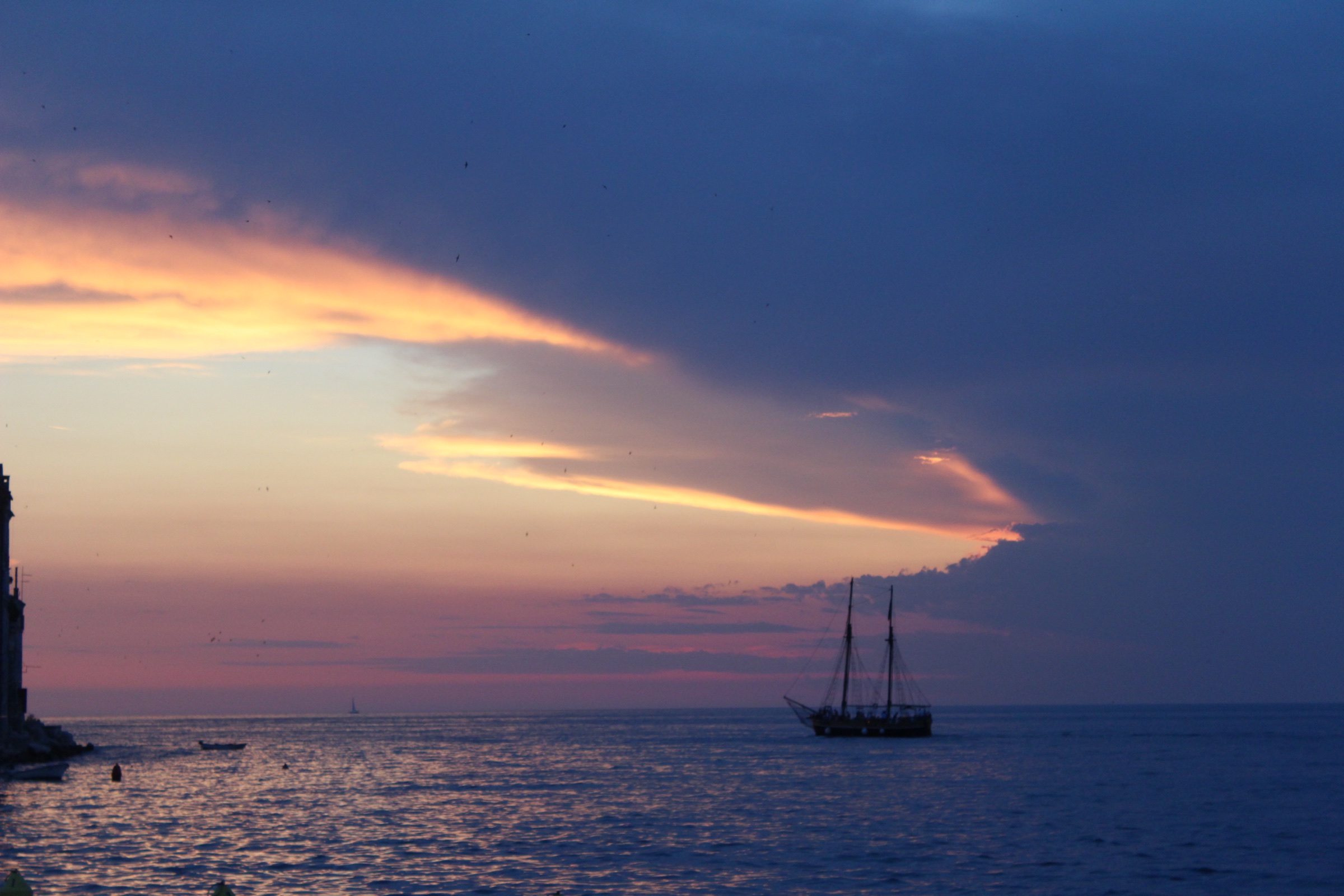
29. Clouds decide which colour survives. A dramatic sky can pull attention away from Rovinj, while a narrow band of light can reveal roof edges and boats. Photograph the weather as part of the place, not as a replacement for it.
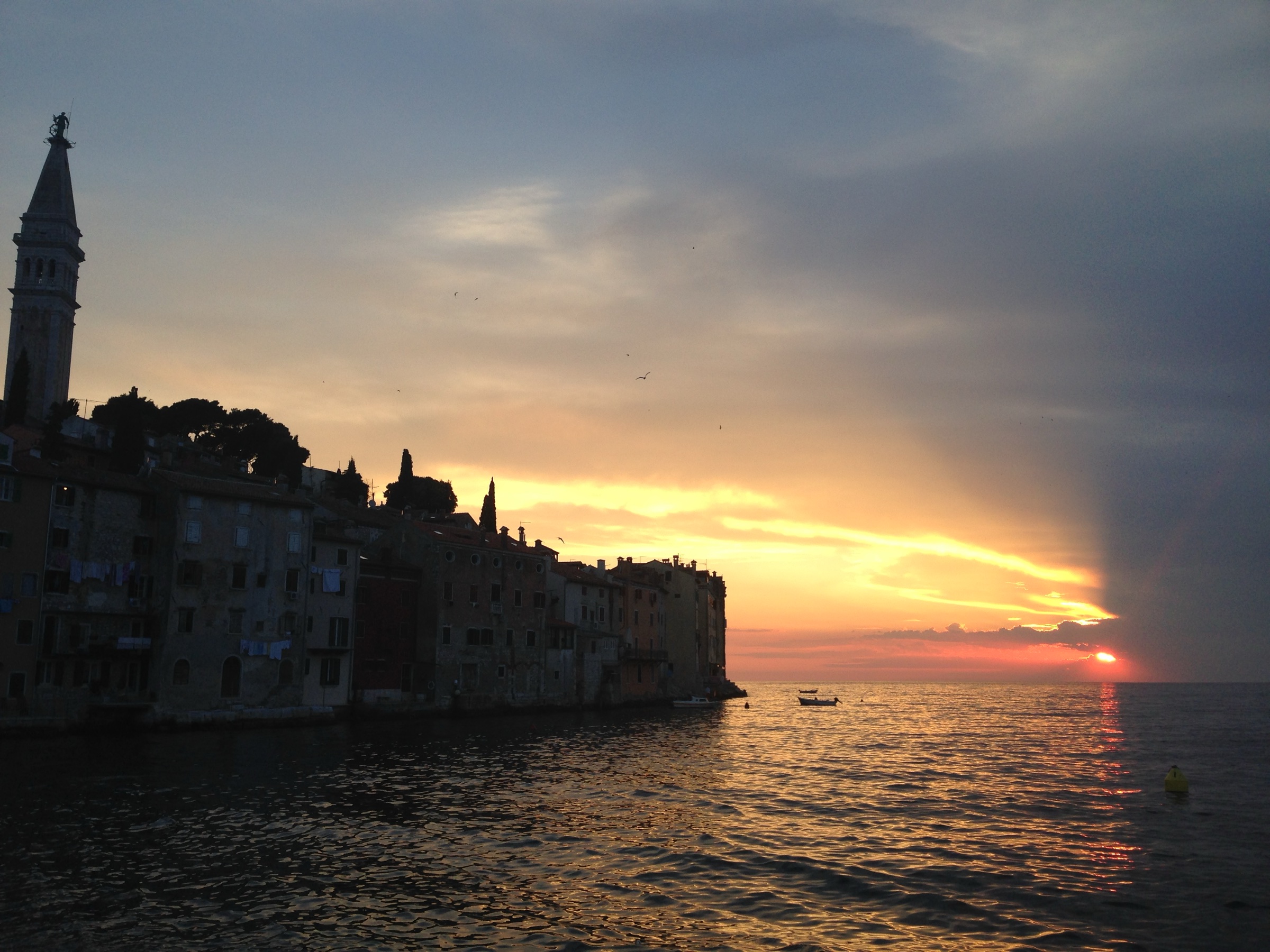
30. At sunset, the thirty details collapse back into one silhouette. Doors, laundry, thresholds and cables disappear, and the famous outline returns. The difference is that you now know what the darkness contains.
If this kind of visual reading appeals to you, our guide to photographing Labin and Rabac beyond the postcard applies the same patient approach to eastern Istria.
Frequently Asked Questions
How long should I allow for this detail walk?
Allow at least two unhurried hours in the old core, more if you stop for galleries, the Batana Eco-museum or a swim. The route is geographically short; observation is what takes time.
What is the best time for photographing Rovinj’s lanes?
Morning gives quieter streets and softer light in many passages. Late afternoon emphasizes wall texture and leads naturally into harbour sunset photographs. Midday can work well inside deep shade, but contrast becomes harder near sea openings.
Are the stone streets difficult to walk?
They are steep, uneven and polished in places. Wear supportive shoes, slow down on descents and take extra care after rain. A route that looks short on a map may feel demanding for limited mobility.
May I photograph doors, laundry and residents?
Photographing a broad public street scene is different from aiming into a private interior or isolating somebody without consent. Keep doorways clear, avoid windows and ask before making a person the identifiable subject.
Is this a separate route from the main Rovinj sights?
No. The details sit along the familiar old-town climb and waterfront. The method changes, not necessarily the map: walk the standard route more slowly and use side lanes when they remain public and accessible.
Final Thoughts
Rovinj’s grand view is the invitation, not the complete explanation. The old town makes sense through the evidence of use: stone worn bright, shutters positioned against the sun, a doorway updated without erasing its frame, a rope leading from quay to boat, a narrow passage holding a rectangle of sea.
Thirty is an editorial number, not a limit. On another day you may notice chimney pots, boot scrapers, rain chains, house numbers or the marks left by removed signs. The valuable habit is to resist treating the historic centre as scenery that exists only when you photograph it.
Look up. Look down. Look through. Then put the camera away for one lane and see what remains when there is no frame to complete.