
The Fort That Became an Aquarium: Inside Pula’s Strangest Second Life
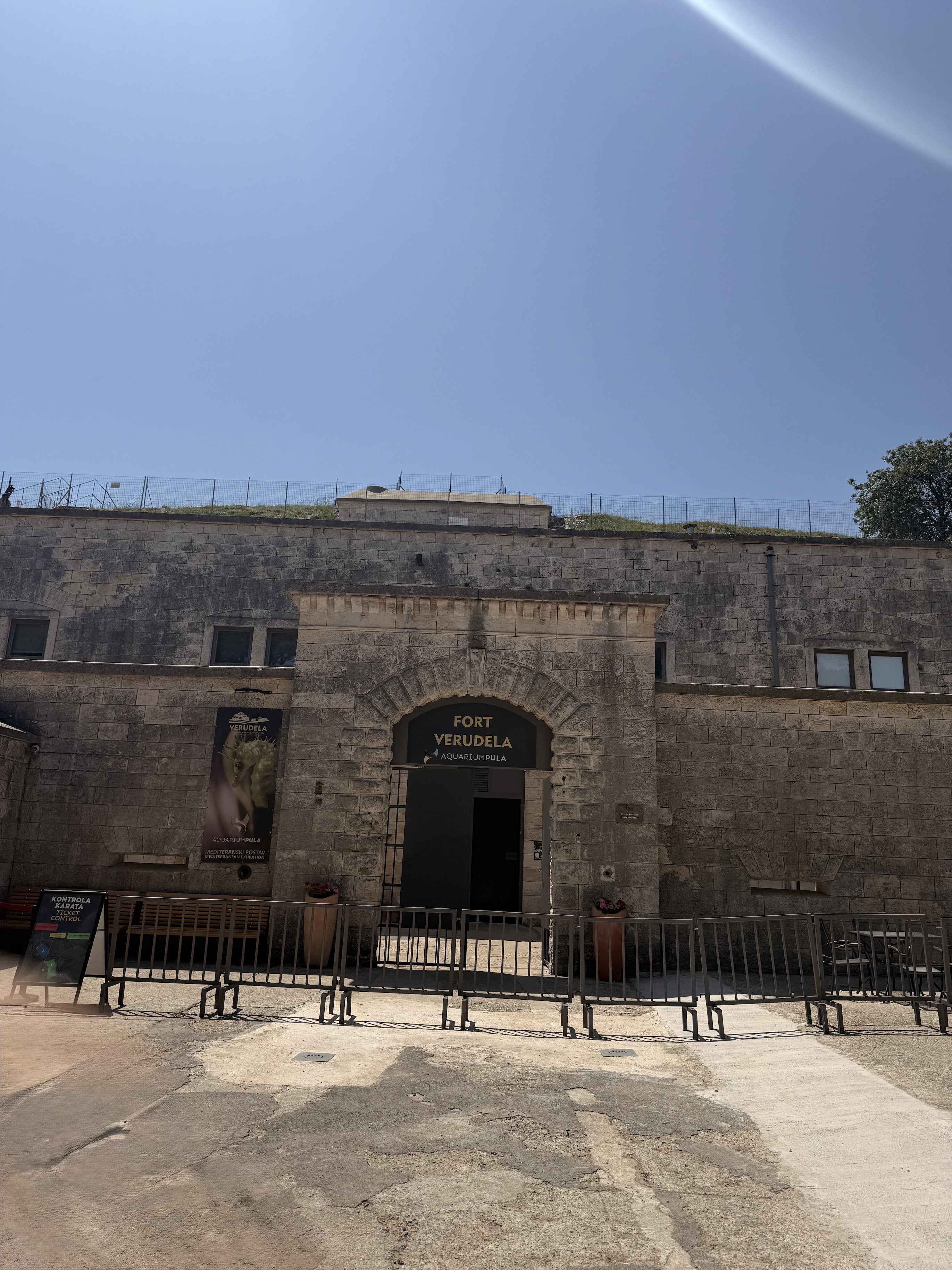
From the courtyard, Fort Verudela still looks prepared to resist the world. Its heavy stone walls, narrow openings and earth-covered profile belong to the Austro-Hungarian naval city that once guarded Pula’s approaches. Step through the entrance, however, and the building begins to glow blue. Jellyfish drift beneath brick vaults. Tropical fish turn old casemates into moving colour. A corridor designed for soldiers now leads visitors through the Adriatic.
This is more than an unusual address for an aquarium. Since 2002, Aquarium Pula has used Fort Verudela—and later the neighbouring Battery San Giovanni—to connect marine life, conservation and the city’s defensive architecture. The result is one of Istria’s most convincing examples of adaptive reuse: a place built to control access has become a place for public discovery.
Key Takeaways

Built from 1881 to 1886
Fort Verudela formed part of the defensive system protecting the Austro-Hungarian naval port of Pula.
An Aquarium Since 2002
The former fort now combines Mediterranean and tropical exhibits with marine rescue, research and education.

Two Buildings, Two Stories
Fort Verudela focuses on the Mediterranean; Battery San Giovanni extends the visit into exotic marine and freshwater habitats.

Allow About 2.5 Hours
The aquarium recommends roughly two and a half hours for both buildings and their indoor and outdoor areas.

Read the Architecture
Stone vaults, the moat, barracks and circulation routes are not background scenery—they are half the experience.
First, Understand the Two Fortifications
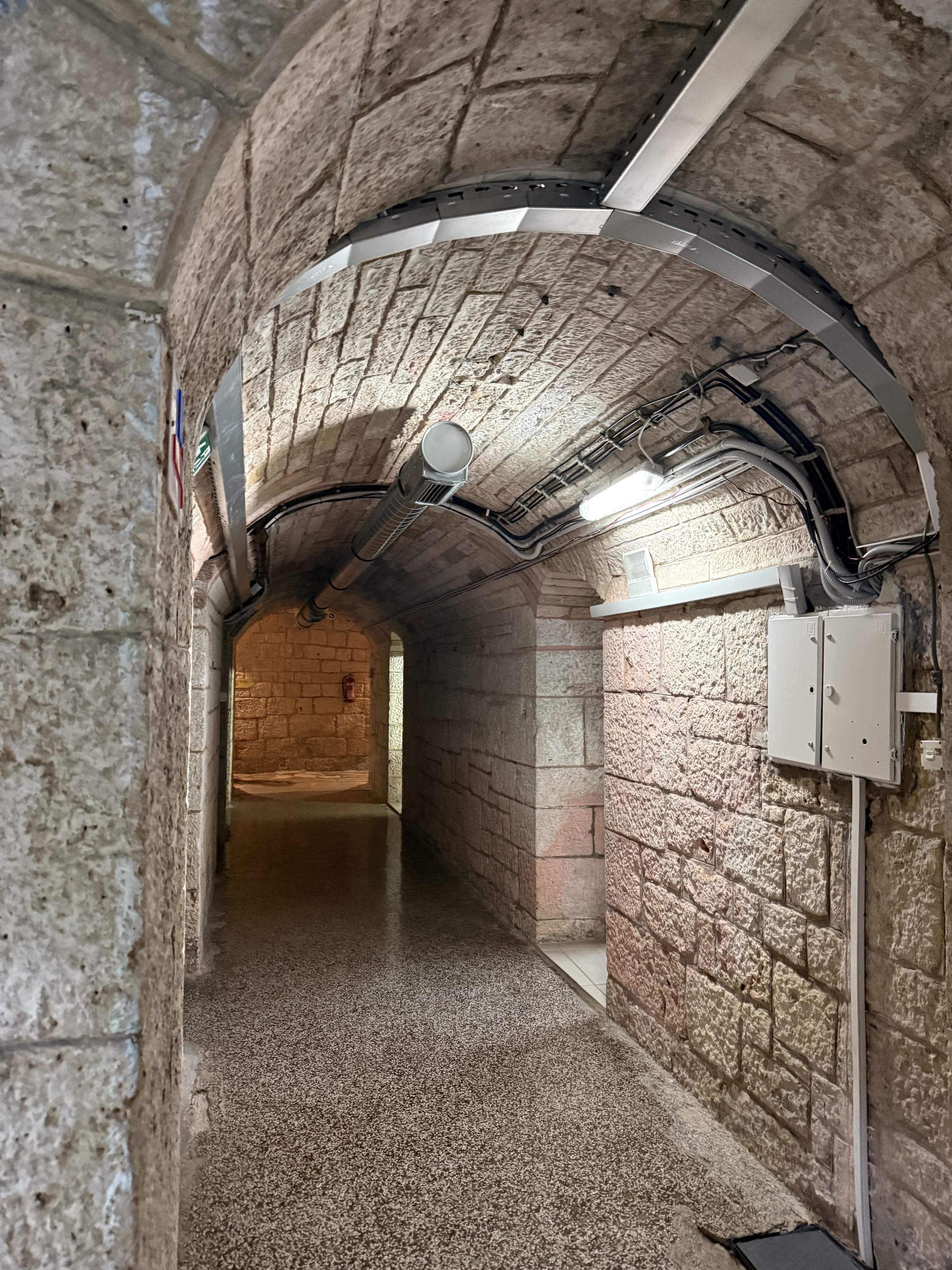
Visitors often use “the fort” for the whole complex, but the aquarium occupies two related structures. Fort Verudela stands at about 31 metres above sea level. Built and equipped between 1881 and 1886, it has a nearly symmetrical pentagonal plan, a central stone block, two-storey barracks, a surrounding moat and an outer earth-and-stone embankment. The walls combine cut stone with brick vaults and later concrete elements.
Battery San Giovanni sits lower, at roughly 21 metres, closer to the coast. It worked with Fort Verudela as a defensive unit, but its later life followed another path. Part of it became a restaurant in 1963. The aquarium began using space there for its educational Blue School in 2014, then added exotic exhibits, quarantine facilities and breeding areas in 2022.
The distinction helps the visit make sense. Fort Verudela carries the Mediterranean story through a dense military interior; Battery San Giovanni opens the collection toward exotic marine and freshwater life. One ticket covers both buildings on the same day, but each entrance may be used only once. Think of them as two chapters rather than one continuous hall.
A Building Designed to Control Movement
Fort architecture is choreography. The moat slows approach. The entrance compresses movement. Corridors turn, stairs narrow and rooms follow one another with limited views ahead. In 1903, the fort’s recorded complement included a commander, four officers and about 120 soldiers. Its spaces were planned for defence, storage, command and controlled circulation—not for leisurely wandering.
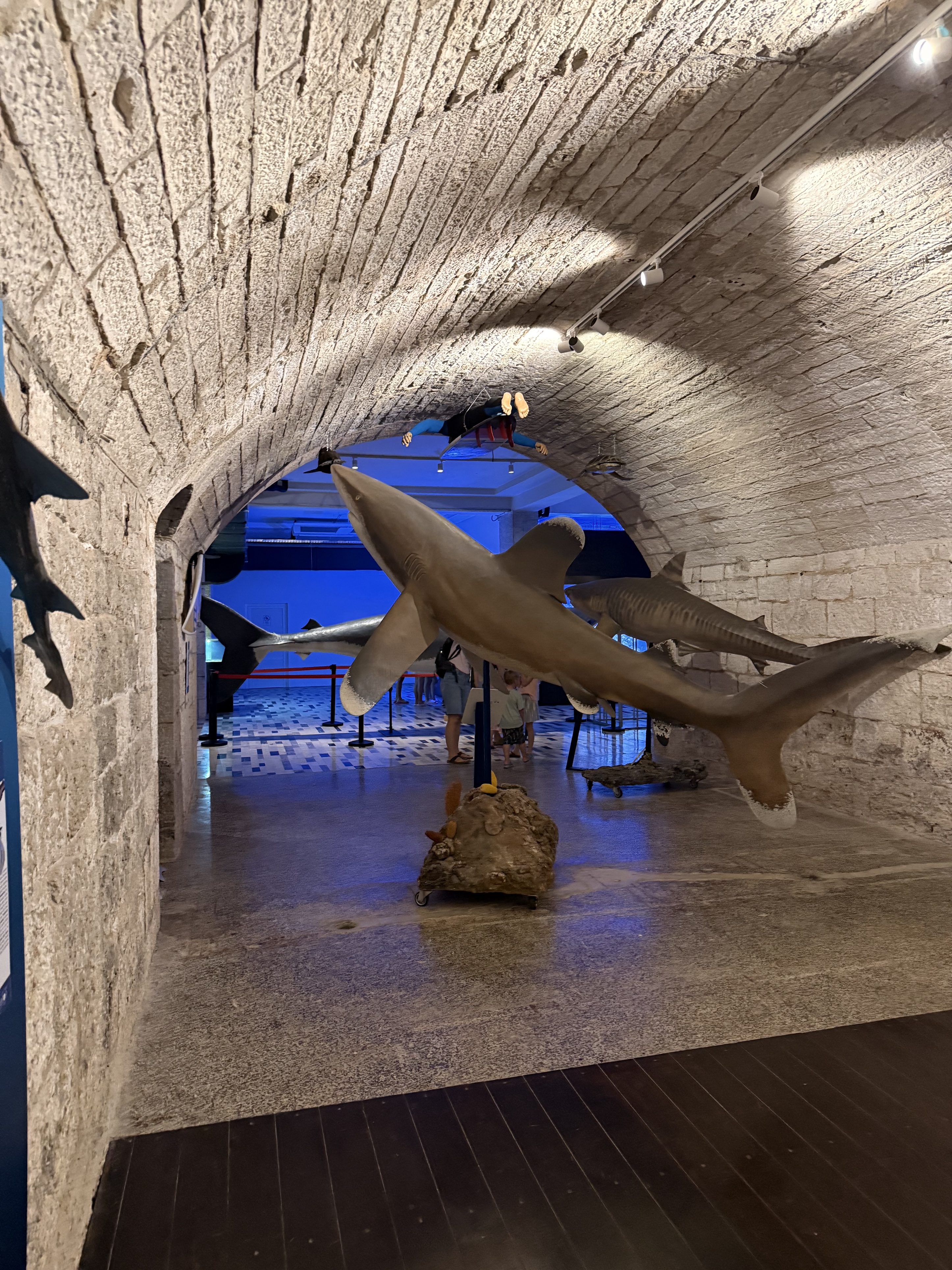
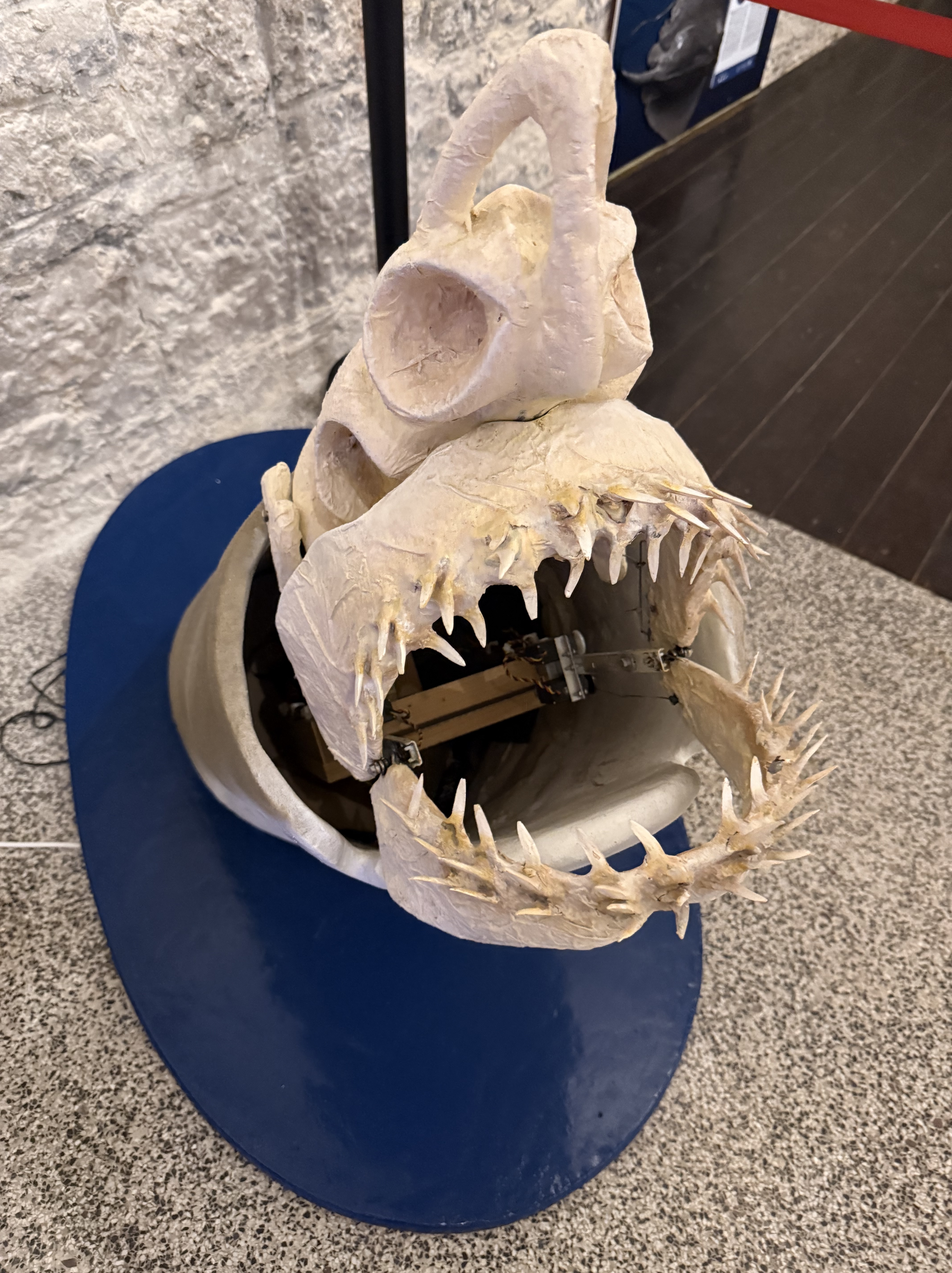
The aquarium does not erase that logic. Instead, it uses it. A visitor passes from dark stone to illuminated water, from a low passage to a tank that appears like an opening in the wall. The building makes every display feel discovered. Even a suspended shark model gains tension when seen beneath a vault built for military protection.
That contrast is the feature’s emotional centre. Most aquariums create atmosphere through architecture designed from scratch. Here, atmosphere already existed. Thick walls soften outside noise; small changes in level slow the route; darkness makes the tanks visually dominant. The fort is not a neutral container. It edits the pace of attention.
What Happens When Blue Light Enters a Casemate
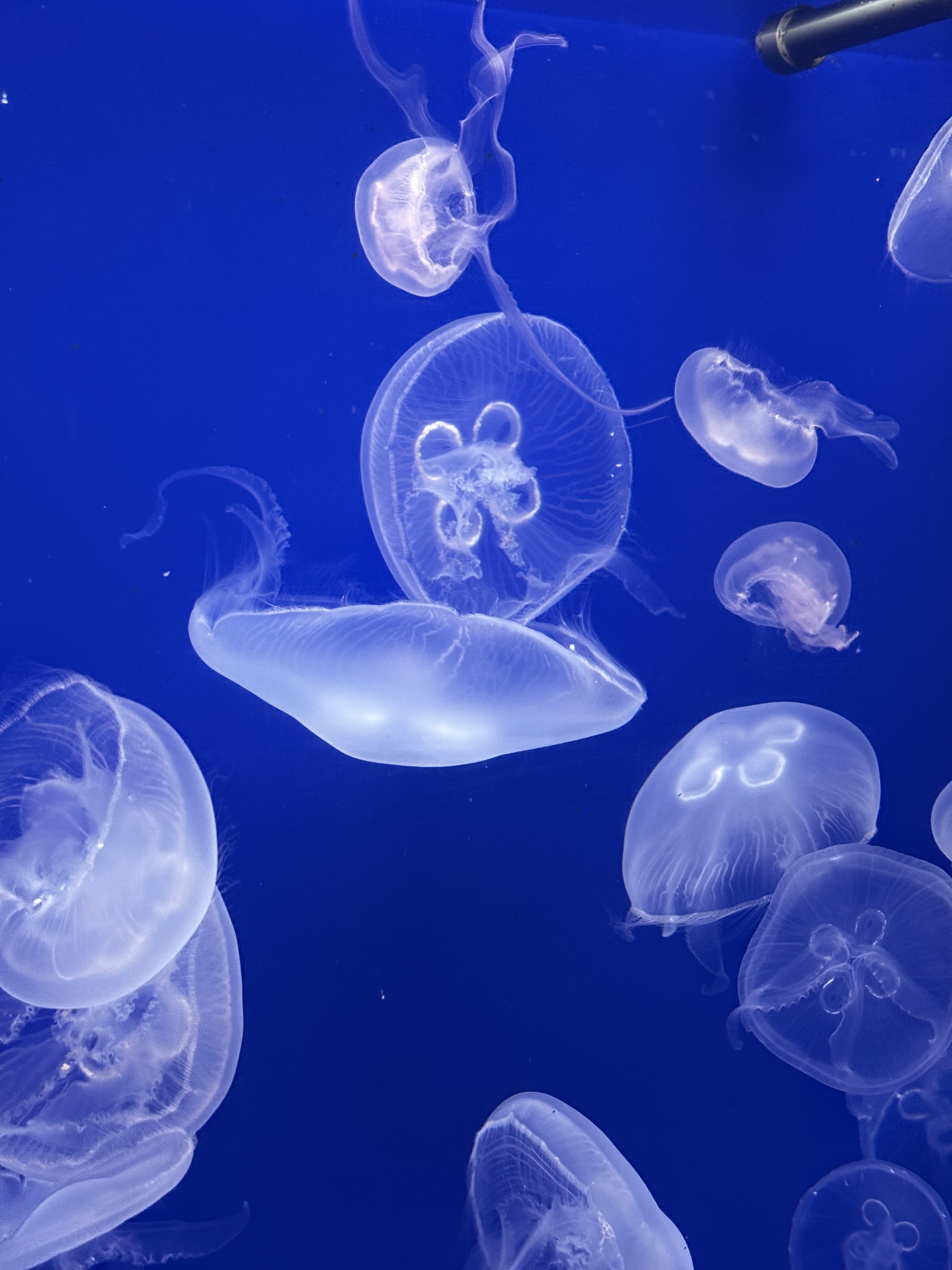
A casemate is a protected, vaulted military room. In Fort Verudela, the same qualities that once made such spaces defensible—mass, enclosure and controlled light—now make them unusually effective exhibition rooms. A glowing tank reads almost like a moving stained-glass window. Jellyfish, which can disappear in a bright gallery, become luminous against the darkness.
This is where the reuse feels least like compromise. The aquarium has not tried to make the nineteenth-century structure behave like a bright contemporary museum. It accepts the depth of the walls, the limited daylight and the irregular sequence of rooms, then lets aquatic light provide orientation. The visitor repeatedly moves through shadow toward colour.
Look away from the animals for a moment. Notice the brickwork above the tank, the thickness of the opening and the join between new equipment and old masonry. The most interesting design decisions are often quiet: modern infrastructure is present, but the original structure remains legible.
The Aquarium Tells Two Histories at Once
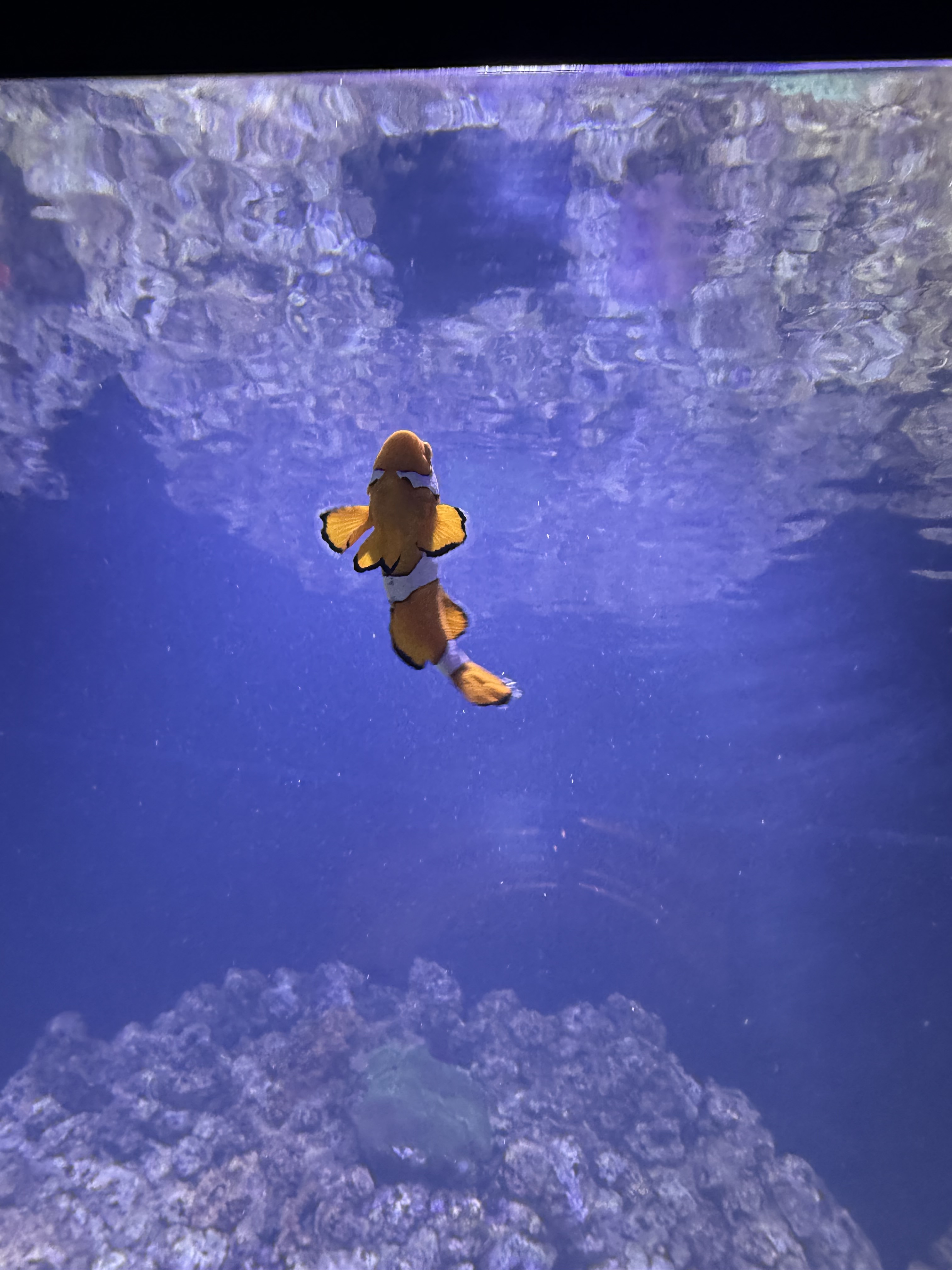
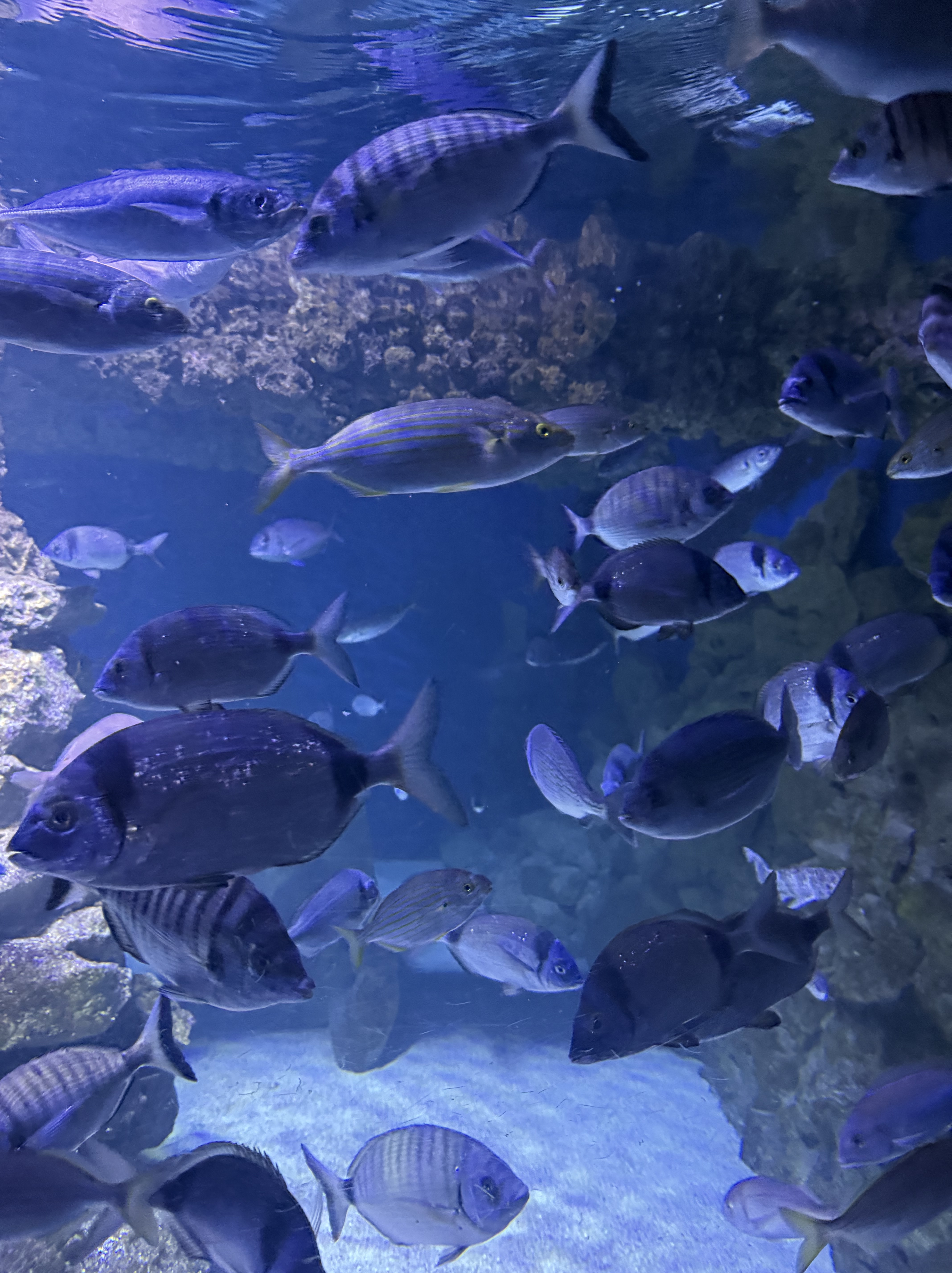
The obvious story is biological: habitats, species, food webs and the difference between the Adriatic and warmer seas. Fort Verudela’s Mediterranean exhibits keep the local sea at the centre, while Battery San Giovanni broadens the journey into tropical marine and freshwater environments. Across roughly 4,000 square metres of indoor and outdoor space, the collection moves from familiar coastal life to species many visitors have never seen closely.
The second story is civic. Pula was not simply a Roman city with an amphitheatre; it was also a nineteenth-century naval port surrounded by a sophisticated system of forts and batteries. The aquarium lets that later history remain visible without turning the whole visit into a conventional military museum.
For families, that layering works particularly well. Fish provide the immediate attraction, while the architecture gives older children and adults another trail to follow. If the marine side is your priority, our practical Aquarium Pula visitor guide covers the visit in a more operational order. This article asks a different question: why does the experience feel so unlike any purpose-built aquarium?
From Display to Conservation
The building’s second life is not only about tourism. Aquarium Pula’s work includes education, rescue, rehabilitation, breeding and public interpretation. Its 2026 communication places particular emphasis on the endangered noble pen shell, Pinna nobilis, and on connecting scientific work with the fort’s own transformation.
That parallel is powerful without being sentimental. A fort once represented protection through force and exclusion. The institution now occupying it approaches protection through research, care and public knowledge. The stone shell remains, but the meaning of “defence” has changed.
Marine conservation also makes the local context harder to ignore. The Adriatic can look inexhaustible from a summer terrace, yet its ecosystems are affected by warming, pollution, invasive species and disease. For a broader look at one animal that often triggers more fear than understanding, continue with our article on sharks and Croatia.
Why the Story Is Stronger in 2026
In May 2026, Aquarium Pula presented a new exhibition on the Austro-Hungarian fortifications of the city inside a Battery San Giovanni casemate. It includes models of Battery San Giovanni at 1:200 and Fort Verudela at 1:250, together with a 40-minute video. For the first time, visitors have a clearer tool for understanding the building around the tanks rather than treating it as atmospheric scenery.
A second 2026 interpretation project connects marine science, sustainability and the history of the fort’s conversion. Supported through the FU-TOURISM programme, it places the noble pen shell, research activity and adaptive reuse inside one narrative. That is exactly the direction this complex needs: less separation between “aquarium” and “heritage,” more explanation of why they belong together.
These additions do not make the fort new. They make it readable. If the models are available during your visit, study them before or after walking through the main building. A plan view explains the turns, thickened edges and central organisation that are difficult to grasp from inside.
How to Read the Complex During Your Visit
| Place | Primary role | What to notice |
|---|---|---|
| Fort Verudela Built 1881–1886 |
Mediterranean exhibits and the core historic experience | Pentagonal organisation, moat, barracks, vaulted rooms and the contrast between stone and aquarium light |
| Battery San Giovanni Expanded aquarium use since 2014 |
Exotic marine and freshwater exhibits, education and support facilities | How later interventions altered the battery and how the surviving military fabric differs from the main fort |
| Fortifications exhibition Opened in 2026 |
Architectural interpretation through models and film | Use the scale models to reconstruct the route you have just walked and locate both buildings in Pula’s wider defence system |
The easiest method is to alternate attention. In one room, concentrate on the animal and its habitat. In the next passage, look at the building: vault profile, wall depth, old openings and changes in material. This prevents either story from overwhelming the other.
Practical Notes for 2026
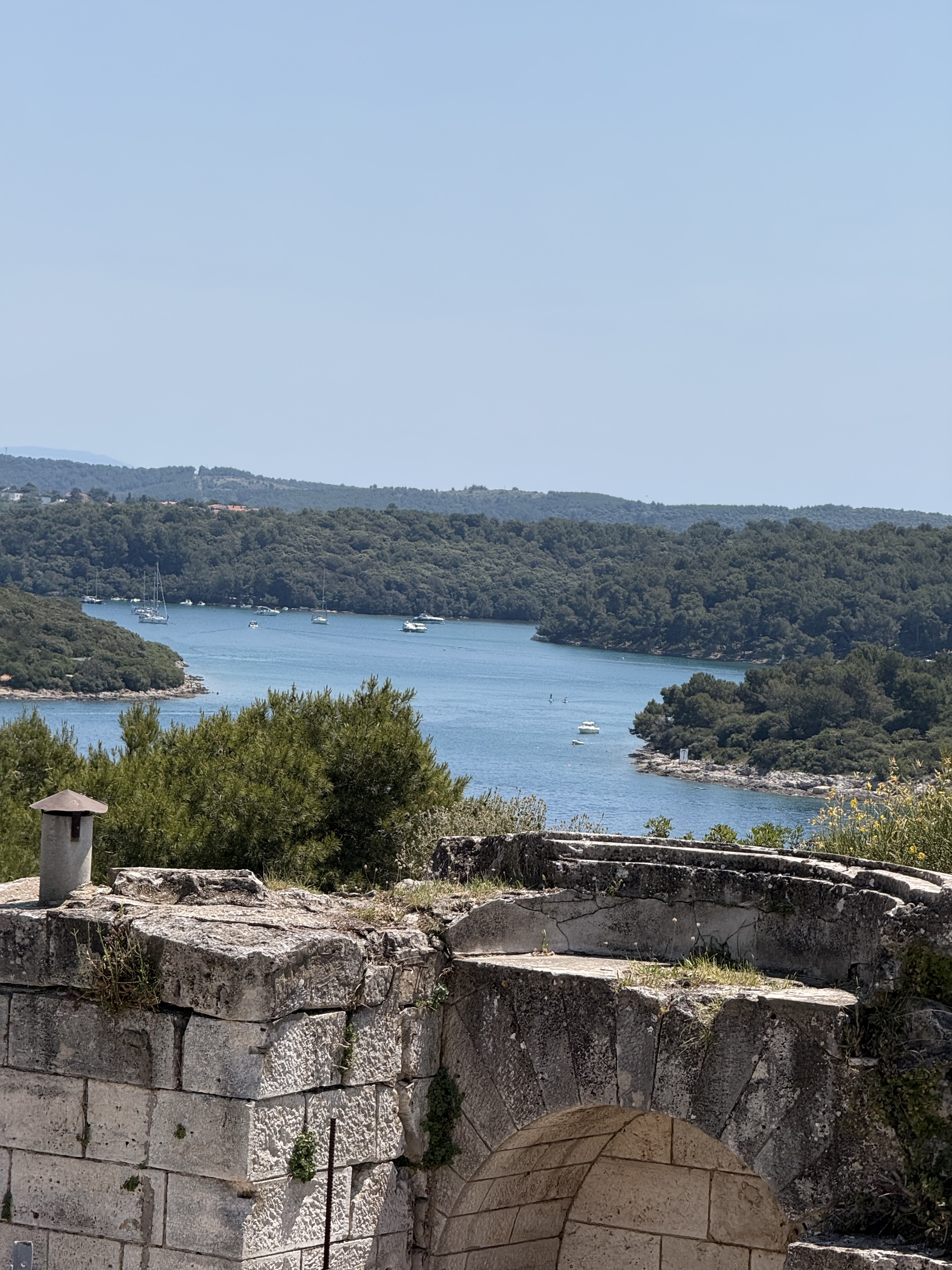
The complex is about four kilometres from central Pula. Seasonal opening hours change, so use the official Aquarium Pula website shortly before travelling. The official FAQ recommends approximately two and a half hours for the full visit.
There is a small free car park with around 20 spaces and additional parking within about 400 metres. On rainy summer days, spaces can fill quickly; city bus lines 2a and 3a or a taxi may be easier. Photography is permitted for personal use without flash. Pets are not allowed.
Mobility requires some planning. Fort Verudela has a mobile ramp between the ground and first floors, while Battery San Giovanni’s visitor exhibits are on the ground floor. Narrow historic passages can make large strollers awkward. The aquarium suggests leaving them in the courtyard when possible.
Because entry to each of the two buildings is single-use on the same-day ticket, complete one before moving to the other. Do not rush the exterior transition: the sea view explains why the fortifications were placed here in the first place.
Frequently Asked Questions
Is Fort Verudela the same as Aquarium Pula?
Fort Verudela is the historic main building occupied by Aquarium Pula. The aquarium also uses the neighbouring Battery San Giovanni, so the complete visit spans two fortifications.
When was Fort Verudela built?
It was built and equipped between 1881 and 1886 as part of the defensive system protecting the Austro-Hungarian naval port of Pula.
How long should I allow?
The aquarium recommends about two and a half hours for both buildings and their outdoor areas. Architecture enthusiasts may want longer.
Is the visit suitable for children?
Yes. The animals provide an immediate focus, while the fort, models and exhibition add a second layer for older children and adults.
What else pairs well with this visit?
Continue exploring Pula’s fortifications or connect the city with eastern Istria using our guide to why Labin and Rabac belong on an Istrian itinerary.
Final Thoughts
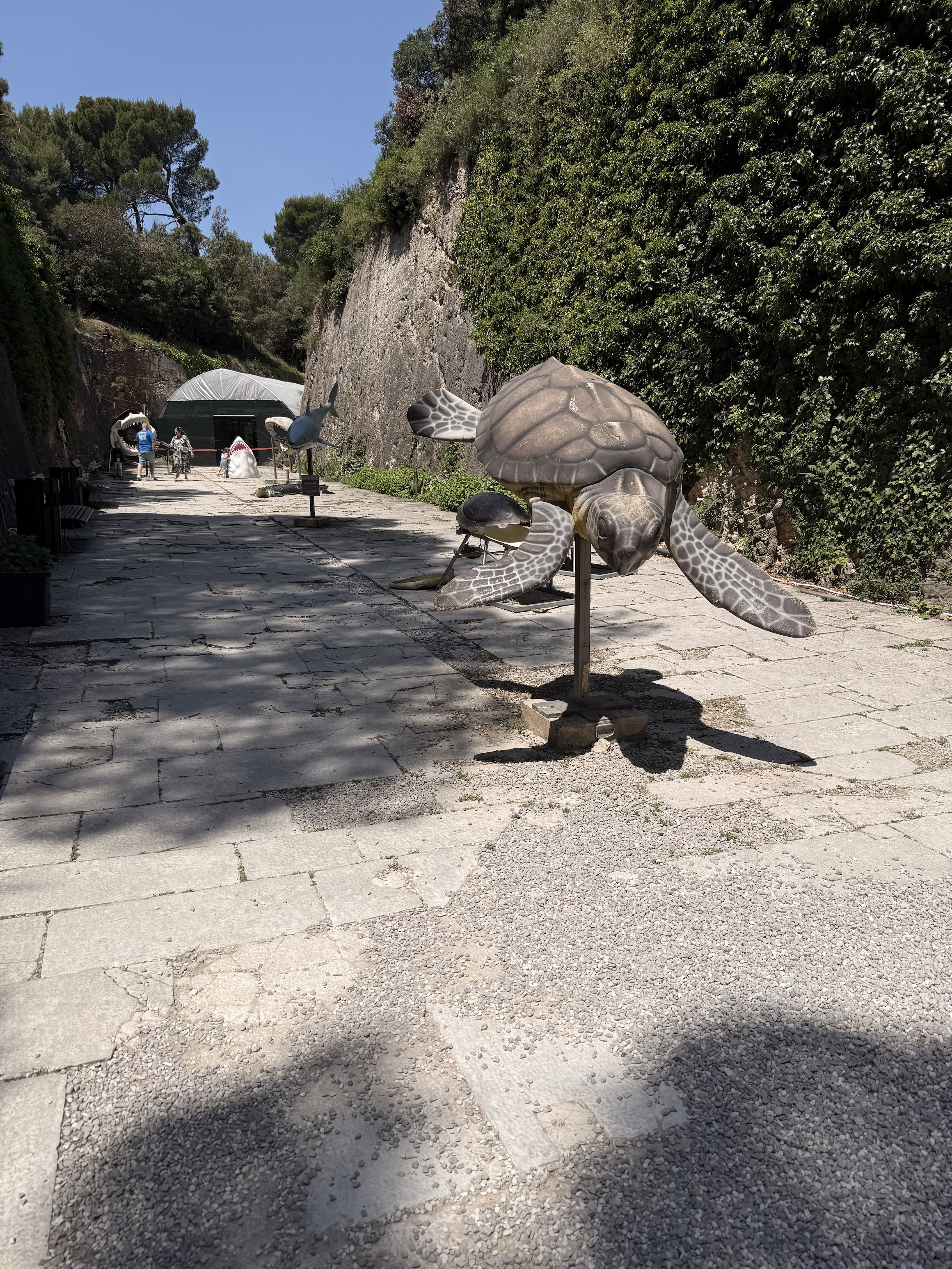
Fort Verudela’s second life works because the first one has not been polished away. The moat still interrupts approach. The masonry still carries weight. The corridors still ration what can be seen ahead. Aquarium tanks have not neutralised those qualities; they have given them a new emotional register.
In the nineteenth century, the complex defended a naval port. In 2026, it protects knowledge, rescued animals and a more attentive relationship with the Adriatic. The strangest thing about Pula’s fort-turned-aquarium is not that the conversion happened, but how naturally two seemingly incompatible histories now occupy the same stone walls.