
Labin’s Hidden Sacred Art: The Five-Minute Stop Most Visitors Miss
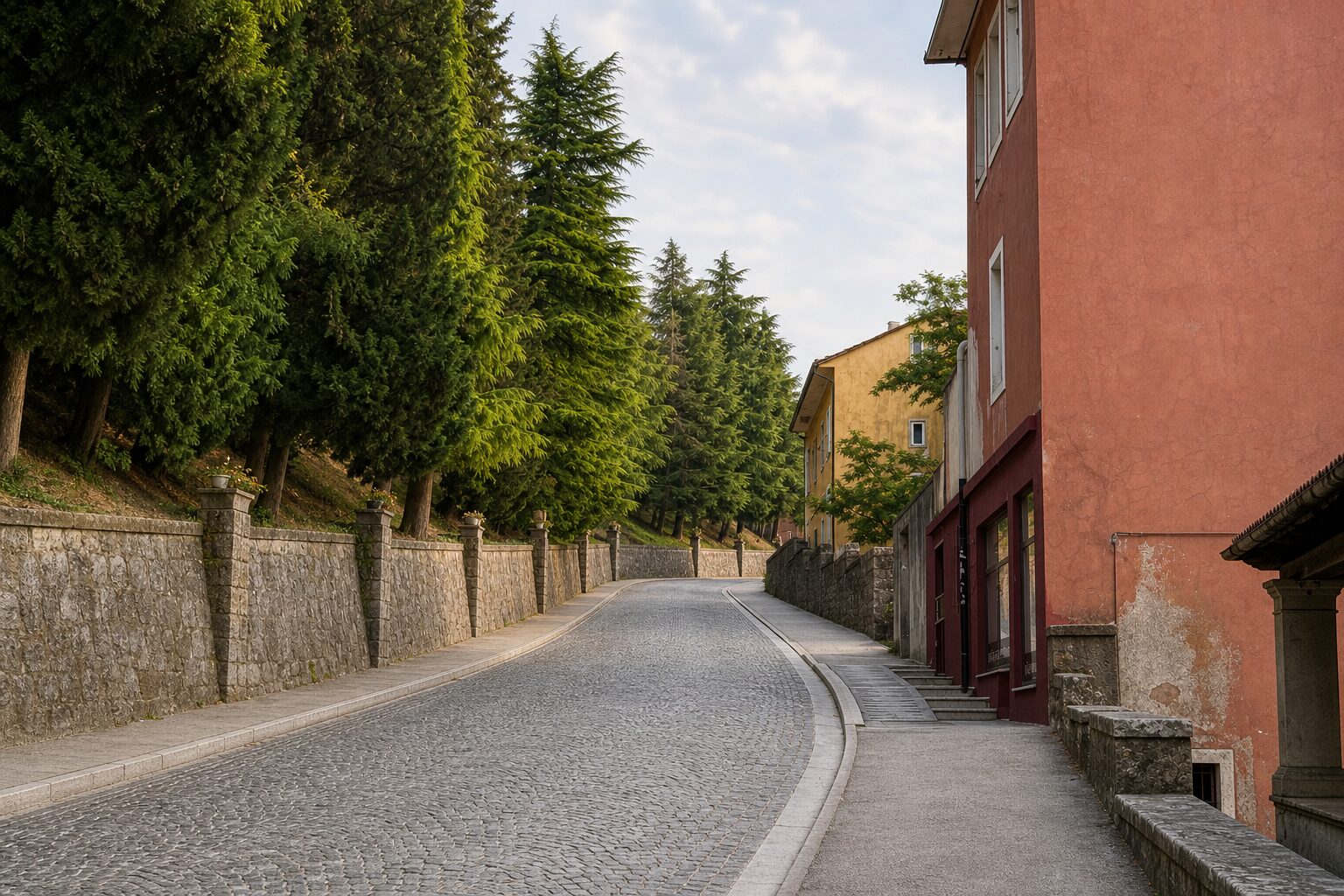
On the climb toward Labin Old Town, the Church of St Mary the Consoler is easy to misread. Its stone walls are quiet, its entrance sits beneath a deep loggia, and nothing outside prepares you for the scale of the art within. Most visitors keep walking toward the better-known palaces, viewpoints and parish church.
That is the mistake. Behind the modest exterior is a museum-managed collection built around nine large seventeenth-century paintings, polychrome wooden figures and a Baroque altar dated 1697. The largest canvas is more than five metres wide. Together, the works turn a small church into one of Labin’s most concentrated cultural experiences.
The title’s “five-minute stop” means a five-minute detour from your Old Town route—not a five-minute sprint through the interior. Allow around 20 minutes if the church is open, longer if you want to follow the painted cycle carefully. Before setting out, confirm access with the Labin National Museum’s current information, because this small collection follows seasonal hours.
Key Takeaways

Look for the Loggia
The covered stone arcade on the approach to the Old Town is the easiest visual clue.

Nine Monumental Paintings
Eight canvases measure roughly 145 by 230 centimetres; the ninth spans more than five metres.

Built in 1426
The church was enlarged in 1537 and received its present form and loggia in 1622.

Allow 20 Minutes
The detour is tiny, but the collection deserves more than a glance at the doorway.

Check Before You Go
Opening arrangements change through the year; use the museum’s current listing.
Why Almost Everyone Walks Past
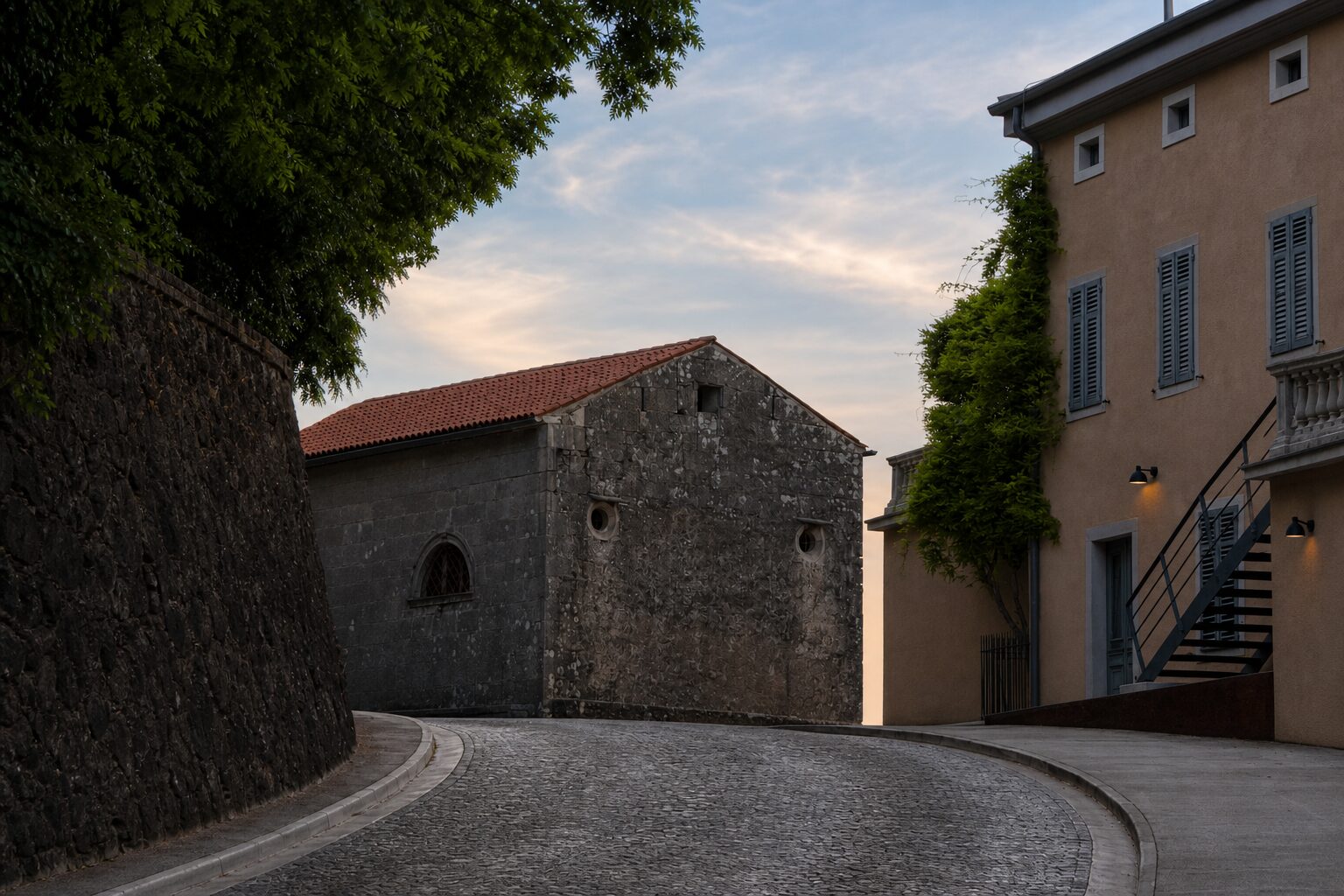
Labin teaches visitors to look upward: bell towers, painted façades and the skyline of the hilltop town pull the eye ahead. This church works in the opposite direction. From the road, its long stone volume can appear almost defensive. The low roof and small openings reveal little, while the loggia reads as a shaded passage rather than an entrance to a collection.
Its names can also cause confusion. Sources refer to the Church of St Mary the Consoler, St Mary of Health and, in its present dedication, the Church of the Assumption of Mary. These are not three separate stops. They describe the same building across different moments of its religious history.
The useful rule is simple: when the road rises beside the park and you see the columned loggia attached to a plain stone church, pause. You are not being diverted away from Labin’s heritage; you are standing in one of its most intimate surviving chapters. For the broader town story, pair this visit with our guide to Labin’s cultural and historical sites.
A Small Church with a Long Timeline
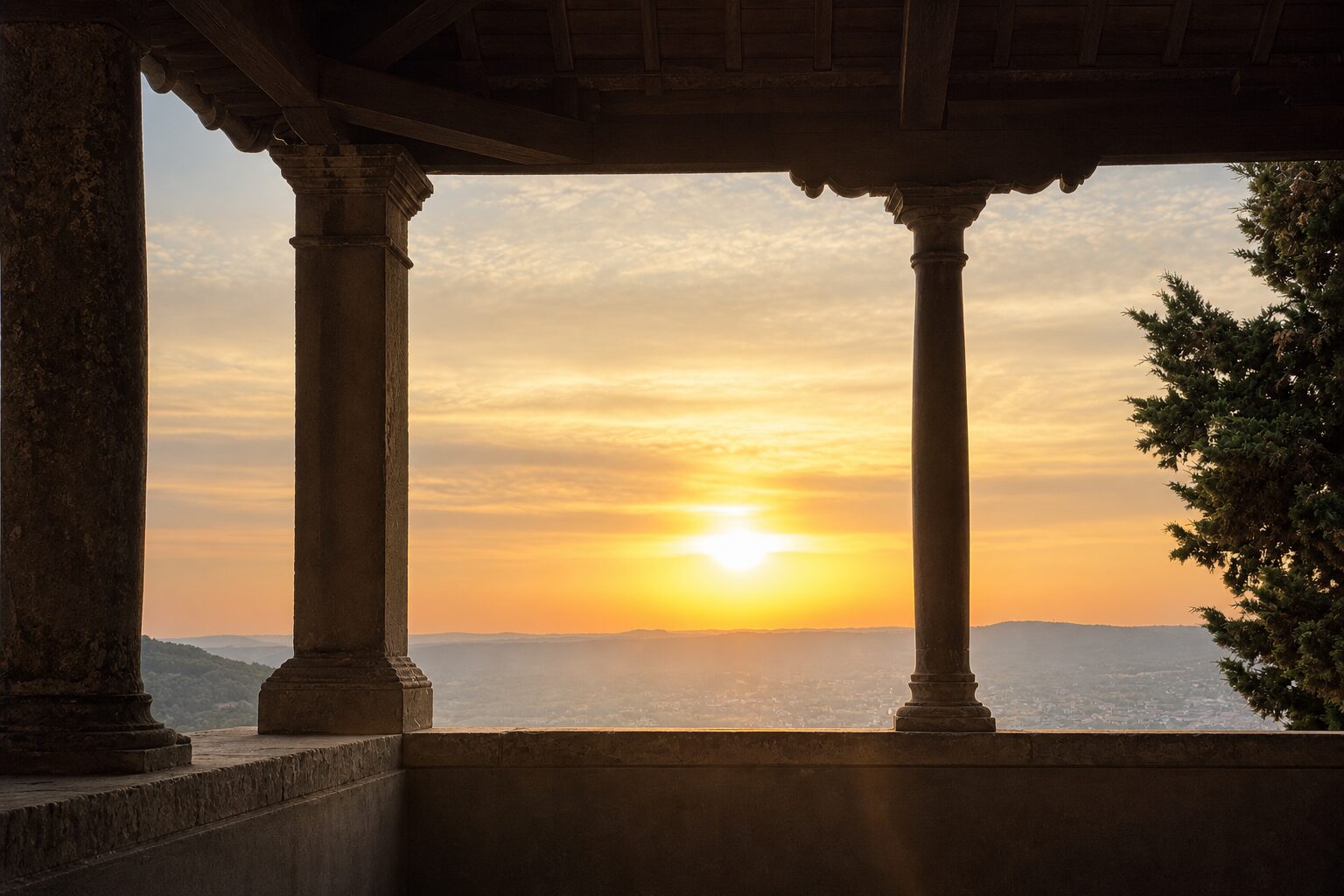
The first church here was built in 1426 for a confraternity—a lay religious brotherhood that combined devotion with practical community responsibilities. The building was expanded in 1537 under the castellan Iacop Sracosich. In 1622, under Ioannes Pier Tagliapietra, it received the form and loggia visitors recognise today. Tagliapietra’s grave and coat of arms remain to the left of the altar.
That chronology matters because the interior is not a single-period room. Medieval foundations, Renaissance-era enlargement, early Baroque painting and a late seventeenth-century altar occupy the same compact space. The roughly fifteen family tombs recorded in the church and loggia add another layer: this was not merely a container for imported art, but a civic and devotional place connected to Labin families over generations.
The building’s restraint is part of its power. It gives no theatrical preview. The change happens only after crossing the threshold, when the scale of the canvases and the carved figures begin to compete with the architecture itself.
What to Look for Inside
Begin with the nine oil paintings on the side walls. They form a cycle devoted to the life of the Virgin and are attributed to Antonio Moreschi, a painter working in the Venetian tradition, probably during the first decades of the seventeenth century. Eight canvases are about 145 by 230 centimetres; the largest is approximately 213 by 555 centimetres. In a small interior, those dimensions are not background decoration—they define the room.
Do not try to identify every scene immediately. First notice how the sequence moves through birth, presentation, annunciation, betrothal, visitation, purification, death or assumption, and coronation. Then look at gestures and lines of sight. Figures point, turn and gather in ways that carry the narrative from one canvas to the next, even when labels are absent.
Next, find the polychrome wooden figures of the Virgin, St Mary Magdalene and the apostles. They were once arranged as a screen separating parts of the church, closer to an iconostasis than to isolated museum sculptures. Imagining them as an architectural barrier changes how you read their scale and frontal poses.
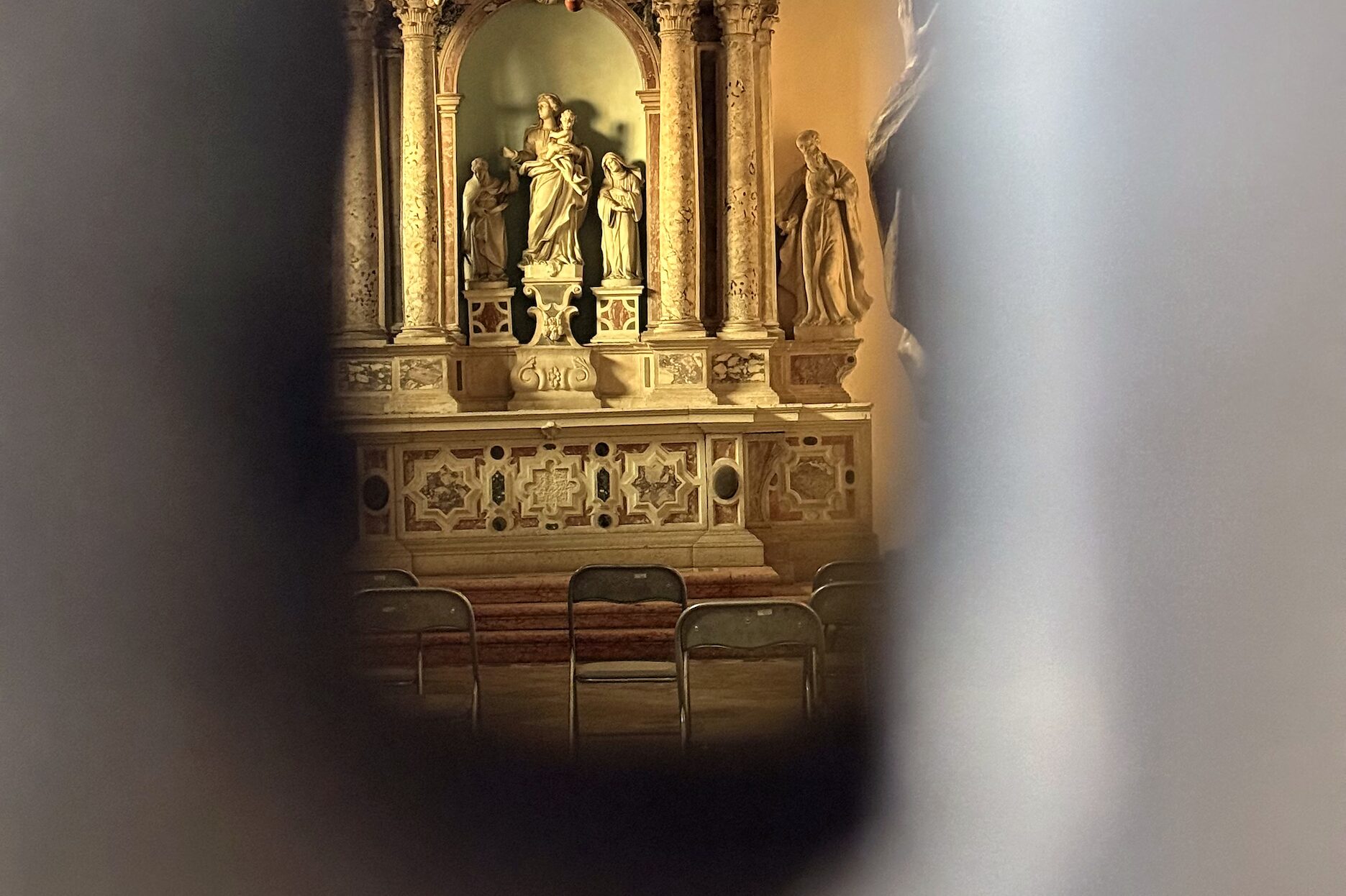
Finally, return to the altar. Its stone Madonna and Child is dated 1697. After the darker canvases and painted wood, the pale stone and patterned inlay feel almost luminous. This is the moment to step back and see the collection as an ensemble rather than a checklist of objects.
The Restoration Story Is Part of the Art
The collection visitors see today is the result of a deliberate rescue. The Labin National Museum presented the conservation problem publicly in the 1980 exhibition Problem restauriranja. From 1981 to 1985, Labin painter and conservator Eugen Kokot worked on the Moreschi cycle. The roof was repaired in 1986, the interior followed in 1987, and the paintings and wooden statues were returned.
The restored collection opened on 19 June 1987. That date is more than an administrative footnote. It explains why the works remain in their architectural setting rather than appearing as detached objects in a white museum gallery. The restoration treated the church, paintings, sculpture and altar as a connected historical environment.
Look for unevenness rather than perfection: the age of surfaces, differences in scale, and the tension between devotional objects and museum interpretation. A polished reconstruction would erase the passage of time. Here, conservation makes that passage legible.
How to Plan the Stop in 2026
The collection is managed by the Labin National Museum, and its published schedule varies by season. The table below reflects the Museum Documentation Centre listing checked on 20 July 2026. Small heritage venues can change hours for events, staffing or conservation, so confirm shortly before your visit.
| Period | Listed hours | Planning note |
|---|---|---|
| November–March | Mon–Fri, 08:00–14:00 | By prior arrangement |
| April–May | Tue–Sun, 10:00–14:00 | Confirm on the day |
| June | Tue–Sun, 11:00–17:00 | Allow about 20 minutes |
| July–August | Daily, 10:00–14:00 and 17:00–21:00 |
Midday closure between sessions |
| September | Tue–Sun, 11:00–17:00 | Pair with an Old Town walk |
| October | Tue–Sun, 10:00–14:00 | Check seasonal changes |
There is no need to build a whole day around this one room. Place it at the beginning of an Old Town visit, then continue uphill. Our first-time Labin museum guide gives the main museum a logical order, while the article on Labin and Rabac in an Istria itinerary helps connect the hill town with the coast.
A Better Way to See It
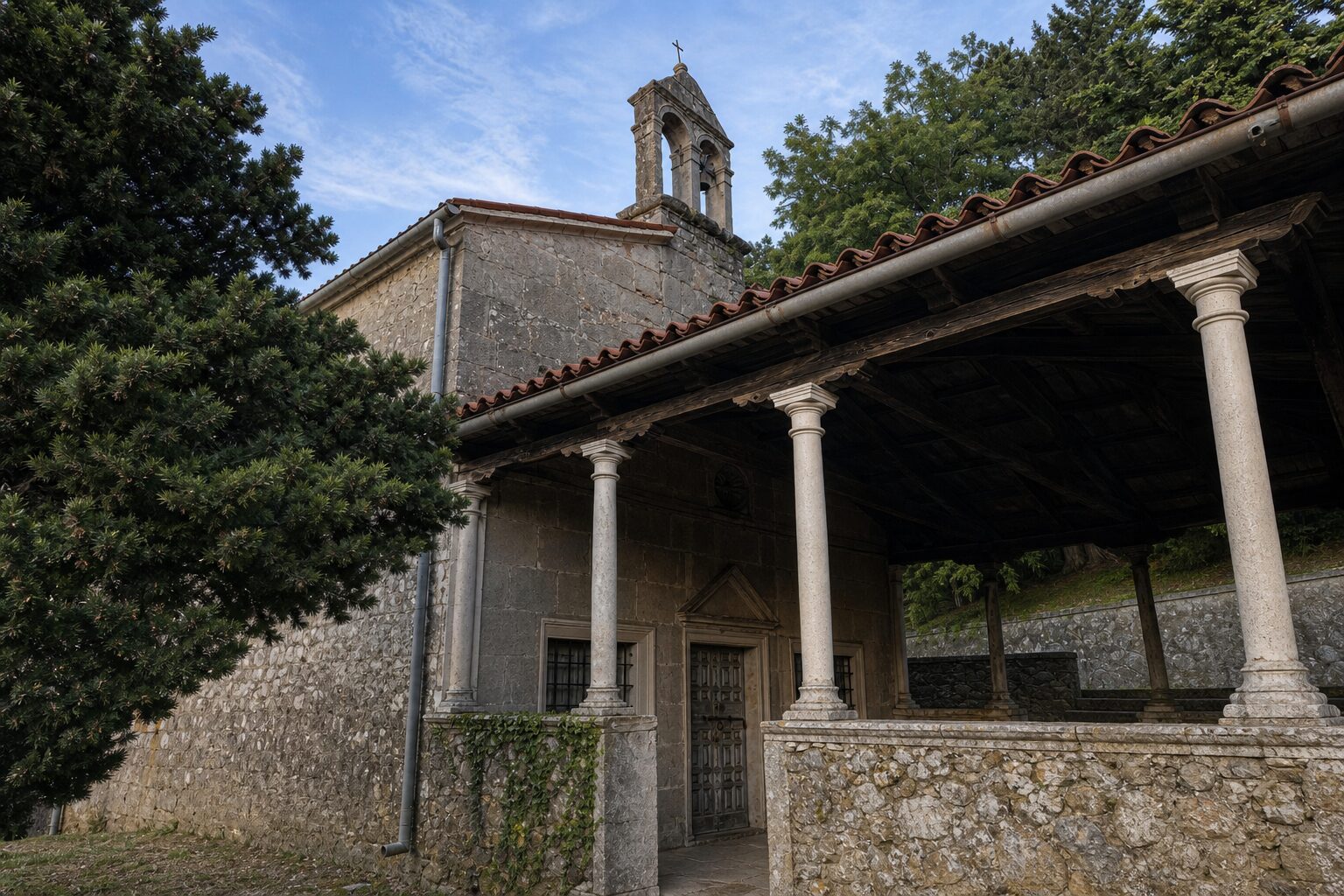
- Pause outside. Read the church and loggia as one structure and notice how deliberately little the façade reveals.
- Take one full-room look. Let your eyes adjust before approaching individual works.
- Follow the paintings as a sequence. Look for repeated figures, gestures and changes in mood.
- Reconstruct the wooden screen mentally. The figures once divided space; they were not conceived as isolated ornaments.
- End at the altar. The 1697 date gives the room a final chronological anchor.
This order keeps the church from becoming a quick photo stop. It also respects what makes the collection unusual: art, architecture, burial memory and restoration remain layered in the place where they acquired meaning.
Frequently Asked Questions
Is this collection inside the Labin National Museum?
No. It is housed in the Church of St Mary the Consoler on the approach to the Old Town, but the collection is managed by the Labin National Museum.
Can I really see it in five minutes?
The detour from the normal walking route takes only a few minutes. The interior deserves about 20 minutes; the title describes how little extra distance is required, not how quickly you should leave.
What is the most important work?
The nine-painting Marian cycle attributed to Antonio Moreschi gives the room its greatest visual impact, but the 1697 altar and polychrome wooden figures are essential to understanding the ensemble.
Are the opening hours guaranteed?
No. The table reflects the museum database checked in July 2026. Confirm with the Labin National Museum before visiting, especially outside summer.
What should I visit next?
Continue to the main museum and the Old Town’s principal monuments. If you prefer a slower route, our portrait of the cats of Labin turns the lanes between major sights into part of the experience.
Final Thoughts
Labin’s sacred art collection is memorable because it resists the normal travel hierarchy. The building does not announce itself with a grand façade. The detour is almost negligible. Yet inside, paintings measured in metres, carved figures, family tombs and a Baroque altar compress four centuries of the town’s history into one quiet space.
Walk uphill slowly. When you reach the loggia, stop instead of following everyone else. The smallest change to your route may reveal the most surprising room in Labin.