
Pizzeria Rumore: Why Labin Has the Best Pizza in Croatia

Croatia is a country of grilled fish, lamb under the bell, truffles, and seafood risotto. Pizza is rarely the headline. That makes it all the more surprising when you climb the narrow stone streets of Labin’s old town, follow your nose past medieval doorways, and find yourself standing in front of a Neapolitan pizzeria that locals, Italians, and visiting chefs all agree on: Pizzeria Rumore.
Sitting on a terrace 320 metres above sea level, looking down over the coastal town of Rabac and the wide sweep of Kvarner Bay, you might assume the view is the main event. It’s not. The pizza is. And it’s serious enough that 234 TripAdvisor reviewers have used the phrase “best pizza in Croatia” — many of them Italians, who do not throw that compliment around lightly.
This is the story of why a small hilltop town in eastern Istria produces what is, quietly and confidently, the most respected wood-fired pizza in the country.
Key Takeaways

Among the Top 2 Pizzerias in Labin
Ranked consistently in TripAdvisor’s top two restaurants in Labin with over 234 reviews — and praised by Italian visitors, the toughest critics there are.

A Real Stefano Ferrara Oven
Hand-built in Naples by the Ferrara family — the same workshop that supplies many of the world’s top Neapolitan pizzerias.

A 30-Hour Dough Rest
Long, slow fermentation is what makes the crust airy, digestible, and slightly tangy — exactly how a real Neapolitan pizza should taste.

A View Over Rabac and Kvarner Bay
The terrace looks out over the coastline and across to the island of Cres on clear evenings — easily the best sunset table in Labin.

Reservations Essential in Summer
From mid-June through August, terrace tables for sunset are booked out two to four days ahead. Call before you walk up.
A Hilltop Restaurant That Hides in Plain Sight
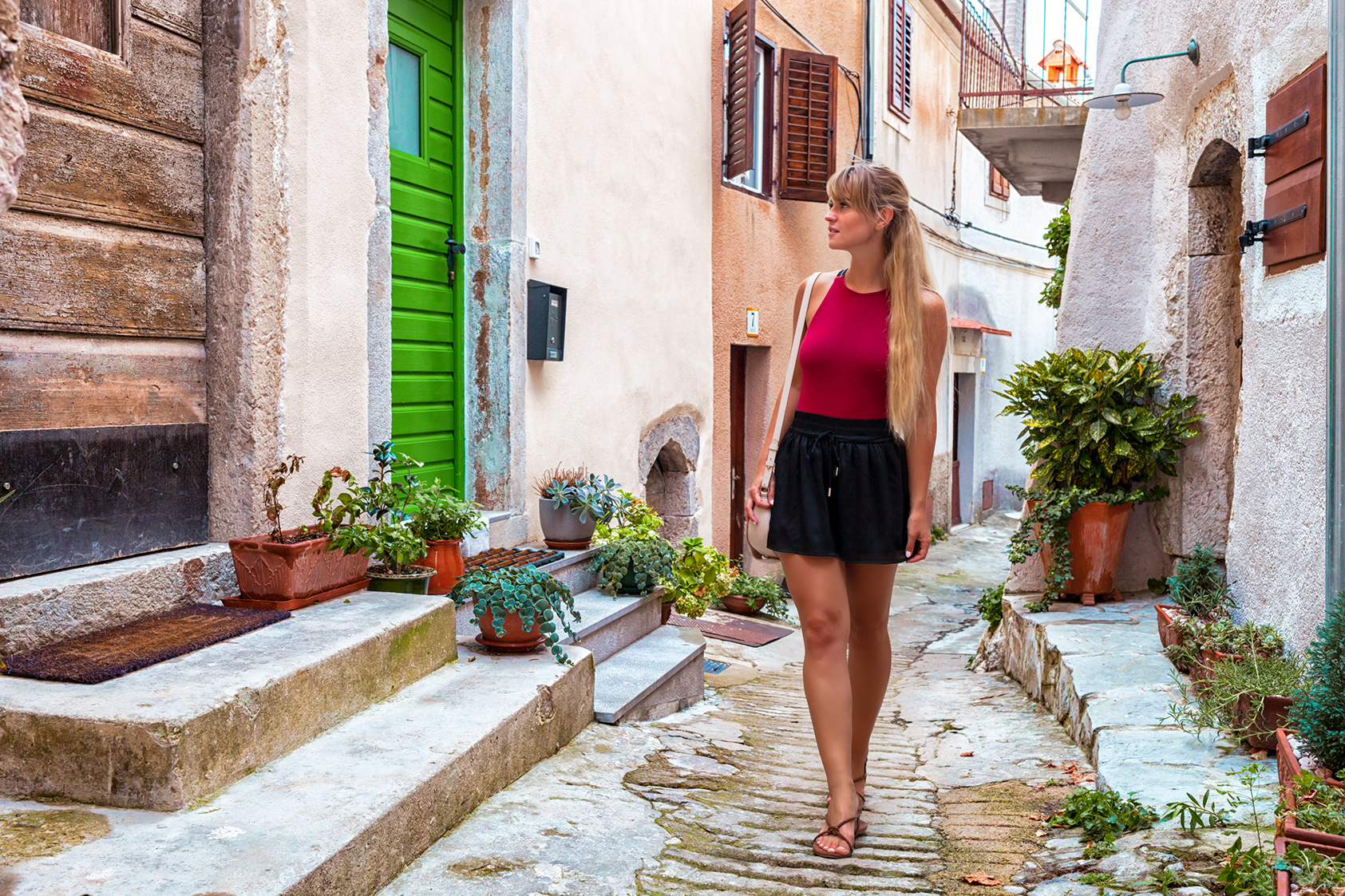
Pizzeria Rumore is not where you’d expect to find it. There is no large sign at the foot of the hill, no neon arrow pointing the way. You park outside the old town walls, walk through the medieval gate, and follow the cobblestones uphill. After two or three minutes — past stone houses, a couple of art galleries, and the small produce stalls of Labin’s morning market — the lane opens onto a terrace built into the edge of the hill, and the noise of the kitchen gives the place away.
The setting tells you something important before you’ve even sat down: this is a restaurant built for people who know the town. Tourists wandering up from Rabac in flip-flops sometimes stumble onto it by accident and look genuinely shocked. Locals book ahead.
The interior is small and clean — exposed stone, wooden tables, the wood-fired oven glowing at the back. Most of the seating is outside on the terrace, under sails and umbrellas in summer, with the Adriatic spread out below. On a windless evening, you can hear conversations drifting up from the streets below and the dough being slapped flat behind you. The name “Rumore” — Italian for “noise” — is a wink at exactly this: the soft, layered noise of a working hilltop kitchen.
The Pizza: Stefano Ferrara, 30-Hour Dough, and Maestro Santucci Flour

To understand why Pizzeria Rumore stands apart from every other “pizza place” in Croatia, you have to look at three things: the oven, the dough, and the flour. Each one is a deliberate, expensive choice — and together they’re the reason Italian visitors leave smiling.
The oven is a Stefano Ferrara. If that name means nothing to you, here’s the short version: Ferrara ovens are built by hand in Naples by a family that has been making them since the early 1970s. They are the ovens behind some of the most respected pizzerias in Naples, New York, and Tokyo. The Ferrara dome holds heat at around 450°C, which is the temperature needed to cook a true Neapolitan pizza in 60 to 90 seconds — long enough to puff the crust, short enough to keep the tomato bright and the basil green.
The dough rests for 30 hours. Most pizzerias in Croatia use a same-day dough — mix, knead, rest for a few hours, stretch, bake. The result is fine, but it has no character. A 30-hour cold fermentation does two things: it develops complex, slightly sour flavours in the crust, and it breaks down the gluten so the pizza sits lighter in your stomach. You will not feel bloated after eating a Rumore pizza. That alone is rare.
The flour is Maestro Santucci. Santucci is a small, family-owned Italian mill that specialises in pizza flour with a high “W” value — meaning the dough can withstand long fermentation without collapsing. It is not the cheapest option on the market, and most pizzerias do not bother with it. Rumore does, because the long dough rest requires it.
The toppings follow the same logic. San Marzano-style tomatoes, fior di latte from northern Italy or fresh mozzarella di bufala on the premium pies, prosciutto from local Istrian producers, basil grown in pots on the terrace. Nothing flashy, everything correct.
What to Order (and What to Skip)

The menu is longer than it needs to be — that’s true of most pizzerias — but a handful of pizzas show off what the oven and dough can do. If it’s your first visit, here’s what to try.
- Margherita DOP: The truest test of any pizzeria. Tomato, fior di latte, basil, olive oil. If a place can make this well, it can make anything. Rumore makes it beautifully — the crust leopard-spotted on the edges, the centre soft and slightly wet in the Neapolitan style.
- Bufala e Prosciutto Crudo: Mozzarella di bufala, raw Istrian prosciutto added after baking, rocket, shaved Grana. The local-Italian crossover dish.
- Tartufo: A nod to Istria’s other famous product. Black truffle paste, fior di latte, and a drizzle of truffle oil. Order this if you’ve already done a truffle hunt nearby and want to see what the kitchen does with the ingredient.
- Diavola: Spicy salami, a little chilli, mozzarella, tomato. Simple and properly done.
- Calzone classico: The folded pizza done well — ricotta, ham, mozzarella, baked to a deep gold. Big enough to share.
Skip the experimental pizzas with five or six toppings — they’re on the menu because they have to be, but they fight the oven. The simpler pies are where the kitchen actually shows off. One pizza per person is plenty — these are 30cm Neapolitan rounds, not Roman thin-crust, and the airy dough fills you up faster than you expect.
The wine list leans local: Malvazija Istarska from nearby Istrian producers is the obvious house white pairing, and a Teran on the red side. House wine by the carafe is honest and inexpensive.
The View Is Half the Reason People Come Back

The first time you sit on Rumore’s terrace, you’ll spend the first five minutes not looking at the menu. The view drops straight down the hillside to Rabac harbour, then out over the open Adriatic. On a clear evening you can see the island of Cres on the horizon, and on really clear ones, the silhouette of the Učka mountain range curving north.
The light is best between 7:30pm and 9:00pm from May through September — the golden hour washes across the bay, the boats turn into silhouettes, and the cliffs of Labin glow warm against the sea. Ask for a terrace edge table when you book — those are the ones that face directly out over Rabac. The inner terrace tables are still pleasant, but the view is what you came for.
This is the kind of view that makes the food taste better. It’s also the reason couples come here for anniversaries and proposals — the staff are used to it, and will quietly bring a little extra something if you mention the occasion when booking.
Practical Information: Quick Facts
Everything you need to know before you go.
| Detail | Info |
|---|---|
| Location | Labin old town (Stari Grad), 5-minute walk from main car park |
| Cuisine | Neapolitan wood-fired pizza, Italian-Istrian crossover |
| Oven | Hand-built Stefano Ferrara (Naples) |
| Dough rest | 30 hours, cold fermentation |
| Flour | Maestro Santucci (Italy) |
| Price range | €€ — most pizzas €10–€16, premium €18–€22 |
| Reservations | Strongly recommended June–September, especially for sunset tables |
| Best time | Dinner — terrace opens around 18:00 |
| Parking | Public car park at the foot of the old town (paid, €1.50/hour) |
| Accessibility | Cobblestone streets and steps — not ideal for limited mobility |
A small local tip: The terrace is small and turnover is slow because Neapolitan pizzas come out one or two at a time from the oven. Don’t show up at 8pm in July expecting to walk in — that’s the busiest slot. Either book the 18:30 sitting (golden light, easier to get) or aim for the late 21:30 table when the first wave clears.
Make a Full Day of It

Pizzeria Rumore is the kind of place worth planning a day around — not just a stop on the way to somewhere else. Here’s how locals and returning guests usually pace it:
Morning: Start with coffee in the old town and a stroll through Labin’s morning market. It’s small, it’s plastic-free, and it’s the best way to see how the local food economy actually works. Then walk the medieval streets — the cultural and historical sites of Labin can fill a couple of hours easily, with the Town Museum, the Loggia, and the panoramic viewpoint above the cemetery.
Afternoon: Drive or walk down to Rabac and spend the hot hours on the beach. If you have the energy and the legs, the Sentona’s Trail walk between Labin and Rabac drops through forest, waterfalls, and a cave — it’s 2.5km and a proper appetite-builder.
Evening: Walk or cab back up to Labin, freshen up, and arrive at Rumore for a 19:30 table. Stay for sunset, order one more carafe of Malvazija than you planned, and walk back down through the lit-up old town. That’s the day.
If you’re planning around the seasons, our guide on when to visit Rabac covers month-by-month weather, crowds, and what’s actually open.
Frequently Asked Questions

Is Pizzeria Rumore really worth the climb up to Labin old town?
Yes — and the climb isn’t really a climb. From the main car park at the foot of the old town, it’s a 4 to 6 minute walk on cobblestones. If you’ve ever walked up to a hilltop village in Tuscany or Provence, this is gentler. The view from the terrace alone justifies the walk; the pizza turns it into a destination meal.
Do I need to speak Croatian or Italian to order?
No. Most of the staff speak fluent English, Italian, and German. The menu is printed in multiple languages. You can comfortably order, ask questions, and pay in English.
How far in advance should I book a terrace table?
In peak season (mid-June through August), aim for two to four days ahead for a sunset table. In May or September, one day ahead is usually enough. Off-season (November to April), most evenings are walk-in friendly, though it’s still polite to call.
Can I get a real Neapolitan pizza this good anywhere else in Croatia?
There are very good pizzerias in Zagreb and a handful in Pula, Rovinj, and Split. But the combination of a real Stefano Ferrara oven, 30-hour fermentation, and Italian-mill flour is uncommon — and the hilltop sunset view is unique. Italian visitors consistently say Rumore is the closest they’ve come to a real Naples pizza outside Italy.
Is it suitable for children?
Yes — families are welcome, there are simpler pizzas (margherita, prosciutto cotto) that kids enjoy, and the terrace is enclosed enough that small children can’t wander off. Highchairs are available but limited; ask when booking.
Conclusion
“Best pizza in Croatia” sounds like a tourist board claim until you eat at Pizzeria Rumore and realise it’s the simplest, most accurate way to describe what’s actually happening on that terrace. A real Neapolitan oven, dough treated with patience, Italian flour that costs more than it has to, and a view that nobody could engineer — these things add up to a meal that explains why people drive across Istria for it.
The town of Labin gets less press than Rovinj or Poreč, and that’s fine. It means the old town stays quiet, the market stays small, and the best pizzeria in the country still feels like a local secret you’ve been let in on. Book a table, walk up at golden hour, order a margherita and a carafe of Malvazija, and see for yourself.